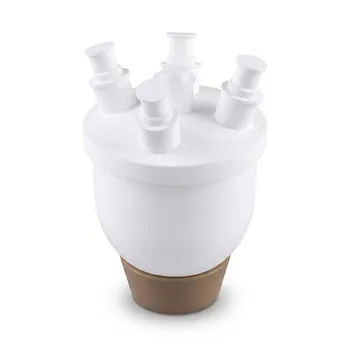
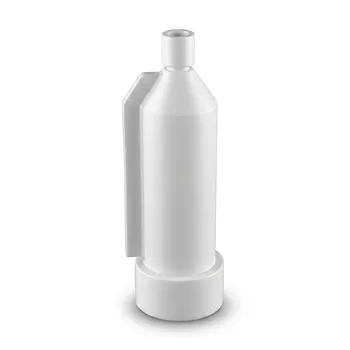
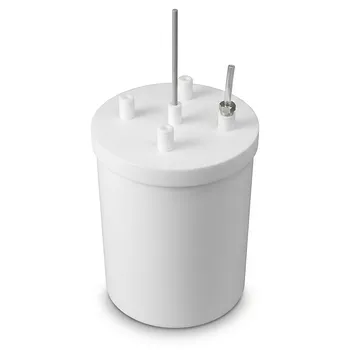
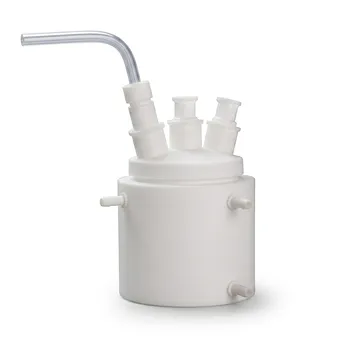
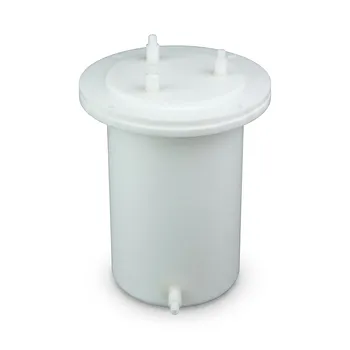
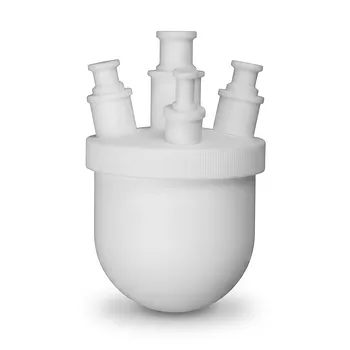
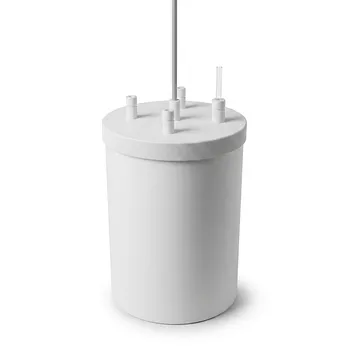
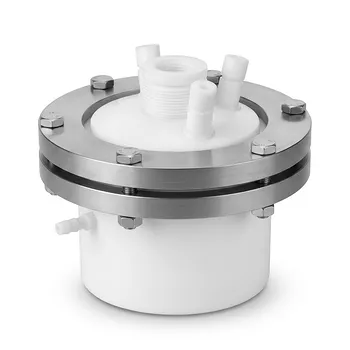
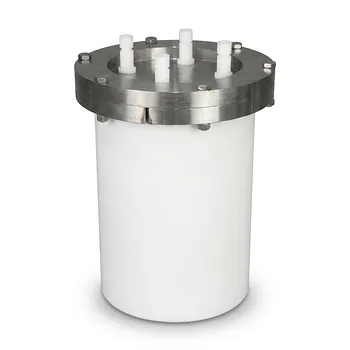
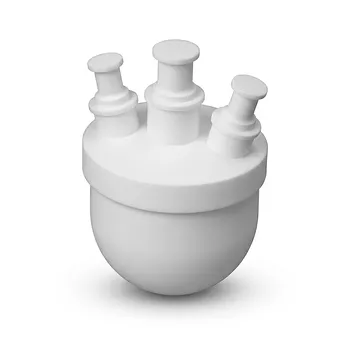
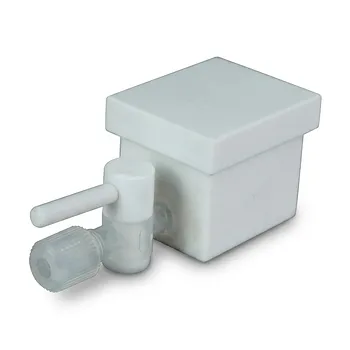
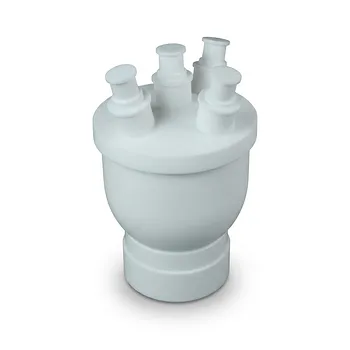
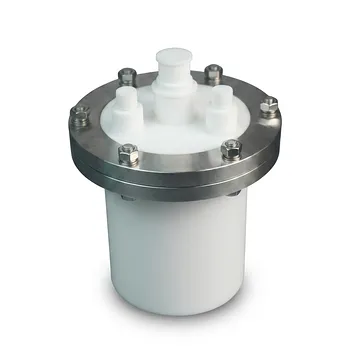
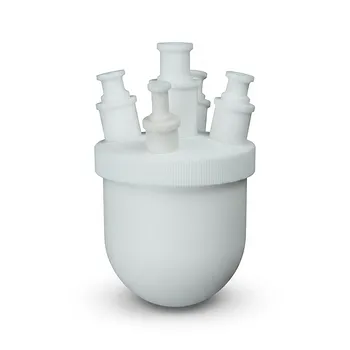
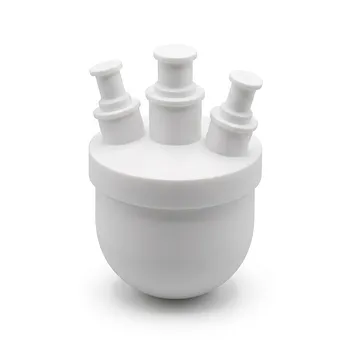
High-performance pressure-resistant reaction vessels are essential for oxygen-assisted hydrothermal conversion at 150 °C because they must simultaneously withstand extreme oxygen pressures of up to 6 MPa and highly corrosive acidic environments as low as pH 1. These vessels provide the structural integrity and airtight sealing required to maintain a constant oxygen concentration, which is the critical driver for transforming aliphatic compounds into stable aromatic structures during the humification process.
Core Takeaway: To achieve efficient hydrothermal conversion, a reaction vessel must serve as a fortified micro-environment that prevents gas leakage and structural failure under the combined stress of high-pressure oxidation and intense acidity.
Managing Extreme Chemical and Physical Stress
Resisting Oxidative and Acidic Attack
The conversion process often operates at a pH as low as 1, creating a liquid medium that is aggressively corrosive to standard materials. High-performance vessels utilize specialized liners, typically made of PTFE (polytetrafluoroethylene) or PFA, which possess the chemical inertness necessary to resist both the acidic media and the highly oxidative oxygen atmosphere.
Sustaining High Internal Pressures
At 150 °C, the introduction of oxygen can drive internal pressures to 6 MPa, far exceeding standard atmospheric conditions. The outer pressure-resistant shell must maintain absolute structural integrity to safely contain these forces, while the sealing mechanism ensures the vessel remains airtight throughout the duration of the reaction.
Protecting the Structural Outer Shell
The internal liner acts as a critical barrier that prevents the reaction liquid from coming into direct contact with the stainless steel reactor body. Without this isolation, the combination of high temperature, pressure, and acidity would lead to rapid corrosion of the metal shell, risking catastrophic vessel failure and experimental contamination.
Critical Process Control and Product Quality
Maintaining Oxygen Concentration for Chemical Transformation
The success of oxygen-assisted humification depends on a constant oxygen concentration to promote the shift from aliphatic to stable aromatic structures. High-performance sealing capabilities prevent oxygen from escaping, ensuring that the stoichiometric requirements for the chemical transformation are met consistently throughout the heating cycle.
Preventing Metal Ion Contamination
In hydrothermal synthesis, maintaining high chemical purity is paramount. By using chemically inert liners like PTFE, the system prevents the leaching of metal ions from the vessel walls into the sample, which is vital for applications requiring high-purity crystalline products or specific fluorescence properties.
Facilitating Product Recovery and Cleaning
The non-stick properties of high-performance liners (like PFA or PTFE) are not just a convenience; they influence morphological control. A smooth, non-reactive surface allows for the complete recovery of synthesized crystals and ensures the liner can be thoroughly cleaned, preventing cross-contamination between experimental batches.
Understanding the Trade-offs
Temperature and Material Limits
While PTFE liners are excellent for chemical resistance, they have physical limits regarding thermal stability and compressive strength. If the temperature exceeds their rated capacity (often around 180°C to 200°C for standard PTFE), the material may deform or "creep," compromising the seal and potentially leading to pressure leaks.
Pressure Monitoring vs. Passive Containment
Standard pressure vessels offer passive containment, but oxygen-assisted processes carry risks of exothermic runaway. Relying solely on the vessel's pressure rating without active monitoring or safety rupture discs can be dangerous, as the transformation of organic matter in an oxygen-rich environment can cause sudden, sharp increases in internal pressure beyond the initial 6 MPa.
How to Apply This to Your Project
When selecting or operating a vessel for hydrothermal conversion, align your choice with the specific stressors of your reaction.
- If your primary focus is maximizing aromatic yield: Ensure the vessel's sealing mechanism is rated for gas-phase oxygen at high pressures to maintain the necessary oxidative atmosphere.
- If your primary focus is sample purity and morphology: Prioritize high-purity PTFE or PFA liners to eliminate metal ion leaching and facilitate easy product recovery.
- If your primary focus is safety during high-acid reactions: Regularly inspect the internal liners for signs of thinning or pitting and ensure the outer stainless steel shell shows no signs of stress corrosion cracking.
The integrity of your reaction vessel is the only factor standing between a controlled chemical transformation and a hazardous laboratory incident.
Summary Table:
| Feature | Challenge at 150°C / 6 MPa | Requirement for Success |
|---|---|---|
| Pressure Resistance | Internal pressure reaches 6 MPa | Robust outer shell and airtight sealing mechanism |
| Chemical Stability | Highly corrosive acidic media (pH 1) | Chemically inert PTFE or PFA internal liners |
| Atmosphere Control | Maintaining constant oxygen levels | High-performance gas-tight seals to prevent leaks |
| Sample Purity | Metal ion leaching from vessel walls | Non-reactive fluoropolymer barriers for high purity |
| Cleaning & Recovery | Material buildup/cross-contamination | Non-stick surfaces for total product recovery |
Secure Your High-Pressure Experiments with KINTEK
Elevate your laboratory's safety and precision with KINTEK’s specialized fluoropolymer solutions. From everyday basic labware like beakers, measuring cylinders, and reagent bottles to advanced fluid transfer components including tubing, valves, and fittings, we provide everything needed for extreme chemical environments.
Whether you require high-purity trace analysis instruments, sample prep tools like filters and pipettes, or complex reaction apparatus such as hydrothermal synthesis liners, electrochemical cells, and microwave digestion vessels, our products are crafted with an exclusive focus on high-performance PTFE and PFA.
Backed by end-to-end custom CNC fabrication, we deliver everything from high-volume standard consumables to bespoke, non-standard machined parts tailored to your specific pressure and temperature requirements. Don’t compromise on experiment integrity—contact our experts today to discuss your custom project!
References
- Meiying Xu, Fangming Jin. Oxygen-promoted low-temperature hydrothermal conversion of Chinese medicinal herbal residues into humic acids. DOI: 10.1007/s43979-025-00127-w
This article is also based on technical information from Kintek Knowledge Base .
Related Products
- Custom TFM Reaction Vessel with Stainless Steel Jacket and PTFE Inner Cup for High Corrosion Resistance
- High Performance Customizable PTFE Reaction Vessel and Corrosion Resistant Polytetrafluoroethylene Flask for Chemical Laboratory Use
- High Pressure Custom TFM Reactor Stainless Steel Outer Vessel PTFE Inner Cup for Corrosive Synthesis
- High Purity PTFE Corrosion Resistant Reaction Vessel with Luer Fittings and Caps for Trace Analysis
- Large Corrosion Resistant PTFE Reaction Tank Integrated Digestion Barrel Leak Proof Vessel
People Also Ask
- Why are PTFE-lined reaction vessels necessary for forced degradation studies? Ensure high-purity results and accuracy.
- Why are high-quality fluoropolymer-lined reaction vessels required for alk-Ti3C2Tx MXene? Ensure Purity & HF Resistance
- How do magnetic stirring and reaction vessels impact MOF-derived carbon quality? Optimize Your Composite Performance
- Why is a high-purity PTFE lined reaction vessel required for the acidic etching of MXenes? Ensure Material Purity.
- What are the benefits of using PTFE-lined reaction vessels for C4F7N? Ensure Accurate Stability Data & High Gas Purity