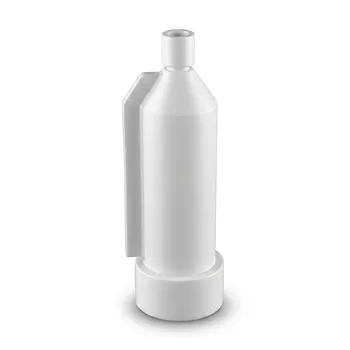
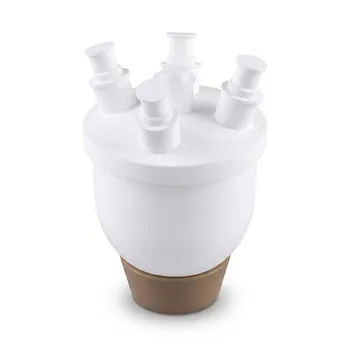
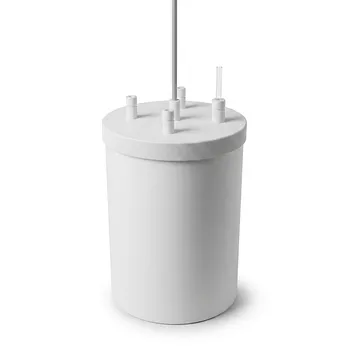
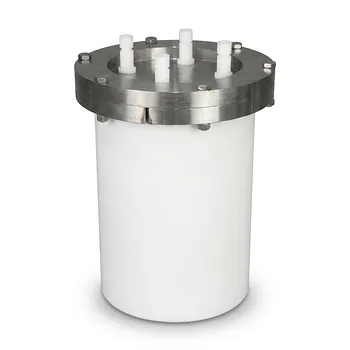
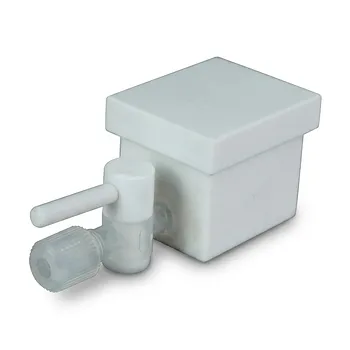
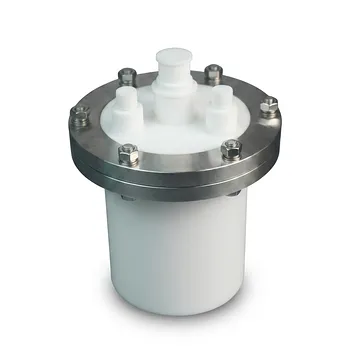
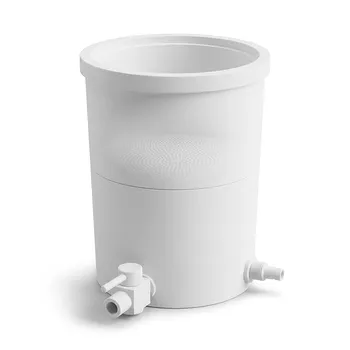
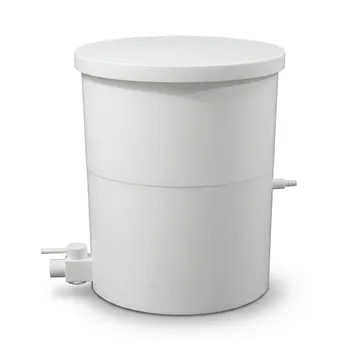
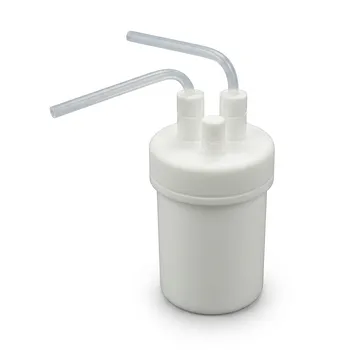
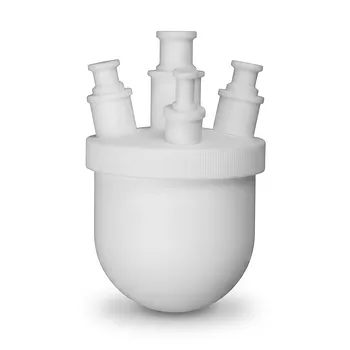
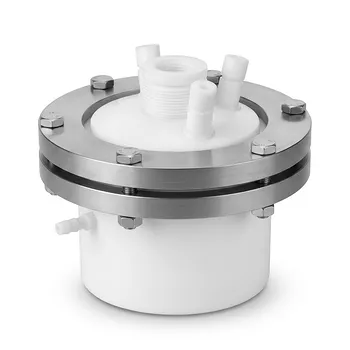
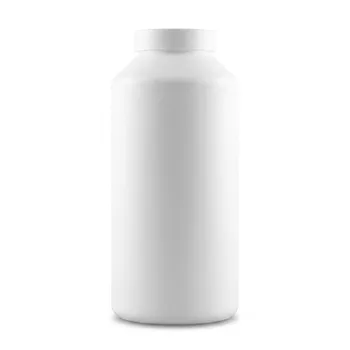
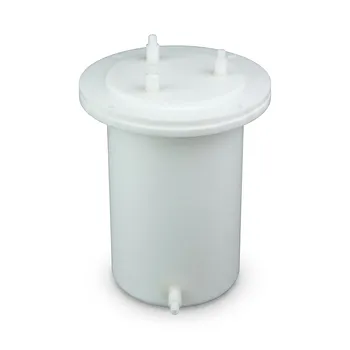
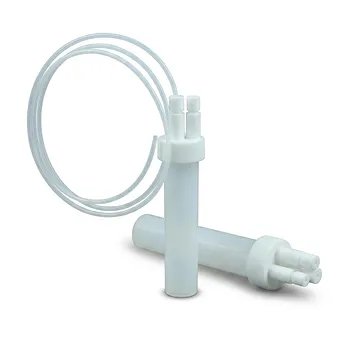
The integrity of forced degradation studies hinges entirely on the chemical inertness of the reaction environment. PTFE-lined vessels and high-stability fluoropolymer containers are necessary because they withstand extreme thermal and chemical stressors without leaching contaminants or adsorbing drug products. This ensures that any observed degradation is purely a result of the experimental conditions, allowing for the accurate identification and characterization of a drug's stability profile.
High-stability fluoropolymers like PTFE and PFA provide a "chemically silent" background necessary for isolating drug-specific degradation products. By eliminating material-induced contamination and sample loss through wall adsorption, these containers guarantee the precision of sensitive analytical data.
Protecting Sample Integrity in Extreme Environments
Resistance to Chemical Attack
Forced degradation involves exposing drug substances to strong acids, bases, and potent oxidizing agents. Standard glass or plastic containers can react with these reagents, potentially altering the chemical path of the study or introducing unintended artifacts.
Thermal Stability During Stress Testing
Researchers often use high temperatures to accelerate the degradation process and predict long-term shelf life. Fluoropolymers like PTFE maintain their structural and chemical integrity at these elevated temperatures, where other materials might soften, warp, or release volatile organic compounds.
Maintaining Controlled Reaction Conditions
By using chemically inert materials, scientists ensure that the reaction environment remains constant throughout the study. This control is vital for repeating experiments and verifying that the resulting degradation products are representative of the drug's true chemical vulnerabilities.
Preventing Analytical Interference and Contamination
Eliminating Trace Metal Leaching
Standard containers often leach impurities such as iron, nickel, sodium, or silicon into the sample solution. In high-sensitivity detection methods like HPLC or Ion Chromatography, these trace metals can interfere with signals or catalyze secondary reactions that obscure the primary data.
Mitigating Surface Adsorption
Low-concentration intermediates and organic degradation products can easily adsorb onto the walls of lower-quality containers. PTFE and PFA possess dense, non-stick surface structures that prevent the loss of these critical analytes, ensuring that the final analysis reflects the full degradation profile.
Ensuring Data Accuracy in Trace Analysis
For studies involving trace element analysis or electrochemical detection, even microscopic contamination can invalidate results. High-purity fluoropolymers provide the extremely low leaching rates required to maintain the concentration stability of digestion solutions and standard stocks.
Understanding the Trade-offs
Cost and Material Investment
High-purity fluoropolymers represent a significant financial investment compared to borosilicate glass or commodity plastics. However, the cost of a failed stability study or an incorrectly identified degradation product far outweighs the initial expense of specialized labware.
Physical Wear and Maintenance
While chemically resistant, PTFE is a "soft" plastic that can be prone to mechanical scratching if handled improperly. Scratches can create microscopic pits that house contaminants, necessitating rigorous cleaning protocols and periodic inspection of the vessel liners.
Selection of Specific Fluoropolymers
Not all fluoropolymers are identical; for instance, PFA is often preferred for trace metal work due to its superior surface smoothness and lower leaching compared to standard PTFE. Choosing the wrong grade of fluoropolymer for a specific analytical method can still lead to avoidable background noise.
How to Apply This to Your Project
When selecting a container for your forced degradation or trace analysis study, consider the specific analytical requirements of your drug substance.
- If your primary focus is trace metal analysis: Utilize high-purity PFA containers to minimize background leaching and ensure the stability of heavy metal ions.
- If your primary focus is high-temperature acid/base stress: Use PTFE-lined reaction vessels, as they provide the best balance of thermal resistance and chemical immunity.
- If your primary focus is preventing the loss of low-concentration analytes: Opt for fluoropolymers with the highest surface density to prevent adsorption of organic products onto the container walls.
The use of high-stability fluoropolymers is the industry standard for ensuring that the analytical data recovered is a true reflection of the drug substance rather than its environment.
Summary Table:
| Key Feature | Benefit to Study | Why it Matters |
|---|---|---|
| Chemical Inertness | Prevents reactions with acids/bases | Ensures observed degradation is purely drug-specific |
| Thermal Stability | Withstands high acceleration temps | Maintains vessel integrity under extreme stress |
| Zero Trace Leaching | No metal/silicon contamination | Eliminates interference in HPLC or Ion Chromatography |
| Non-stick Surface | Mitigates wall adsorption | Ensures full recovery of low-concentration analytes |
Elevate Your Research Integrity with KINTEK’s High-Performance Fluoropolymers
Don't let material-induced contamination or sample loss compromise your forced degradation studies. KINTEK provides the "chemically silent" environment your sensitive drug stability tests demand.
From everyday basic labware like beakers, measuring cylinders, and reagent bottles to high-purity PFA digestion tubes and specialized filtration tools, we offer a comprehensive range of solutions. Our expertise extends to advanced apparatus, including microwave digestion vessels, electrochemical cells, and microchannel reactors, all crafted from premium PTFE and PFA.
Why Partner with KINTEK?
- End-to-End Customization: Our advanced CNC fabrication allows us to deliver everything from complex, non-standard machined parts to bespoke laboratory setups.
- Absolute Material Focus: We maintain an exclusive focus on high-performance fluoropolymers to guarantee unrivaled chemical resistance and low leaching rates.
- Scalable Solutions: Whether you need a single custom-engineered component or high-volume orders of general consumables (like O-rings, valves, and tubing), we deliver with precision.
Ensure your analytical data reflects the truth of your drug substance, not its container. Contact KINTEK today to discuss your project requirements!
References
- Jayshree Raut*, Sachin Kale, Kailash Biyani. A Review on Development and Validation of RP-HPLC Method for Dapagliflozin and Bisoprolol in Bulk and Pharmaceutical Dosage Form. DOI: 10.5281/zenodo.17857457
This article is also based on technical information from Kintek Knowledge Base .
Related Products
- Custom TFM Reaction Vessel with Stainless Steel Jacket and PTFE Inner Cup for High Corrosion Resistance
- PTFE Lined High Pressure Digestion Vessel 50ml High Temperature Hydrothermal Synthesis Tank
- High Purity PTFE Corrosion Resistant Reaction Vessel with Luer Fittings and Caps for Trace Analysis
- High Performance Customizable PTFE Reaction Vessel and Corrosion Resistant Polytetrafluoroethylene Flask for Chemical Laboratory Use
- High Purity PTFE Reaction Vessel Polyfluortetraethylene Cylindrical Tank Petrochemical Reaction Container
People Also Ask
- Why are high-performance pressure-resistant reaction vessels required for oxygen-assisted hydrothermal conversion at 150 °C?
- How do magnetic stirring and reaction vessels impact MOF-derived carbon quality? Optimize Your Composite Performance
- Why are high-quality fluoropolymer-lined reaction vessels required for alk-Ti3C2Tx MXene? Ensure Purity & HF Resistance
- Why is a high-purity PTFE lined reaction vessel required for the acidic etching of MXenes? Ensure Material Purity.
- Why are PTFE-lined reaction vessels necessary for alkali stability tests? Ensure accurate ionomer degradation data.