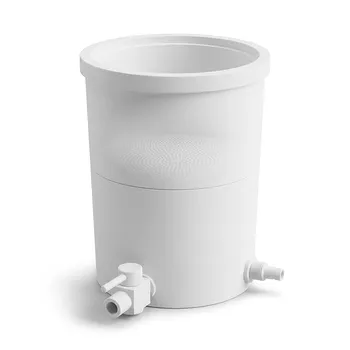
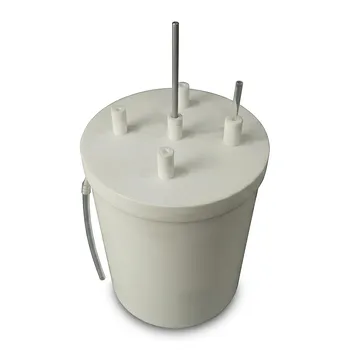
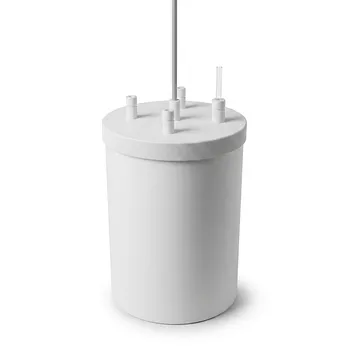
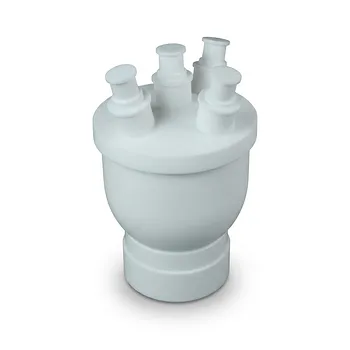
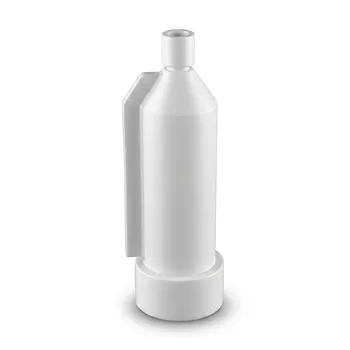
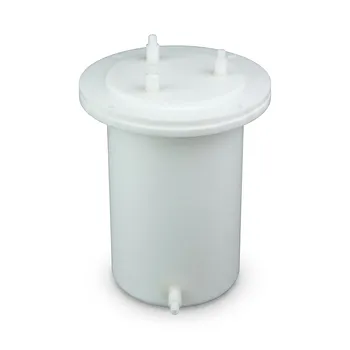
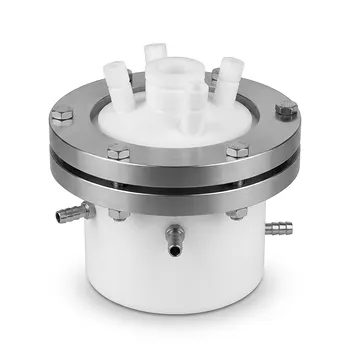
The necessity of high-purity PTFE (polytetrafluoroethylene) in KIT-5 synthesis stems from the extreme acidity of the precursor solution. KIT-5 requires high concentrations of hydrochloric acid (HCl), which would aggressively corrode standard metal reactors at the required 150°C hydrothermal temperature. The PTFE liner acts as a chemically inert barrier that prevents hardware degradation and, crucially, stops metal ions from leaching into and contaminating the delicate mesoporous silica framework.
Core Takeaway: High-purity PTFE is the industry standard for KIT-5 synthesis because it provides a "clean-room" environment within a high-pressure vessel. It simultaneously protects the stainless steel autoclave from acid-induced failure and ensures the final silica product maintains its structural integrity without metallic contamination.
Protection Against Extreme Chemical Corrosion
Neutralizing the Impact of Concentrated HCl
The synthesis of KIT-5 involves a precursor environment saturated with hydrochloric acid. This acidity is necessary for the proper assembly of the silica structure but is devastating to metallic surfaces.
Preserving the Structural Integrity of the Autoclave
Without a liner, the metal walls of the hydrothermal reactor would undergo rapid pitting and oxidation. PTFE serves as a sacrificial yet resilient barrier that isolates the corrosive fluid from the structural outer shell.
Extending Equipment Lifespan
By preventing direct contact between the acid and the stainless steel body, the PTFE liner significantly extends the operational life of the pressure vessel. This reduces the risk of catastrophic failure under high-pressure conditions.
Ensuring Material Purity and Framework Quality
Preventing Metal Ion Leaching
At temperatures reaching 150°C, even high-grade stainless steel can release trace metal ions into the solution. These ions can incorporate themselves into the mesoporous silica, altering its chemical and physical properties.
Maintaining Chemical Inertness
High-purity PTFE is chosen for its chemical inertia, meaning it does not react with the silica precursors or the acid catalyst. This ensures that the synthesized KIT-5 is a chemically pure representation of the intended mesoporous model.
Facilitating Clean Material Recovery
The excellent mold-release properties of PTFE allow researchers to easily collect the synthesized nanopowders. This prevents the loss of material and ensures the sample is not contaminated by residue from previous synthesis cycles.
Understanding the Trade-offs
Temperature and Pressure Limitations
While PTFE is highly stable, it has a functional upper limit, typically around 220°C to 250°C. Exceeding these temperatures can cause the liner to soften, deform, or release toxic fluorinated vapors.
Poor Thermal Conductivity
PTFE acts as an insulator, which means the internal reaction temperature may lag behind the temperature of the oven or heating mantle. This requires precise calibration of the hydrothermal dwell time to ensure the reaction reaches the target 150°C.
Physical Deformation (Cold Flow)
Under repeated high-pressure cycles, PTFE can experience "creep" or mechanical deformation. Liners must be inspected regularly for thinning or warping to prevent the corrosive precursor from leaking behind the liner and reaching the metal shell.
Making the Right Choice for Your Goal
- If your primary focus is material purity: Always use high-purity, virgin PTFE liners to eliminate the risk of cross-contamination from recycled materials or trace metallic leachates.
- If your primary focus is equipment safety: Ensure the PTFE liner is properly fitted with a gasket and check for structural integrity after every synthesis involving concentrated HCl to prevent "weeping" onto the autoclave walls.
- If your primary focus is reaction scalability: Consider the thermal lag caused by the PTFE's insulation and adjust your heating ramp rates to ensure uniform crystallization of the KIT-5 framework.
By prioritizing the use of high-purity PTFE, you ensure that the hydrothermal synthesis of KIT-5 remains a controlled, safe, and highly reproducible process.
Summary Table:
| Key Feature | Benefit for KIT-5 Synthesis | Impact on Research |
|---|---|---|
| Acid Resistance | Neutralizes concentrated Hydrochloric Acid (HCl) | Prevents autoclave corrosion and failure |
| High Purity | Eliminates trace metal ion leaching | Ensures structural integrity of silica framework |
| Chemical Inertness | No reaction with precursors or catalysts | Guarantees chemically pure material recovery |
| Non-Stick Surface | Excellent mold-release properties | Facilitates easy collection of nanopowders |
| Temperature Stability | Reliable performance up to 220°C-250°C | Safely handles standard hydrothermal cycles |
Elevate Your Research with KINTEK’s High-Performance Fluoropolymers
Precision in KIT-5 synthesis demands materials that never compromise. KINTEK specializes in high-performance PTFE and PFA solutions designed for the most demanding laboratory environments. From everyday basic labware like beakers, crucibles, and reagent bottles to advanced hydrothermal synthesis liners, microwave digestion vessels, and custom electrochemical cells, we ensure your experiments remain free from metallic contamination.
Our expertise extends to comprehensive fluid transfer components (tubing, valves, fittings) and sample prep tools (filters, pipettes, tweezers), all backed by end-to-end custom CNC fabrication. Whether you need high-volume consumables or a bespoke non-standard machined part, KINTEK delivers the chemical inertness and durability your high-purity trace analysis requires.
Ensure absolute purity in your next synthesis—contact KINTEK today for standard or custom laboratory supplies!
References
- Abdul Qudoos, Zeinab Abbas Jawad. Development of KIT-5 and amine-functionalized KIT-5 for CO<sub>2</sub> adsorption. DOI: 10.1088/1742-6596/3003/1/012046
This article is also based on technical information from Kintek Knowledge Base .
Related Products
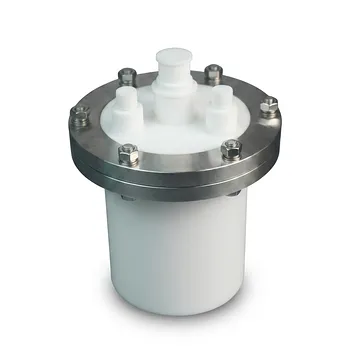
- Custom TFM Reaction Vessel with Stainless Steel Jacket and PTFE Inner Cup for High Corrosion Resistance
- High Purity TFM Microwave Digestion Vessels PTFE Acid Evaporation Liners Domestic GT-400 Equivalent Laboratory Reaction Containers
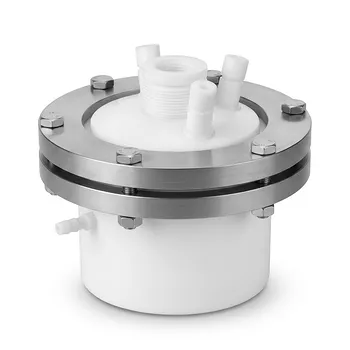
- High Pressure Custom TFM Reactor Stainless Steel Outer Vessel PTFE Inner Cup for Corrosive Synthesis
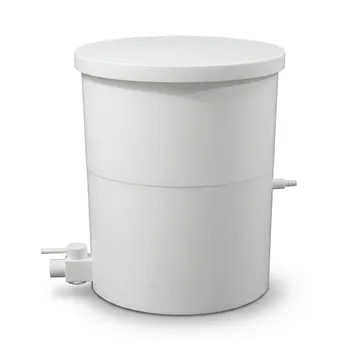
- Large Scale PTFE Double Layer Reaction Tank with Integrated Filter Plate for Chemical Processing
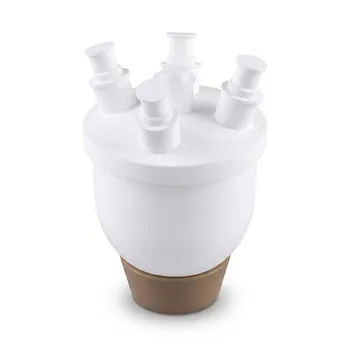
- PTFE 10L Reaction Vessel with Stirring Paddle Customizable Corrosion Resistant High Temperature Reactor for Biopharmaceutical and Chemical Processing
People Also Ask
- Why are high-performance pressure-resistant reaction vessels required for oxygen-assisted hydrothermal conversion at 150 °C?
- Why are high-quality fluoropolymer-lined reaction vessels required for alk-Ti3C2Tx MXene? Ensure Purity & HF Resistance
- How do magnetic stirring and reaction vessels impact MOF-derived carbon quality? Optimize Your Composite Performance
- Why are PTFE-lined reaction vessels necessary for forced degradation studies? Ensure high-purity results and accuracy.
- Why is a high-purity PTFE lined reaction vessel required for the acidic etching of MXenes? Ensure Material Purity.