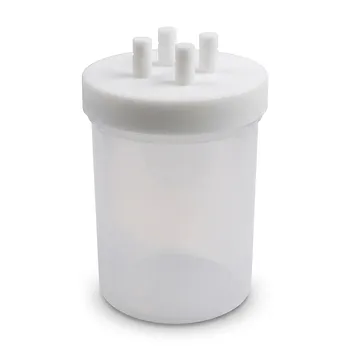
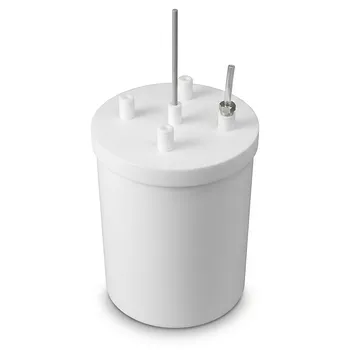
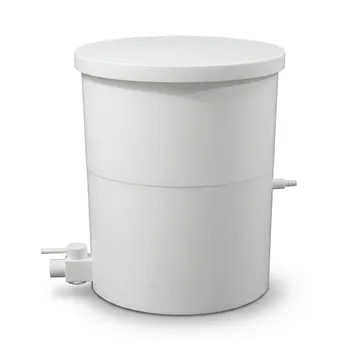
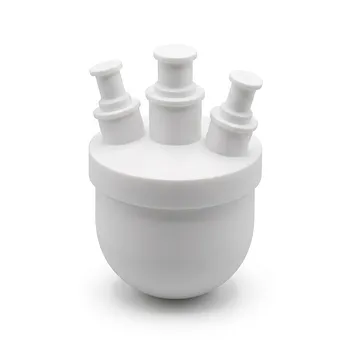
High-temperature and high-pressure reaction vessels serve as the essential closed-system environment required to transform amorphous silica into the structured Silicalite-1 framework. These vessels generate the autogenous pressure needed to facilitate the chemical condensation of silica sources around organic templates, typically at temperatures between 170°C and 180°C.
The primary function of these vessels is to create a stable, subcritical environment where autogenous pressure and heat force silica precursors to overcome energy barriers, ensuring the formation of a highly ordered MFI-type crystalline framework.
The Mechanics of Hydrothermal Synthesis
Generating Autogenous Pressure
In a sealed hydrothermal vessel, heating the liquid synthesis gel beyond its boiling point creates autogenous pressure. This internal pressure is critical because it maintains the solvent in a liquid or subcritical state, significantly increasing the solubility of silica precursors.
Facilitating Silica Condensation
High thermal energy provides the necessary kinetics for silica sources, such as TEOS, to undergo condensation. The vessel’s environment ensures that these chemical bonds form consistently, transforming the initial amorphous gel into a solid, structured lattice.
Maintaining Thermal Stability
Crystallization of Silicalite-1 typically requires a sustained temperature of approximately 175°C. The reaction vessel acts as a thermal buffer, ensuring the internal environment remains constant for the 24 to 48 hours required for full crystal growth.
The Role of Structure Direction and Phase Transformation
Influencing OSDA Interactions
Organic Structure-Directing Agents (OSDA), such as TPAOH, act as templates around which the silica framework assembles. The high-pressure environment facilitates the tight interaction between the OSDA and the silica species, ensuring the template is correctly "wrapped" by the inorganic framework.
Transitioning from Amorphous to Crystalline
Without the containment of a high-pressure vessel, the synthesis mixture would remain a disordered, amorphous gel. The vessel provides the physical constraints and energy required for directional alignment, resulting in a molecular sieve with precise pore structures.
Ensuring Phase Purity
By controlling the pressure-temperature (P-T) relationship, these vessels help prevent the formation of competing phases. This precision is vital for producing MFI-type zeolites with the specific electrochemical and catalytic properties required for industrial applications.
Understanding the Technical Trade-offs
Pressure Integrity vs. Safety
Operating at high temperatures creates significant internal stress on the vessel's lining and seals. Any failure in the sealing mechanism results in a loss of autogenous pressure, which immediately halts the crystallization process and leads to poor product quality.
Reaction Time vs. Crystal Quality
While higher temperatures can accelerate the process, they also increase the risk of over-crystallization or the formation of larger, less desirable crystal sizes. Balancing the residence time within the vessel is a critical trade-off between throughput and the specific surface area of the Silicalite-1.
Equipment Corrosion
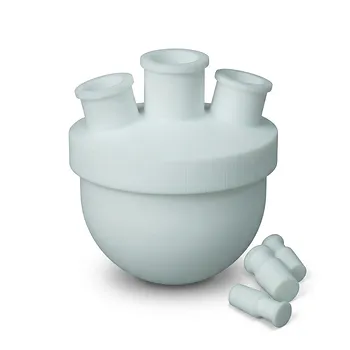
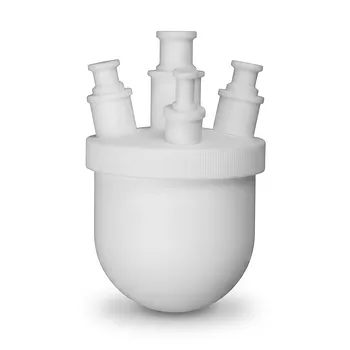
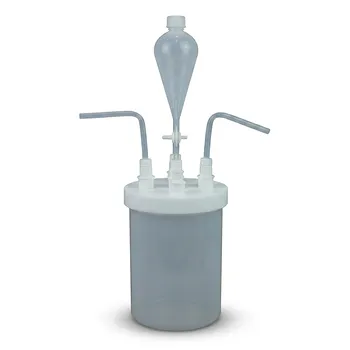
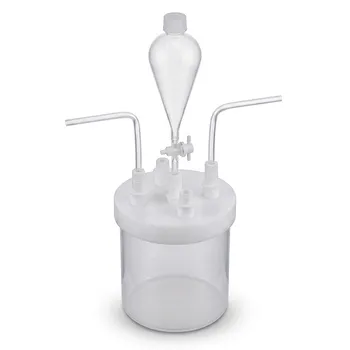
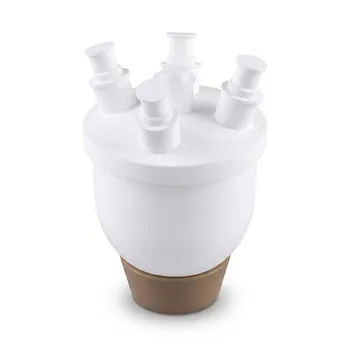
The use of alkaline templates like TPAOH at high temperatures can be corrosive to standard metallic vessels. This necessitates the use of PTFE (Teflon) liners, which protect the vessel but impose strict upper-temperature limits that must not be exceeded to avoid liner deformation.
How to Optimize Vessel Parameters for Your Project
To achieve the best results in Silicalite-1 synthesis, your approach to the reaction vessel should align with your specific material requirements:
- If your primary focus is high crystallinity and purity: Maintain a steady temperature of 175°C for a full 48-hour cycle to ensure complete transformation of the amorphous gel.
- If your primary focus is controlling crystal size: Utilize a vessel with precise digital temperature ramping to carefully manage the nucleation phase before the growth phase begins.
- If your primary focus is high-throughput production: Ensure the use of multi-vessel carousels that allow for uniform heat distribution across all reaction chambers simultaneously.
The reaction vessel is not merely a container, but a precision instrument that dictates the structural integrity and performance of the resulting Silicalite-1 zeolite.
Summary Table:
| Key Vessel Function | Impact on Silicalite-1 Synthesis | Technical Requirement |
|---|---|---|
| Autogenous Pressure | Increases silica solubility & maintains subcritical state | Secure sealing & pressure integrity |
| Thermal Buffering | Ensures consistent crystallization over 24-48 hours | Precise digital temperature control |
| Chemical Containment | Facilitates OSDA (TPAOH) and silica condensation | Corrosion-resistant PTFE/PFA liners |
| Phase Control | Prevents competing phases via P-T relationship management | High-performance fluoropolymer materials |
Elevate Your Synthesis Precision with KINTEK
Achieving the perfect Silicalite-1 framework requires more than just a recipe; it requires the highest standards of material integrity. At KINTEK, we specialize in high-performance fluoropolymer solutions designed for the most demanding hydrothermal environments.
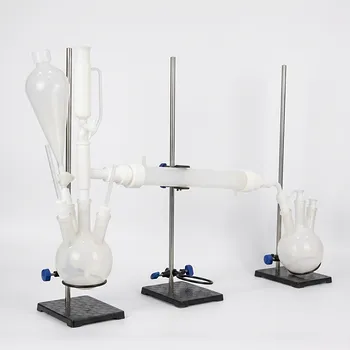
Whether you require custom PTFE liners for reaction vessels, high-purity PFA labware (bottles, beakers, and digestion tubes), or advanced microchannel reactors and electrochemical cells, our end-to-end custom CNC fabrication ensures every component meets your exact specifications. From everyday essentials like stirring bars and filtration tools to bespoke laboratory setups for battery testing and hydrothermal synthesis, KINTEK provides the absolute focus on quality your research deserves.
Ready to optimize your lab's performance? Contact our expert team today to discuss your custom fluoropolymer requirements!
References
- Joaquin Martínez-Ortigosa, Teresa Blasco. New insights into fluoride's role in MFI zeolites: unveiling the link between location and synthesis conditions. DOI: 10.1039/d4qi03001j
This article is also based on technical information from Kintek Knowledge Base .
Related Products
- PTFE Lined High Pressure Digestion Vessel 50ml High Temperature Hydrothermal Synthesis Tank
- High Temperature PTFE Reaction Flask 1000ml Single Neck Round and Flat Bottom Laboratory Bottle
- High Temperature Corrosion Resistant PTFE Reaction Flask Custom Multi Neck Laboratory Vessel with Flat or U Bottom
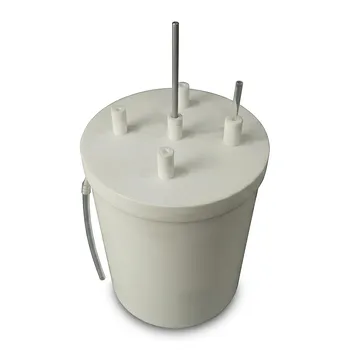
- Custom TFM Reaction Vessel with Stainless Steel Jacket and PTFE Inner Cup for High Corrosion Resistance
- PTFE 10L Reaction Vessel with Stirring Paddle Customizable Corrosion Resistant High Temperature Reactor for Biopharmaceutical and Chemical Processing
People Also Ask
- What are the benefits of using a PTFE-lined vessel for carbon-sulfur cathode treatment? Maximize Purity & Performance
- Why are PTFE-lined pressure digestion vessels required for the preparation of Ag/CeO2 catalysts? Purity & Performance
- What is the function of high-pressure PTFE digestion vessels in mineral analysis? Optimize Sample Mineralization
- What safety features are typically incorporated into high-pressure PTFE digestion vessel designs? Ensure Lab Safety
- What is the function of PTFE lined high-pressure vessels in g-C3N4 synthesis? Achieve High-Purity Material Growth