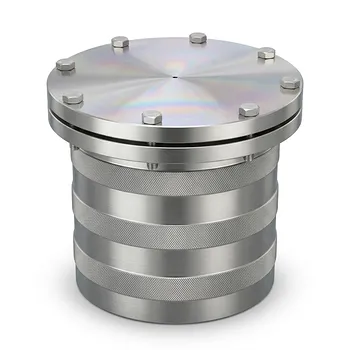
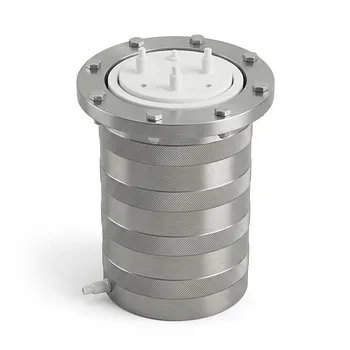
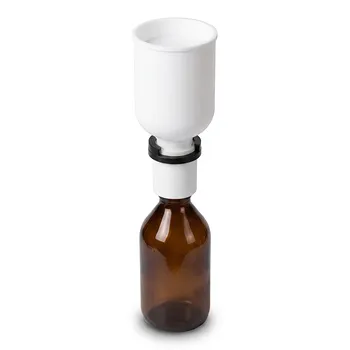
The hydrothermal synthesis of Nickel Sulfide nanosheets requires a PTFE-lined stainless steel autoclave to create a stable, high-pressure environment where precursors can react without degrading the vessel or contaminating the final product. This specific equipment setup allows chemical precursors like nickel chloride and thiourea to react at temperatures significantly exceeding the normal boiling point of water. The combination of the stainless steel's structural strength and the PTFE’s chemical inertness is vital for producing high-purity, two-dimensional nanostructures.
The PTFE-lined autoclave is essential because it provides the mechanical strength to withstand extreme hydrothermal pressures while offering a chemically inert barrier that prevents corrosive precursors from leaching metal impurities into the Nickel Sulfide nanosheets.
Facilitating High-Energy Chemical Reactions
Overcoming Boiling Point Limitations
Hydrothermal synthesis relies on water acting as a solvent at temperatures well above 100°C. The sealed stainless steel autoclave prevents water from evaporating, creating a high-pressure environment that keeps the solvent in a liquid state.
Driving Precursor Decomposition
Elevated temperatures and pressures are necessary to decompose precursors like thiourea to release active sulfur species. This high-energy state facilitates reactions that are otherwise impossible at room temperature or in open-air systems.
The Critical Role of the PTFE Liner
Ensuring Product Purity
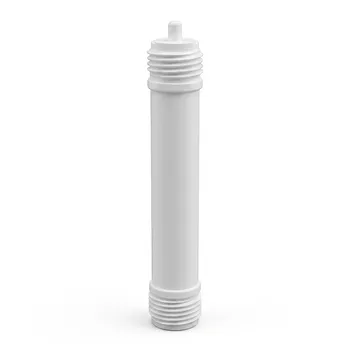
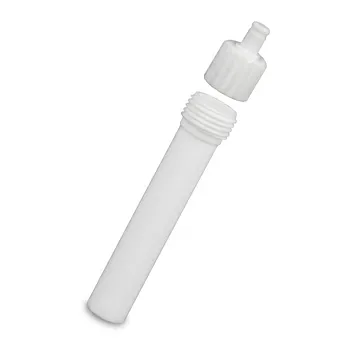
Nickel Sulfide nanosheets are highly sensitive to their chemical environment during growth. The PTFE (polytetrafluoroethylene) liner is exceptionally inert, ensuring that no stray metal ions from the autoclave walls enter the reaction solution.
Preventing Vessel Corrosion
The precursors used in this synthesis, such as nickel chloride, can be highly corrosive to metals at high temperatures. The PTFE liner acts as a protective shield, preventing the acidic or alkaline reaction media from eroding the stainless steel external shell.
Controlling Nanosheet Morphology
Facilitating Uniform Crystal Growth
The stable, pressurized environment inside the liner allows for the precise control of crystal growth kinetics. This ensures that the nickel sulfide grows uniformly into two-dimensional nanostructures with specific crystal facets.
Maximizing Surface Area
By maintaining consistent thermal conditions, the autoclave enables the formation of nanosheets with a high specific surface area. This morphology is critical for the material’s performance in applications like electrocatalysis or energy storage.
Understanding the Trade-offs and Limitations
Thermal Constraints of PTFE
While PTFE is chemically resilient, it has a functional temperature limit, typically around 200°C to 240°C. Exceeding these temperatures can cause the liner to soften or deform, compromising the seal and potentially releasing toxic fumes.
Pressure Management Risks
Because the autoclave is a sealed pressure vessel, internal pressure scales rapidly with temperature. Operators must strictly adhere to filling degree limits (usually 60-80% of volume) to prevent catastrophic failure or "explosive" decompression.
Making the Right Choice for Your Goal
How to Apply This to Your Project
- If your primary focus is maximum purity: Always inspect the PTFE liner for any signs of discoloration or pitting before use, as trapped contaminants from previous experiments can leach into your new sample.
- If your primary focus is structural uniformity: Ensure the autoclave is heated slowly to the target temperature to allow for the steady nucleation and growth of the nanosheets.
- If your primary focus is safety and longevity: Never exceed the rated temperature of the PTFE liner, and ensure the stainless steel threads are lubricated to prevent seizing under high-pressure conditions.
The strategic use of a PTFE-lined autoclave transforms a standard chemical reaction into a precision engineering process for high-performance nanomaterials.
Summary Table:
| Component/Feature | Role in NiS Nanosheet Synthesis | Key Benefit |
|---|---|---|
| Stainless Steel Shell | Provides structural integrity under high heat | Withstands extreme hydrothermal pressures |
| PTFE Liner | Acts as a chemically inert barrier | Prevents metal contamination & vessel corrosion |
| Sealed Pressure Vessel | Maintains solvent in liquid state >100°C | Enables high-energy precursor decomposition |
| Thermal Stability | Maintains consistent reaction kinetics | Ensures uniform 2D nanosheet morphology |
Elevate Your Synthesis Precision with KINTEK Fluoropolymer Solutions
Achieving high-purity Nickel Sulfide nanosheets requires equipment that can withstand aggressive chemistry without compromising results. KINTEK specializes in high-performance laboratory supplies crafted exclusively from PTFE and PFA, ensuring your research remains free from contamination.
From everyday essentials like beakers, crucibles, and reagent bottles to specialized hydrothermal synthesis liners, microwave digestion vessels, and custom electrochemical cells, we provide the tools you need for advanced material science. Whether you require standard labware or bespoke, non-standard machined parts via our end-to-end custom CNC fabrication, KINTEK is your partner for high-volume orders and complex laboratory setups.
Ready to optimize your lab’s performance? Contact our experts today to discuss your custom requirements and discover how our fluoropolymer expertise can drive your next breakthrough!
References
- B. Mondal. Onepot hydrothermal synthesis of nickel sulphide nanoflakes. DOI: 10.33545/26648636.2025.v7.i2d.171
This article is also based on technical information from Kintek Knowledge Base .
Related Products
- Custom TFM Reaction Vessel with Stainless Steel Jacket and PTFE Inner Cup for High Corrosion Resistance
- PTFE Lined High Pressure Digestion Vessel 50ml High Temperature Hydrothermal Synthesis Tank
- High Pressure Custom TFM Reactor Stainless Steel Outer Vessel PTFE Inner Cup for Corrosive Synthesis
- High Purity PTFE Microwave Digestion Vessel for Soil and Food Analysis Acid Resistant Fluoropolymer Sample Preparation Liners
- High Purity PTFE Microwave Digestion Vessel Replacement Liner for Acid Sample Preparation and Trace Analysis
People Also Ask
- Why are high-performance pressure-resistant reaction vessels required for oxygen-assisted hydrothermal conversion at 150 °C?
- How do magnetic stirring and reaction vessels impact MOF-derived carbon quality? Optimize Your Composite Performance
- Why are PTFE-lined reaction vessels necessary for forced degradation studies? Ensure high-purity results and accuracy.
- Why are PTFE-lined reaction vessels necessary for alkali stability tests? Ensure accurate ionomer degradation data.
- Why is a PTFE-lined reactor required for Mn2O3 synthesis? Achieve High Purity & Corrosion Resistance