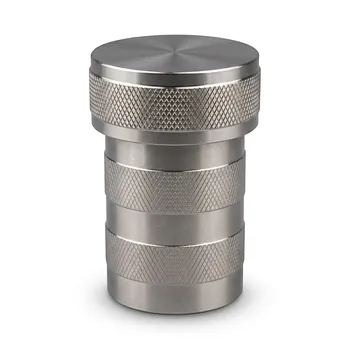
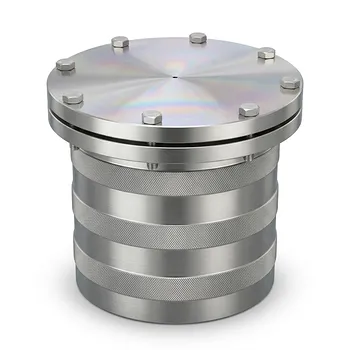
The hydrothermal synthesis of Faujasite Zeolite requires a high-pressure autoclave to create a stable, subcritical environment where solvents remain liquid above their boiling point. At a target temperature of 120°C, the resulting autogenous pressure accelerates the dissolution of aluminosilicate precursors and maintains the supersaturation necessary for ordered nucleation. This specific physical environment is the only way to ensure the formation of the Faujasite-Y structure with a precise Si/Al ratio.
Core Takeaway: A high-pressure autoclave provides the thermodynamic and kinetic conditions required to dissolve stable precursors and transform them into ordered zeolite crystals while preventing contamination and solvent loss.
The Role of Autogenous Pressure in Phase Control
Accelerating Dissolution and Re-precipitation
In the synthesis of Faujasite, the raw aluminosilicate precursors are often highly stable and difficult to break down. The high-pressure environment inside the autoclave significantly increases the solubility of these solid reactants, allowing them to dissolve into the synthesis gel. Once dissolved, these components can re-precipitate into the desired crystalline framework more efficiently than at atmospheric pressure.
Maintaining Supersaturation and Nucleation
For a regular crystal structure like Faujasite to form, the reaction system must maintain a state of supersaturation. The sealed autoclave prevents the evaporation of water or other solvents, ensuring that the concentration of reactants remains constant and high. This stability induces ordered nucleation, where the first "seeds" of the crystal form in a controlled, predictable manner.
Enabling High-Temperature Liquid Reactions
Standard laboratory glassware cannot heat water-based synthesis gels to 120°C without the liquid boiling away. The autoclave’s sealed design allows the internal pressure to rise as the temperature increases, keeping the solvent in a liquid state well above its atmospheric boiling point. This "subcritical" water acts as a much more aggressive solvent, which is vital for the solid-phase reaction kinetics required for zeolites.
Material Integrity and Purity Management
Chemical Inertness through PTFE Liners
Faujasite synthesis typically involves strong alkaline environments, such as high concentrations of Sodium Hydroxide (NaOH). A high-pressure autoclave is almost always equipped with a Polytetrafluoroethylene (PTFE) or PFA liner to resist corrosion. This liner is critical because it prevents the alkaline gel from reacting with the metal walls of the reactor.
Preventing Metal Ion Contamination
If the synthesis gel were to contact the stainless steel walls of the autoclave, metal ions like iron or chromium could leach into the mixture. These impurities can disrupt the Si/Al ratio or become embedded in the zeolite framework, ruining the material's catalytic properties. The combination of a sealed environment and an inert liner ensures the high purity of the final Faujasite-Y structure.
Structural Strength and Safety
The outer shell of the autoclave, usually made of stainless steel, provides the mechanical strength necessary to contain the internal pressure safely. Without this reinforced exterior, the "autogenous" pressure generated at 120°C would cause the vessel to fail. This structural integrity allows for the long "aging" or crystallization times often required for zeolite growth.
Understanding the Trade-offs
While high-pressure autoclaves are essential, they come with specific limitations. Thermal lag is a common issue, as the thick stainless steel walls take time to heat up and cool down, which can make precise timing of the crystallization phase difficult.
Additionally, PTFE liners have a maximum temperature threshold (typically around 200°C–250°C) and can deform under extreme pressure or rapid cooling. Overloading an autoclave beyond its recommended volume capacity is a significant safety risk, as it leaves insufficient "headspace" for gas expansion, potentially leading to a catastrophic pressure release.
How to Apply This to Your Project
Recommendations for Synthesis Success
- If your primary focus is crystal purity: Ensure you use a high-quality PTFE liner that is free of scratches or previous residue to prevent metal leaching.
- If your primary focus is rapid production: Optimize the temperature to the highest safe limit of your liner (e.g., 180°C) to accelerate the dissolution-recrystallization kinetics.
- If your primary focus is specific Si/Al ratios: Maintain a strictly sealed environment to prevent solvent loss, as even a minor leak will change the concentration of the gel and alter the final framework.
By mastering the balance of pressure, temperature, and chemical containment, you can reliably produce high-quality Faujasite Zeolite with the exact structural characteristics required for your application.
Summary Table:
| Requirement | Role in Synthesis | Key Benefit |
|---|---|---|
| Subcritical Water | Maintains liquid state at 120°C+ | Accelerates precursor dissolution |
| Autogenous Pressure | Prevents solvent evaporation | Ensures supersaturation for nucleation |
| PTFE/PFA Liners | Provides chemical inertness | Prevents metal ion contamination |
| Mechanical Shell | High structural integrity | Safely contains internal pressure during aging |
Master Your Material Synthesis with KINTEK Fluoropolymer Expertise
Achieving the perfect Faujasite-Y structure demands equipment that handles extreme alkalinity and pressure without compromise. KINTEK provides an exhaustive range of laboratory solutions crafted from high-performance PTFE and PFA.
From everyday basic labware (beakers, reagent bottles, and digestion tubes) and fluid transfer components (tubing, fittings, and valves) to advanced reaction apparatus like hydrothermal synthesis liners, microwave digestion vessels, and custom-machined electrochemical cells—we have it all. Backed by end-to-end custom CNC fabrication, KINTEK is equipped to deliver everything from high-volume orders to bespoke laboratory setups designed for your unique research.
Contact KINTEK today to discuss your project requirements!
References
- F. O. Oshomogho, Osariemen Edokpayi. Dye Sorption from Textile Wastewater onto Faujasite Zeolite Synthesized from Bauxite Sediment and Rice Husk Silica. DOI: 10.62277/mjrd2025v6i30012
This article is also based on technical information from Kintek Knowledge Base .
Related Products
- High Temperature Corrosion Resistant Hydrothermal Synthesis Reactor with TFM Inner Liner and Straight Cylinder Design
- PTFE Lined High Pressure Digestion Vessel 50ml High Temperature Hydrothermal Synthesis Tank
- Custom TFM Reaction Vessel with Stainless Steel Jacket and PTFE Inner Cup for High Corrosion Resistance
- High Pressure Custom TFM Reactor Stainless Steel Outer Vessel PTFE Inner Cup for Corrosive Synthesis
- High Purity PFA Reaction Vessel for Biopharmaceutical Synthesis and Corrosive Chemical Fluid Handling with Customizable Tube Fittings
People Also Ask
- What is the role of a corrosion-resistant reactor in the synthesis of lignin-based carbon dots? Ensure Maximum Purity
- What are the technical advantages of using hydrothermal synthesis reactors for advanced electronic & optical nanomaterials?
- How does a hydrothermal synthesis reactor facilitate the production of crystalline materials with tailored morphologies? Precision Crystal Growth
- Why is the sealing reliability of a hydrothermal synthesis reactor critical for 24-hour cycles? Ensure Nano-Precision
- What role do hydrothermal synthesis reactors play in CQD preparation? Achieve High-Purity Nanomaterial Synthesis