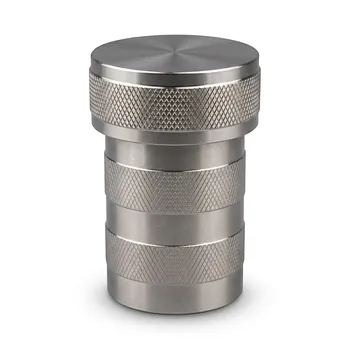
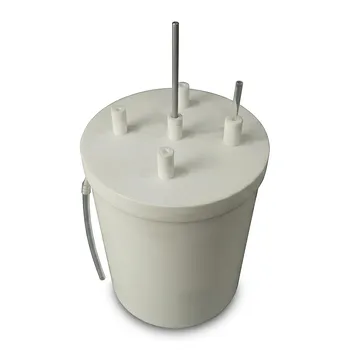
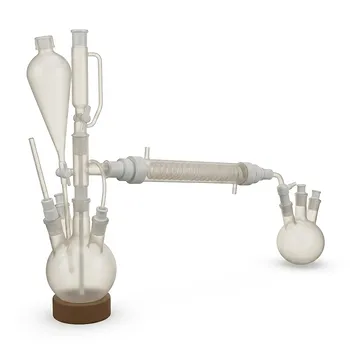
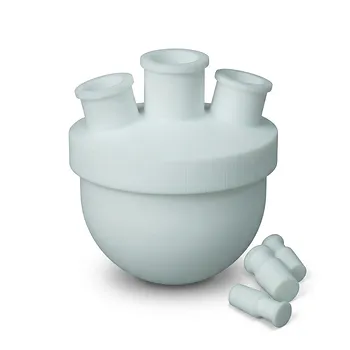
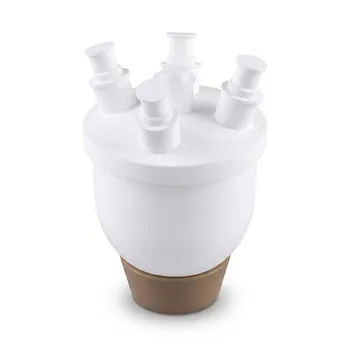
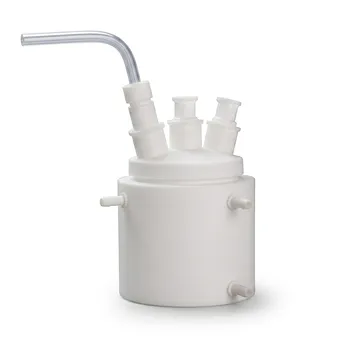
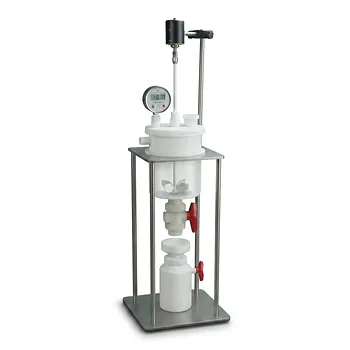
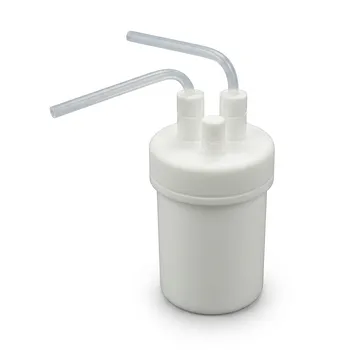
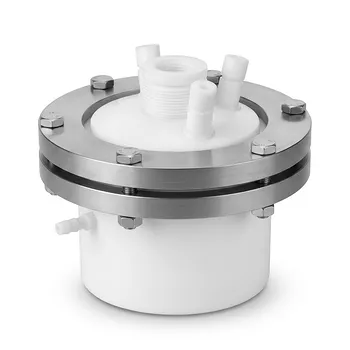
High-pressure hydrothermal synthesis reactors and corrosion-resistant liners provide the controlled, high-energy environment necessary to facilitate the chemical transformation of molybdenum and sulfur precursors into low-crystallinity MoOxSy. These components ensure that reactants like ammonium molybdate and thiourea react fully under subcritical conditions while preventing the introduction of metallic impurities that would compromise the material’s specific oxidation states.
Core Takeaway: The reactor and its liner work in tandem to maintain a sealed, high-pressure liquid phase that drives precursor dissolution and recombination. This specific environment is what allows for the formation of layered nanomaterials characterized by rich sulfur defects and varied molybdenum oxidation states.
The Role of the High-Pressure Reactor
Creating Subcritical Conditions
The reactor provides a sealed environment that allows the temperature to rise above the boiling point of water at atmospheric pressure. This creates a high-pressure liquid phase, often referred to as subcritical or near-supercritical fluids, which significantly increases the solubility and reactivity of the precursors.
Facilitating Complete Precursor Reaction
By maintaining conditions such as 150°C to 200°C for extended periods (e.g., 20 hours), the reactor ensures that molybdenum sources (like ammonium molybdate) and sulfur sources (like thiourea) react fully. This thorough reaction is essential for achieving the complex stoichiometry required for oxysulfides rather than simple oxides or sulfides.
Inducing Sulfur Defects and Layered Structures
The uniform pressure within the reactor promotes the formation of layered nanomaterials. In the specific case of MoOxSy, this process is tuned to prevent perfect crystal growth, instead inducing sulfur defects and preserving various molybdenum oxidation states that are critical for the material's functional performance.
The Necessity of Corrosion-Resistant Liners
Protecting Chemical Purity
Liners, typically made from Polytetrafluoroethylene (PTFE) or Para-polyphenylene (PPL), act as an inert barrier between the reaction solution and the metal autoclave shell. This prevents metal ions from the reactor walls from leaching into the precursor solution and contaminating the molybdenum oxysulfide.
Resistance to Aggressive Precursors
The synthesis of metal sulfides often involves sulfur sources or byproduct gases that can be highly corrosive at high temperatures. High-performance liners offer the chemical inertness required to withstand these conditions without degrading or reacting with the catalyst precursors.
Ensuring a Hermetic Seal
The liner and its associated gaskets ensure a tight seal at high temperatures, which is vital for maintaining the pressure-induced liquid penetration. This penetration allows the active components to load uniformly into the deep pores of any substrate or to form consistent nanostructures throughout the solution.
Understanding the Trade-offs and Pitfalls
Temperature Limitations of Materials
While PTFE liners are excellent for many applications, they generally have a maximum operating temperature of 200°C to 250°C. Exceeding these limits can cause the liner to deform (creep), leading to seal failure or potential safety hazards.
Pressure Safety Risks
Hydrothermal synthesis involves significant internal pressure that is not always easy to monitor in real-time. Overfilling the liner or using incorrect precursor concentrations can lead to pressure spikes that exceed the mechanical limits of the stainless steel autoclave.
Contamination from Reused Liners
Even with high chemical resistance, liners can absorb trace amounts of precursors or products over time. If not cleaned rigorously (often with acid washing), cross-contamination between different synthesis batches can occur, affecting the crystallinity and oxidation states of the MoOxSy.
How to Apply This to Your Synthesis Goals
Specific Recommendations for Success
- If your primary focus is maximizing sulfur defects: Use lower hydrothermal temperatures (around 150°C) and shorter durations to prevent the material from transitioning into a highly crystalline, stable MoS2 phase.
- If your primary focus is ensuring phase purity: Opt for a high-purity PTFE liner and ensure the autoclave is filled to 60-80% capacity to maintain optimal pressure without risking seal failure.
- If your primary focus is synthesizing on porous substrates: Utilize the reactor’s pressure to drive "liquid penetration," ensuring that precursors reach deep into the pores of the support material for uniform loading.
By precisely controlling the hydrothermal environment and ensuring the integrity of the inert liner, researchers can reliably produce molybdenum oxysulfides with the specific disordered structures required for advanced catalytic applications.
Summary Table:
| Component | Key Function | Impact on MoOxSy Synthesis |
|---|---|---|
| High-Pressure Reactor | Creates subcritical liquid phases (150°C-200°C) | Drives complete precursor reaction and induces sulfur defects. |
| PTFE/PPL Liner | Provides an inert chemical barrier | Prevents metallic contamination and maintains high precursor purity. |
| Hermetic Sealing | Maintains constant internal pressure | Facilitates deep liquid penetration for uniform nanomaterial growth. |
| Temperature Control | Sustains precise thermal energy | Prevents transition from low-crystallinity to stable MoS2 phases. |
Optimize Your Synthesis with KINTEK’s Precision Fluoropolymers
Achieving the perfect low-crystallinity MoOxSy requires an environment free from contamination and optimized for extreme conditions. KINTEK specializes in high-performance fluoropolymer solutions tailored for advanced material research.
From custom-fit hydrothermal synthesis liners and microwave digestion vessels to high-purity PTFE and PFA labware (beakers, crucibles, reagent bottles, and digestion tubes), we provide the chemical inertness your catalysts demand. Our capabilities extend to complex bespoke laboratory setups, including electrochemical cells and fluid transfer components (tubing, valves, and fittings), all backed by end-to-end custom CNC fabrication.
Whether you need high-volume consumables like O-rings and stirring bars or a unique non-standard machined part for your reactor, KINTEK delivers absolute quality with an exclusive focus on high-performance materials.
Ready to enhance your lab’s efficiency and purity?
Contact our experts today to discuss your custom requirements!
References
- Arturo Sanz‐Marco, Jesús Santamaría. UV to IR Continuous Photocatalytic Gas‐Phase CO<sub>2</sub> Hydrogenation Over Ni‐Doped Molybdenum Oxysulfide: An Experimental and Mechanistic Study. DOI: 10.1002/cey2.685
This article is also based on technical information from Kintek Knowledge Base .
Related Products
- High Pressure Custom TFM Reactor Stainless Steel Outer Vessel PTFE Inner Cup for Corrosive Synthesis
- PTFE Lined High Pressure Digestion Vessel 50ml High Temperature Hydrothermal Synthesis Tank
- High Temperature Corrosion Resistant Hydrothermal Synthesis Reactor with TFM Inner Liner and Straight Cylinder Design
- Custom TFM Reaction Vessel with Stainless Steel Jacket and PTFE Inner Cup for High Corrosion Resistance
- PTFE 10L Reaction Vessel with Stirring Paddle Customizable Corrosion Resistant High Temperature Reactor for Biopharmaceutical and Chemical Processing
People Also Ask
- Why is a PTFE-lined reactor required for Mn2O3 synthesis? Achieve High Purity & Corrosion Resistance
- What is the technical value of 180 bar pressure for MgO nanostructures? Unlock Superior Crystallinity and Morphology
- What are the technical advantages of using high-pressure PTFE reaction vessels during metal digestion? Expert Insights.
- How does the regulation of initial pressure within a high-pressure reaction system affect the production of MIL-100(Fe)?
- Why is a high-pressure reactor necessary for the esterification reaction between oleic acid and methanol at 150°C? Guide