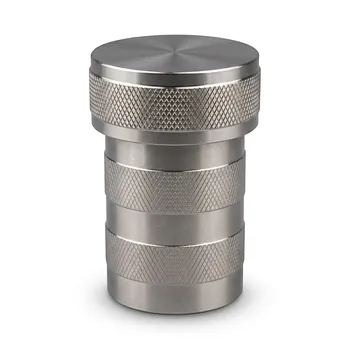
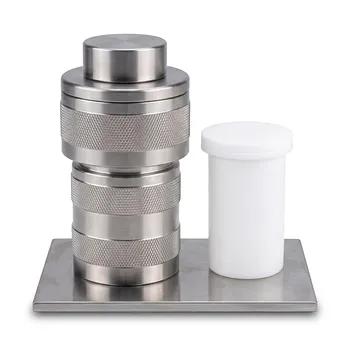
Natural cooling is a non-negotiable step in hydrothermal synthesis. Allowing the autoclave to return to room temperature gradually prevents drastic temperature gradients that would otherwise compromise the morphology, chemical composition, and crystallinity of the synthesized alpha-[Fe2O3-FeOOH].
Core Takeaway: Natural cooling protects the structural integrity of nanoparticles by preventing thermal shock and unintended phase transitions, ensuring the final product meets its specific design requirements.
The Role of Thermal Stability in Nanomaterial Synthesis
Preventing Thermal Shock and Crystal Cracking
Rapid cooling creates high-stress environments within the crystal lattice. If the temperature drops too quickly, the resulting thermal shock can cause the alpha-[Fe2O3-FeOOH] nanostructures to crack or shatter.
Natural cooling allows the atoms to settle into their most stable positions. This gradual approach maintains the structural stability of the nanoparticles while they are still suspended in the mother liquor.
Preserving Phase Purity and Crystallinity
The transition from high heat to room temperature influences the final phase of the material. Forced cooling may "freeze" the material in a meta-stable state or trigger unintended phase transitions.
By cooling slowly, you ensure the product reaches its intended crystallinity. This process allows the chemical reactions to conclude at a pace that favors the desired alpha-[Fe2O3-FeOOH] phase over secondary impurities.
Maintaining Morphology in the Mother Liquor
The mother liquor acts as a medium that continues to influence the particles until equilibrium is reached. Rapidly changing the environment can lead to morphological defects, altering the shape of the nanorods or particles.
Slow cooling ensures that the interaction between the particles and the surrounding solution remains stable. This stability is vital for achieving the uniform morphology required for high-performance applications.
Pressure Dynamics and Safety Considerations
Managing Internal Vapor Pressure
At high temperatures, such as 150°C, the autoclave generates significant internal pressure. Natural cooling allows this vapor pressure to dissipate at a rate proportional to the temperature drop.
Abruptly cooling the exterior of the vessel while the interior remains hot can create dangerous pressure differentials. This can stress the seals of the autoclave, leading to leaks or mechanical failure.
The Importance of Headspace and Expansion
The stability of the reaction is also dependent on the initial loading volume, which should be approximately 70 percent of total capacity. This headspace is critical for accommodating thermal expansion during the heating and cooling phases.
Sufficient headspace ensures that the kinetic conditions for crystal growth remain consistent. When combined with natural cooling, this ratio prevents safety hazards associated with excessive pressure spikes.
Understanding the Trade-offs
Time Efficiency vs. Product Quality
The primary trade-off in natural cooling is the significant amount of time required. While "quenching" (rapid cooling) saves hours of laboratory time, it almost always results in inferior material quality and potential reactor damage.
Equilibrium vs. Kinetic Trapping
Natural cooling favors thermodynamic equilibrium, leading to more predictable results. Rapid cooling can lead to "kinetic trapping," where the material is stuck in a disordered state that may not be chemically stable over the long term.
Best Practices for Hydrothermal Synthesis
Natural cooling should be viewed as a functional part of the reaction itself, not just a waiting period. To ensure the highest quality alpha-[Fe2O3-FeOOH], follow these specific guidelines based on your objectives.
- If your primary focus is phase purity: Always allow the autoclave to remain in the oven with the power off until it reaches room temperature to ensure complete crystallization.
- If your primary focus is morphology control: Strictly adhere to the 70% fill ratio to maintain stable pressure gradients that facilitate the growth of uniform nanorods.
- If your primary focus is equipment longevity: Avoid using water baths or fans to accelerate cooling, as this can warp the stainless steel casing or damage the internal PTFE liner.
By respecting the thermodynamic pace of the cooling process, you guarantee the chemical and structural integrity of your synthesized nanomaterials.
Summary Table:
| Key Factor | Impact of Natural Cooling | Risk of Rapid Cooling (Quenching) |
|---|---|---|
| Structural Integrity | Prevents thermal shock; allows stable atom positioning | Crystal cracking, shattering, or lattice stress |
| Phase Purity | Ensures reach of intended thermodynamic equilibrium | Kinetic trapping or unintended phase transitions |
| Morphology | Maintains uniform nanorod/particle shapes | Morphological defects and inconsistent growth |
| Equipment Safety | Safe, proportional dissipation of vapor pressure | Damaged PTFE liners, warped casing, or seal leaks |
| Crystallinity | Promotes high-quality, stable crystal growth | Disordered or chemically unstable material states |
Elevate Your Synthesis with KINTEK’s Precision Fluoropolymer Solutions
Success in hydrothermal synthesis depends not only on your cooling protocol but also on the quality of your reaction vessels. KINTEK specializes in high-performance laboratory supplies crafted from PTFE and PFA, ensuring your experiments achieve maximum purity and structural integrity.
From everyday basic labware like beakers, crucibles, and reagent bottles to critical components for fluid transfer (tubing, valves, fittings) and sample prep (filters, pipettes, tweezers), we provide everything needed for a sterile, non-reactive environment. For specialized research, we offer advanced reaction apparatus, including hydrothermal synthesis liners, microwave digestion vessels, and custom electrochemical cells.
Why Choose KINTEK?
- Custom CNC Fabrication: We deliver complex, non-standard machined parts tailored to your specific research needs.
- Material Excellence: Absolute focus on high-performance fluoropolymers for extreme chemical resistance.
- Scalability: From bespoke laboratory setups to high-volume industrial orders.
Ensure your alpha-[Fe2O3-FeOOH] synthesis meets the highest standards. Contact our experts today to discuss your custom laboratory requirements!
References
- John Godwin. Hydrothermal Synthesis of Mixed Nanocomposite of α-[Fe2 O3 -FeOOH] from Iron Nitrate Salt in Teflon Autoclave. DOI: 10.61440/jmset.2025.v3.32
This article is also based on technical information from Kintek Knowledge Base .
Related Products
- High Temperature Corrosion Resistant Hydrothermal Synthesis Reactor with TFM Inner Liner and Straight Cylinder Design
- PTFE Lined High Pressure Digestion Vessel 50ml High Temperature Hydrothermal Synthesis Tank
People Also Ask
- What is the role of a corrosion-resistant reactor in the synthesis of lignin-based carbon dots? Ensure Maximum Purity
- What are the technical advantages of using hydrothermal synthesis reactors for advanced electronic & optical nanomaterials?
- How does a hydrothermal synthesis reactor facilitate the production of crystalline materials with tailored morphologies? Precision Crystal Growth
- Why is the sealing reliability of a hydrothermal synthesis reactor critical for 24-hour cycles? Ensure Nano-Precision
- What role do hydrothermal synthesis reactors play in CQD preparation? Achieve High-Purity Nanomaterial Synthesis