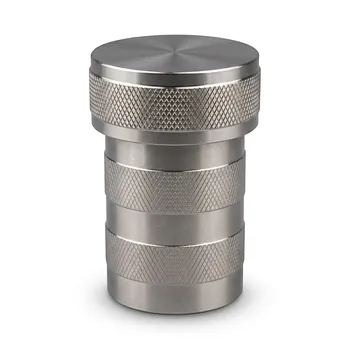
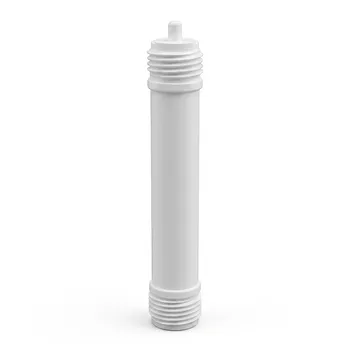
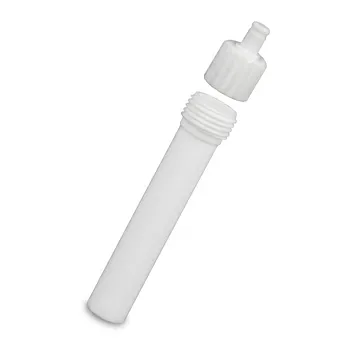
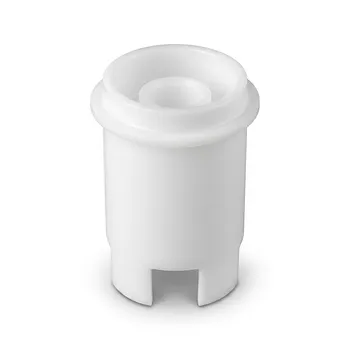
The hydrothermal synthesis of vanadium dioxide (VO2) requires high-pressure autoclaves and PTFE/PFA liners to create a controlled, high-energy environment while maintaining absolute chemical purity. This specialized setup provides the necessary reaction kinetics for crystal growth and prevents the metallic autoclave body from leaching contaminants into the sensitive vanadium precursors.
Core Takeaway: High-pressure autoclaves drive the thermodynamic transition needed to form VO2 nanostructures, while fluoropolymer liners (PTFE/PFA) act as an indispensable chemical barrier that ensures high crystallinity and prevents metal-ion interference.
Driving Reaction Kinetics Through High Pressure
Creating the Necessary Thermodynamic Environment
Hydrothermal synthesis mimics geothermal processes by using water as a solvent under high temperature and high pressure. The autoclave allows the reaction to reach temperatures well above the boiling point of water, creating a high-energy state that facilitates the reduction of vanadium precursors.
Promoting Oriented Crystal Growth
The high-pressure environment is critical for the oriented growth of vanadium dioxide into one-dimensional nanostructures. This pressure-induced kinetic path allows for the formation of nanowires and nanorods, which are essential for the material's unique anisotropic phase transition properties.
Facilitating Molecular Reorientation
Under these sealed conditions, the precursor solution can reach a near-supercritical state. This state increases the solubility of reactants and drives molecular reorientation, which is necessary for the nucleation of specific VO2 polymorphs, such as VO2(B) or VO2(M).
The Critical Role of PTFE and PFA Liners
Providing a Chemically Inert Interface
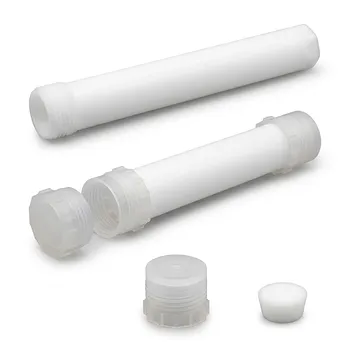
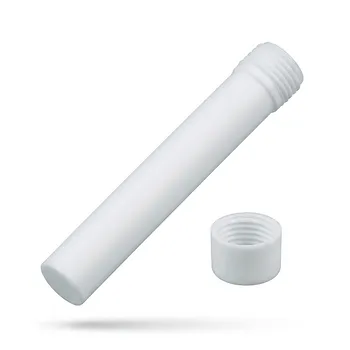
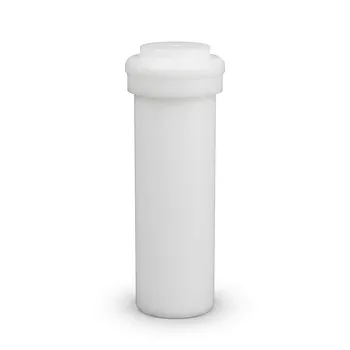
Vanadium precursors are often mixed with strong acids, bases, or organic reducing agents like isopropanol. PTFE (Polytetrafluoroethylene) and PFA (Perfluoroalkoxy) liners are utilized because they are chemically inert, meaning they do not react with these aggressive reagents even at temperatures up to 200°C.
Preventing Metal Ion Contamination
Without a liner, the acidic or alkaline reaction media would directly corrode the stainless steel body of the autoclave. This corrosion would introduce foreign metal ions (such as iron, nickel, or chromium) into the VO2 crystal lattice, which would degrade the material’s purity and suppress its electronic properties.
Ensuring Thermal Stability and Safety
High-performance fluoropolymers maintain their physical stability across broad temperature ranges. This ensures that the seal remains tight under pressure, protecting the external steel jacket from structural damage and ensuring the safety of the high-pressure process.
Understanding the Trade-offs and Limitations
Temperature Thresholds of Fluoropolymers
While PTFE and PFA are highly resistant, they have a maximum operating temperature (typically around 220°C to 250°C). Exceeding these limits can cause the liner to soften or deform, potentially leading to a seal failure or dangerous pressure release.
Mechanical Constraints and Cold Flow
PTFE is susceptible to "cold flow" or deformation under heavy mechanical loads over time. Users must ensure the liner is properly seated within the stainless steel jacket to prevent the polymer from warping under the extreme internal pressures generated during synthesis.
Cleaning and Cross-Contamination
Despite their non-stick properties, liners can retain trace residues from previous experiments if not cleaned rigorously. Because VO2 synthesis is highly sensitive to stoichiometry, any residual precursors from a prior run can act as unwanted dopants in the new batch.
How to Apply This to Your Synthesis Goals
Optimizing Your Equipment Setup
- If your primary focus is high-purity phase transitions: Use a high-quality PTFE liner and perform an acid-wash cycle between runs to ensure no metallic or precursor cross-contamination occurs.
- If your primary focus is morphology control (nanowires/nanorods): Ensure your autoclave is rated for at least 200°C to provide the kinetic energy required for anisotropic growth.
- If your primary focus is rapid heating or microwave-assisted synthesis: Opt for PFA liners due to their microwave transparency, which allows electromagnetic energy to heat the solution directly and uniformly.
Selecting the correct combination of a robust pressure vessel and a high-grade fluoropolymer liner is the foundational step in achieving high-performance vanadium dioxide nanostructures.
Summary Table:
| Component | Role in VO2 Synthesis | Key Benefit |
|---|---|---|
| High-Pressure Autoclave | Creates thermodynamic environment | Drives oriented crystal growth (nanowires/rods) |
| PTFE/PFA Liners | Acts as a chemically inert barrier | Prevents metal ion leaching and ensures high purity |
| Pressure Seal | Maintains near-supercritical state | Facilitates molecular reorientation and nucleation |
| Thermal Stability | Resists temperatures up to 250°C | Ensures safety and structural integrity during reaction |
Elevate Your Synthesis Precision with KINTEK Fluoropolymer Excellence
Achieving high-purity vanadium dioxide nanostructures requires equipment that never compromises on chemical integrity. KINTEK specializes in high-performance fluoropolymer labware designed to withstand the most aggressive hydrothermal environments.
From hydrothermal synthesis liners, microwave digestion vessels, and custom microchannel reactors to essential labware like beakers, crucibles, and high-purity trace analysis instruments, we manufacture virtually every laboratory supply imaginable from premium PTFE and PFA. Whether you need standard centrifuge tubes, fittings, and valves or bespoke electrochemical cells and battery testing fixtures, our end-to-end custom CNC fabrication delivers non-standard machined parts tailored to your exact research specifications.
Don't let metal contamination compromise your results. Trust the experts in high-performance materials to provide the absolute focus your lab deserves.
Contact KINTEK Today for Custom Laboratory Solutions
References
- Arfat Firdous, Abrar Ashraf. Critical Review on the Phase Change Properties of VO₂: Influence of Synthesis Methods and Transition Mechanisms. DOI: 10.64060/jestt.v2i2.2
This article is also based on technical information from Kintek Knowledge Base .
Related Products
- PTFE Lined High Pressure Digestion Vessel 50ml High Temperature Hydrothermal Synthesis Tank
- Custom TFM Reaction Vessel with Stainless Steel Jacket and PTFE Inner Cup for High Corrosion Resistance
- High Temperature Corrosion Resistant Hydrothermal Synthesis Reactor with TFM Inner Liner and Straight Cylinder Design
- High Purity PTFE Microwave Digestion Vessel for Soil and Food Analysis Acid Resistant Fluoropolymer Sample Preparation Liners
- High Purity PTFE Microwave Digestion Vessel Replacement Liner for Acid Sample Preparation and Trace Analysis
People Also Ask
- What are the benefits of using a PTFE-lined vessel for carbon-sulfur cathode treatment? Maximize Purity & Performance
- Why are PTFE-lined pressure digestion vessels required for the preparation of Ag/CeO2 catalysts? Purity & Performance
- What safety features are typically incorporated into high-pressure PTFE digestion vessel designs? Ensure Lab Safety
- What is the function of PTFE lined high-pressure vessels in g-C3N4 synthesis? Achieve High-Purity Material Growth
- Role of High-Pressure Digestion Tanks in Perovskite Synthesis: Achieve Superior Stability and Latent Heat