The superior performance of hydrothermal catalysts is driven by the precise control of nucleation kinetics within a high-pressure environment. This specific synthesis method facilitates the formation of high-activity phases, such as $\alpha$-Co and CoO, which are fundamentally more effective at hydrogenating $CO_2$ than the phases typically produced through standard thermolysis.
By leveraging high pressure and sealed temperature control, hydrothermal synthesis forces the development of specific cobalt-based active phases that optimize hydrogenation. This structural advantage allows for $CO_2$ conversion rates to reach approximately 51.5%, significantly outperforming the results of conventional thermal preparation.
The Role of Reactor Environment in Phase Formation
High-Pressure Kinetic Control
Hydrothermal synthesis takes place within a sealed vessel, creating a high-pressure environment that is impossible to achieve with standard thermolysis. This pressure directly modifies the kinetics of catalyst nucleation, ensuring that the atoms arrange themselves into specific patterns during the initial stages of formation.
Precision in Crystal Growth
Because the synthesis occurs under controlled, pressurized conditions, the crystal growth of the catalyst is more regulated. This prevents the haphazard structural development common in open-air or standard heating methods, leading to a more uniform and active catalyst surface.
Identifying the Active Phases
The Dominance of $\alpha$-Co and CoO
The primary reason for increased efficiency is the presence of specific active phases: $\alpha$-Co and CoO reduction phases. These phases are uniquely stable and abundant in catalysts prepared via the hydrothermal route.
Thermal Windows for Maximum Activity
These specific cobalt phases exhibit their highest hydrogenation activity within a temperature window of 270–290°C. When the catalyst operates in this range, it achieves a peak $CO_2$ conversion rate of 51.5%, a level of efficiency that thermolysis-derived catalysts cannot match due to their different phase compositions.
Understanding the Trade-offs
Process Complexity and Safety
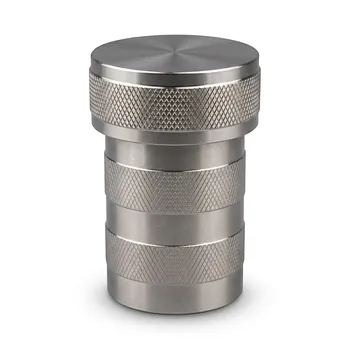
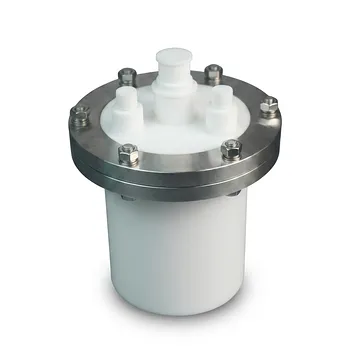
While hydrothermal synthesis yields superior results, it requires specialized equipment like high-pressure autoclaves. The need for a sealed environment adds layers of operational complexity and safety requirements that are not present in standard thermolysis.
Scalability and Time Constraints
The controlled kinetics of hydrothermal growth often require longer processing times compared to the rapid heating of thermolysis. For industrial applications, the trade-off involves balancing the higher conversion yields against the slower throughput and higher equipment costs of pressurized synthesis.
Strategic Implementation for Catalyst Design
How to Apply This to Your Project
To determine the best preparation method for your specific $CO_2$ conversion goals, consider the following strategic alignments:
- If your primary focus is Maximum Conversion Efficiency: Use hydrothermal synthesis to ensure the formation of $\alpha$-Co and CoO phases, aiming for the 51.5% conversion benchmark.
- If your primary focus is Operating in the 270-290°C Range: Choose the hydrothermal route, as this preparation method specifically optimizes the catalyst for peak performance at these temperatures.
- If your primary focus is Low-Cost, High-Throughput Production: Evaluate standard thermolysis, recognizing that while conversion rates will be lower, the manufacturing process is significantly simpler and faster.
By prioritizing the structural evolution of the catalyst through high-pressure synthesis, you can fundamentally shift the limits of $CO_2$ conversion performance.
Summary Table:
| Feature | Hydrothermal Synthesis | Standard Thermolysis |
|---|---|---|
| Max CO2 Conversion | ~51.5% | Lower Efficiency |
| Key Active Phases | α-Co and CoO | Standard Metallic Phases |
| Environment | High-Pressure (Sealed) | Atmospheric/Open |
| Nucleation Control | Precise Kinetic Regulation | Haphazard Crystal Growth |
| Optimal Temp Range | 270–290°C | Less Specific |
Elevate Your Catalyst Research with KINTEK’s High-Performance Fluoropolymer Solutions
Achieving peak $CO_2$ conversion requires precision equipment that can withstand rigorous synthesis environments. KINTEK manufactures an extensive range of laboratory supplies crafted from PTFE and PFA, specifically designed for high-purity trace analysis and demanding chemical reactions.
Whether you require hydrothermal synthesis liners, microwave digestion vessels, and high-pressure reaction apparatus, or everyday essentials like beakers, crucibles, and reagent bottles, we have you covered. From fluid transfer components (tubing, valves) to bespoke custom CNC-machined parts and electrochemical cells, KINTEK provides end-to-end solutions tailored to your laboratory's unique specifications.
Maximize your synthesis yields with our durable, high-performance materials. Contact KINTEK today to discuss your custom project!
References
- A. N. Gosteva, Mayya V. Kulikova. CO2 HYDROGENATION REACTION ON BIMETALLIC CATALYSTS BASED ON DOUBLE COMPLEX SALTS. DOI: 10.37614/2949-1215.2025.16.1.024
This article is also based on technical information from Kintek Knowledge Base .
Related Products
- High Temperature Corrosion Resistant Hydrothermal Synthesis Reactor with TFM Inner Liner and Straight Cylinder Design
- PTFE Lined High Pressure Digestion Vessel 50ml High Temperature Hydrothermal Synthesis Tank
- PTFE Distillation Condensation Apparatus High Temperature Hydrofluoric Acid Resistant Fluorination Reaction Flask
- PTFE Flat Bottom Flask Continuous Reaction System Hydrofluoric Acid Resistant with Dropping Funnel
- High Pressure Custom TFM Reactor Stainless Steel Outer Vessel PTFE Inner Cup for Corrosive Synthesis
People Also Ask
- What is the role of a corrosion-resistant reactor in the synthesis of lignin-based carbon dots? Ensure Maximum Purity
- What are the technical advantages of using hydrothermal synthesis reactors for advanced electronic & optical nanomaterials?
- How does a hydrothermal synthesis reactor facilitate the production of crystalline materials with tailored morphologies? Precision Crystal Growth
- Why is the sealing reliability of a hydrothermal synthesis reactor critical for 24-hour cycles? Ensure Nano-Precision
- What role do hydrothermal synthesis reactors play in CQD preparation? Achieve High-Purity Nanomaterial Synthesis