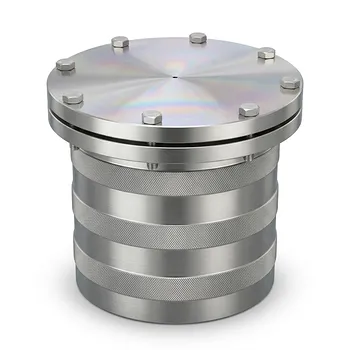
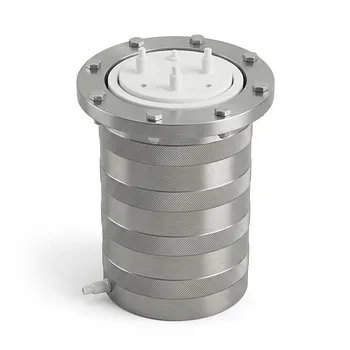
A PTFE-lined stainless steel autoclave provides the essential high-pressure, high-temperature hydrothermal environment required to decompose nitrogen precursors and embed them into the graphene lattice. It creates a sealed system where temperatures typically reaching 150°C to 180°C facilitate the chemical modification of reduced graphene oxide (rGO). This setup ensures that nitrogen sources, such as urea, are effectively integrated while maintaining the chemical purity of the resulting nanomaterial.
The autoclave acts as a specialized micro-reactor that combines mechanical strength with chemical resistance, enabling the synthesis of nitrogen-doped reduced graphene oxide (NRGO) through controlled precursor decomposition and high-energy atomic embedding.
The Hydrothermal Environment for Nitrogen Doping
Facilitating Precursor Decomposition
The primary function of the autoclave is to maintain a high-temperature environment, often around 150°C, which is necessary for urea or other nitrogen precursors to decompose. Once decomposed, these precursors release nitrogen sources that are energetic enough to react with the graphene structure.
Enabling Atomic Embedding
The high-pressure conditions generated within the sealed vessel force these nitrogen atoms into the lattice structure of the reduced graphene oxide. This "doping" process modifies the electronic properties of the material, a feat that is difficult to achieve under standard atmospheric pressure.
Maintaining Solvent Phases
By sealing the reaction, the autoclave allows the solvent to remain in a liquid or supercritical state well above its normal boiling point. This hydrothermal state increases the solubility of precursors and accelerates the chemical modification of the rGO.
Chemical Inertness and Material Purity
Prevention of Metal Contamination
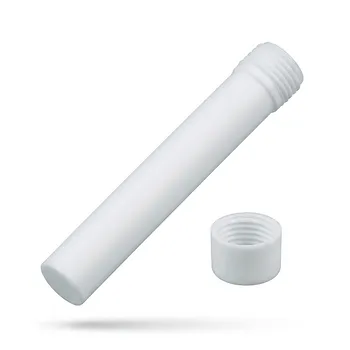
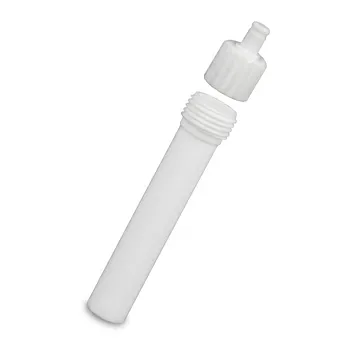
The internal Polytetrafluoroethylene (PTFE) liner is critical because of its exceptional chemical inertia. It acts as a barrier that prevents corrosive reaction liquids from coming into contact with the stainless steel shell, ensuring that metal ions do not leach into and contaminate the NRGO.
Resistance to Corrosive Precursors
Synthesis often involves aggressive agents like ammonia or strong bases which would otherwise erode metal surfaces. The PTFE liner’s corrosion resistance allows for the use of diverse nitrogen sources without degrading the structural integrity of the pressure vessel.
Facilitating Solid Recovery
The extremely smooth surface of the PTFE lining is a functional advantage during the collection phase. It prevents the synthesized NRGO powder from sticking to the walls, ensuring a higher yield and easier recovery of the solid precipitates.
Mechanical Integrity and Pressure Containment
The Role of the Stainless Steel Shell
While the PTFE liner provides chemical protection, it lacks the structural strength to withstand internal gas expansion. The stainless steel outer shell provides the necessary pressure-bearing capacity to safely contain the high-energy hydrothermal reaction.
Maintaining a Sealed System
The combination of the heavy-duty shell and the liner creates a perfectly sealed environment. This prevents the loss of volatile nitrogen precursors, ensuring that the stoichiometry of the reaction remains consistent throughout the synthesis process.
Understanding the Trade-offs
Temperature Limitations
While durable, PTFE has a thermal limit, generally recommended to stay below 220°C–250°C. Exceeding these temperatures can lead to the deformation of the liner or the release of toxic fluorinated vapors, which risks both the experiment and the equipment.
Thermal Lag and Heating Rates
PTFE is an insulator, meaning it does not conduct heat as efficiently as the stainless steel shell. This creates a thermal lag, where the internal reaction temperature may take longer to reach the setpoint of the external heating oven, requiring careful calibration for precise synthesis.
How to Apply This to Your Synthesis Goals
Recommendations for NRGO Synthesis
- If your primary focus is High Atomic Purity: Ensure the PTFE liner is free of scratches or pitting to prevent even trace amounts of metal ion migration from the steel shell.
- If your primary focus is Consistent Doping Levels: Strictly monitor the temperature and "soak time" at 150°C or higher to ensure the complete decomposition of urea precursors.
- If your primary focus is Maximum Material Yield: Utilize the non-stick properties of the PTFE liner by using a mechanical scraper or sonication to recover all NRGO precipitates from the smooth internal walls.
The synergy between the mechanical strength of stainless steel and the chemical resilience of PTFE is what makes the hydrothermal synthesis of high-quality NRGO possible.
Summary Table:
| Component/Feature | Role in NRGO Synthesis | Key Benefit |
|---|---|---|
| PTFE Liner | Chemical inertness & non-stick surface | Prevents metal contamination and ensures high recovery yield |
| Stainless Steel Shell | High-pressure containment | Safely enables reactions at temperatures (150-180°C) above solvent boiling points |
| Sealed Environment | Volatile precursor retention | Maintains consistent stoichiometry for uniform nitrogen doping |
| Thermal Stability | Controlled hydrothermal state | Facilitates nitrogen precursor decomposition and lattice embedding |
Elevate Your Nanomaterial Synthesis with KINTEK’s Precision Fluoropolymers
Achieving consistent results in NRGO synthesis requires equipment that stands up to aggressive precursors and high-pressure hydrothermal conditions. KINTEK specializes in high-performance PTFE and PFA laboratory supplies, maintaining an exclusive focus on materials that ensure zero contamination and maximum durability.
From everyday labware—including beakers, reagent bottles, and digestion tubes—to advanced hydrothermal synthesis liners, microwave digestion vessels, and custom electrochemical cells, we provide the tools necessary for cutting-edge research. Our end-to-end custom CNC fabrication allows us to deliver everything from complex non-standard machined parts to high-volume orders tailored to your specific reactor dimensions.
Ready to upgrade your lab’s performance? Contact KINTEK today to discuss your custom laboratory setup!
References
- Sonia Saini, Madhav Sharma. Green synthesis and characterization of nitrogen doped reduced graphene oxide nanosheets as electrode material for direct ethanol fuel cell. DOI: 10.15251/jor.2025.212.249
This article is also based on technical information from Kintek Knowledge Base .
Related Products
- Custom TFM Reaction Vessel with Stainless Steel Jacket and PTFE Inner Cup for High Corrosion Resistance
- PTFE Lined High Pressure Digestion Vessel 50ml High Temperature Hydrothermal Synthesis Tank
- High Pressure Custom TFM Reactor Stainless Steel Outer Vessel PTFE Inner Cup for Corrosive Synthesis
- High Purity TFM Microwave Digestion Vessels PTFE Acid Evaporation Liners Domestic GT-400 Equivalent Laboratory Reaction Containers
- High Purity PTFE Microwave Digestion Vessel Replacement Liner for Acid Sample Preparation and Trace Analysis
People Also Ask
- Why are high-performance pressure-resistant reaction vessels required for oxygen-assisted hydrothermal conversion at 150 °C?
- How do magnetic stirring and reaction vessels impact MOF-derived carbon quality? Optimize Your Composite Performance
- Why are high-quality fluoropolymer-lined reaction vessels required for alk-Ti3C2Tx MXene? Ensure Purity & HF Resistance
- Why are PTFE-lined reaction vessels necessary for forced degradation studies? Ensure high-purity results and accuracy.
- Why is a high-purity PTFE lined reaction vessel required for the acidic etching of MXenes? Ensure Material Purity.