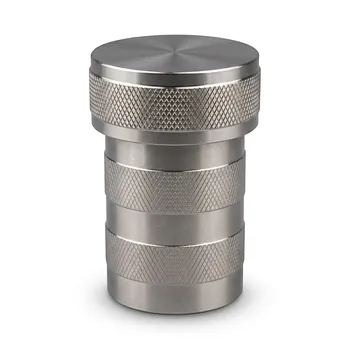
The synthesis of molybdenum disulfide (MoS2) nanomaterials requires a specialized environment that traditional open-vessel heating cannot provide. A high-pressure hydrothermal synthesis autoclave creates a sealed, high-temperature, and high-pressure environment essential for the reaction between precursors like sodium molybdate and thiourea. These extreme conditions, often reaching 210°C, allow for the precise control of crystal growth, morphology, and phase purity, resulting in nanostructures with high electrochemical activity.
The hydrothermal autoclave is the indispensable tool for MoS2 synthesis because it enables subcritical fluid conditions that facilitate the dissolution and recrystallization of precursors. This process is the only reliable way to achieve the specific morphology and phase transitions necessary for high-performance nanomaterials.
Overcoming Solubility and Kinetic Barriers
Achieving Subcritical Conditions
A high-pressure autoclave allows solvents to remain in a liquid state at temperatures well exceeding their atmospheric boiling points. Under these subcritical conditions, the properties of water or other solvents change, significantly increasing the solubility of solid reactants.
Accelerating Reaction Kinetics
The sealed environment creates autogenous pressure, which accelerates the solid-phase reaction kinetics between precursors like sodium molybdate and thioacetamide. This energy-intensive environment ensures that reactants react thoroughly, leading to full crystallization without the need for additional high-temperature annealing.
Precision Control of Crystal Morphology and Phase
Directing Crystal Growth and Nucleation
The high-pressure environment provides the necessary thermodynamic drive to control the nucleation and growth direction of nanocrystals. This precision results in MoS2 nanostructures with high crystallinity and specific layered two-dimensional structures that offer large surface areas.
Inducing Phase Transitions
Hydrothermal synthesis is critical for facilitating the partial phase transition of MoS2 from the semiconducting 2H phase to the metallic 1T phase. This phase control is essential for enhancing the electrical conductivity and catalytic performance of the resulting nanomaterial.
The Strategic Importance of the PTFE Liner
Protecting the Vessel from Corrosion
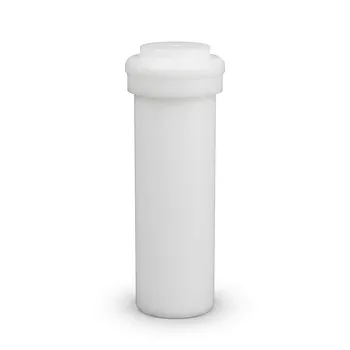
Synthesis often involves acidic or corrosive precursor solutions that would damage the stainless steel walls of an autoclave at high temperatures. Polytetrafluoroethylene (PTFE) liners are used for their exceptional chemical inertness and stability up to approximately 230°C.
Ensuring Material Purity and Recovery
The extremely smooth, non-adhesive surface of the PTFE liner minimizes the sticking of MoS2 nanosheets to the vessel walls. This ensures maximum material recovery and prevents contamination from metal ions, which is vital for maintaining the integrity of the microporous structures.
Understanding the Trade-offs and Limitations
Temperature and Pressure Constraints
While autoclaves enable high-energy reactions, they are strictly limited by the thermal stability of their liners. Exceeding the rated temperature of PTFE (typically 200°C–230°C) can lead to liner deformation and potential safety failures of the pressure vessel.
Safety and Operational Complexity
Operating at high autogenous pressures requires rigorous safety protocols and specialized training. Unlike open-system synthesis, hydrothermal methods do not allow for real-time monitoring or the addition of reagents mid-reaction, making initial precursor ratios critical.
How to Apply This to Your Synthesis Project
When selecting your synthesis parameters and equipment, consider the specific requirements of your desired MoS2 morphology.
- If your primary focus is high catalytic activity: Prioritize an autoclave setup that can sustain 210°C to facilitate the 1T phase transition and maximize electrochemical surface area.
- If your primary focus is material purity and recovery: Ensure the use of high-quality, non-aged PTFE liners to prevent metal ion leaching and ensure the nanosheets do not adhere to the vessel walls.
- If your primary focus is structural uniformity: Utilize the sealed environment to maintain constant pressure, which prevents the fluctuations that typically lead to irregular crystal growth in open systems.
By leveraging the unique thermodynamics of the high-pressure autoclave, you can transform simple chemical precursors into highly engineered MoS2 nanostructures with precision and reproducibility.
Summary Table:
| Key Feature | Benefit for MoS2 Synthesis |
|---|---|
| Subcritical Conditions | Increases precursor solubility and accelerates reaction kinetics. |
| Autogenous Pressure | Enables full crystallization without the need for post-annealing. |
| Phase Engineering | Facilitates the critical transition from 2H (semiconducting) to 1T (metallic) phase. |
| PTFE Liner | Provides chemical inertness and ensures maximum material recovery/purity. |
| Morphology Control | Delivers thermodynamic drive for precise 2D nanostructure growth. |
Elevate Your Material Synthesis with KINTEK’s Precision Engineering
Achieving the perfect MoS2 nanostructure requires more than just a recipe—it demands equipment that can withstand extreme chemical and thermal environments. KINTEK specializes in high-performance fluoropolymer solutions tailored for advanced laboratory research.
From high-purity PTFE and PFA liners for hydrothermal synthesis and microwave digestion vessels to a full spectrum of laboratory essentials—including beakers, crucibles, reagent bottles, and centrifuge tubes—we provide the tools that ensure zero contamination and maximum recovery. Whether you need comprehensive fluid transfer components (tubing, valves, fittings), sample prep tools (filters, pipettes, spatulas), or custom-machined CNC parts for unique electrochemical cells and battery testing fixtures, KINTEK delivers end-to-end excellence.
Ready to optimize your lab’s performance with bespoke fluoropolymer labware?
Contact KINTEK today to discuss your custom project!
References
- Murat Ateş. Sulfur dopant effects on hybrid rGO/MoS2/PANI nanocomposites for SupercapBattery devices. DOI: 10.59287/iccar.780
This article is also based on technical information from Kintek Knowledge Base .
Related Products
- High Temperature Corrosion Resistant Hydrothermal Synthesis Reactor with TFM Inner Liner and Straight Cylinder Design
- PTFE Lined High Pressure Digestion Vessel 50ml High Temperature Hydrothermal Synthesis Tank
- Custom TFM Reaction Vessel with Stainless Steel Jacket and PTFE Inner Cup for High Corrosion Resistance
- High Pressure Custom TFM Reactor Stainless Steel Outer Vessel PTFE Inner Cup for Corrosive Synthesis
- High Performance TFM Microwave Digestion Vessel Rack 15 Position Customizable Sample Preparation Support
People Also Ask
- What is the role of a corrosion-resistant reactor in the synthesis of lignin-based carbon dots? Ensure Maximum Purity
- What are the technical advantages of using hydrothermal synthesis reactors for advanced electronic & optical nanomaterials?
- How does a hydrothermal synthesis reactor facilitate the production of crystalline materials with tailored morphologies? Precision Crystal Growth
- Why is the sealing reliability of a hydrothermal synthesis reactor critical for 24-hour cycles? Ensure Nano-Precision
- What role do hydrothermal synthesis reactors play in CQD preparation? Achieve High-Purity Nanomaterial Synthesis