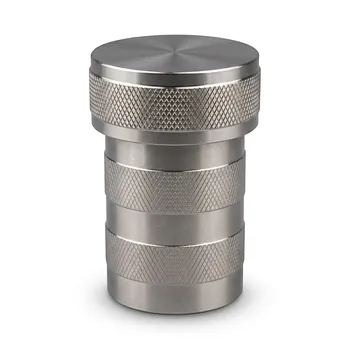
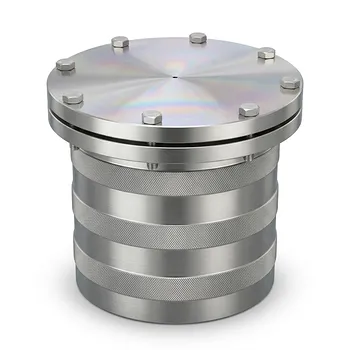
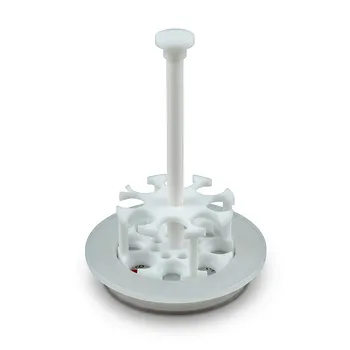
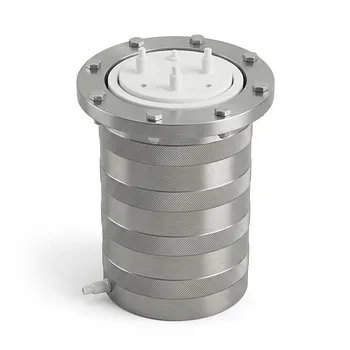
The high-pressure hydrothermal autoclave serves as a specialized reaction vessel that creates the extreme physical environment necessary to facilitate the in-situ growth of $Bi_2WO_6$ nanowires onto $BiOCl$ microspheres. By operating at temperatures between 150°C and 160°C, the autoclave generates autogenous pressure that keeps organic solvents in a liquid state well above their atmospheric boiling points. This pressurized environment is the critical driver for the dissolution-recrystallization process that produces a stable, three-dimensional core-shell nanocomposite.
The autoclave’s fundamental function is to bypass atmospheric boiling points, allowing for high-energy liquid-phase reactions that are otherwise impossible. This enables precise control over the crystallization and orientation of $Bi_2WO_6$ on the $BiOCl$ substrate, ensuring structural stability.
The Mechanics of Autogenous Pressure
Maintaining Liquid Phase Above Boiling Points
In the synthesis of $Bi_2WO_6/BiOCl$, solvents such as ethylene glycol or triethylene glycol are often used. The sealed nature of the autoclave prevents these solvents from evaporating as they reach temperatures of 150–160°C.
This maintains a high-density liquid medium where precursors can interact more effectively than in a gas or standard liquid phase. The resulting autogenous pressure—pressure generated by the heating of the sealed liquid—is essential for maintaining the solvent's solvating power.
Accelerating Dissolution and Recrystallization
High pressure significantly increases the solubility of precursors, allowing them to dissolve and then reprecipitate more rapidly. This acceleration of reaction kinetics ensures that the $Bi_2WO_6$ components can crystallize efficiently.
Without this pressure, the energy barriers for forming the specific nanowire morphology would be too high, leading to amorphous or poorly defined structures. The autoclave environment provides the kinetic energy required for atoms to align into high-purity crystalline lattices.
Driving Morphology and Structural Integrity
In-Situ Growth of Core-Shell Structures
The autoclave environment forces the uniform growth of $Bi_2WO_6$ nanowires directly onto the surface of $BiOCl$ microspheres. This "in-situ" growth is what creates the stable three-dimensional core-shell architecture.
Because the reaction occurs under high pressure, the $Bi_2WO_6$ nanowires are essentially "driven" to anchor themselves to the $BiOCl$ template. This results in a highly integrated interface between the two materials, which is vital for the electronic and catalytic performance of the nanocomposite.
Precision Control of Crystal Facets
By manipulating the temperature and pressure within the autoclave, researchers can achieve programmatic control over the final morphology of the material. Specific crystal facets can be targeted for growth by adjusting the internal kinetics.
This level of control ensures that the $Bi_2WO_6/BiOCl$ composite maintains a high specific surface area. The high-pressure environment prevents the structures from collapsing or aggregating into bulk masses during the synthesis process.
Understanding the Trade-offs
Equipment Limitations and Safety
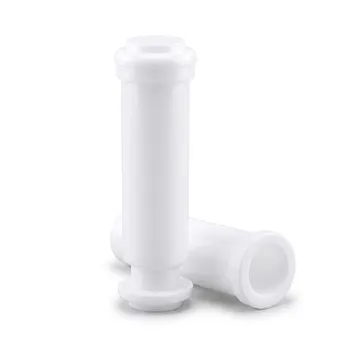
While high pressure is beneficial for crystallization, it requires specialized hardware such as PTFE (polytetrafluoroethylene) liners to prevent corrosion. These liners ensure that the reaction solution does not contact the metal walls of the autoclave, which would introduce contaminants.
Furthermore, the "black box" nature of the autoclave means that real-time monitoring of the crystal growth is difficult. If the pressure or temperature is not calibrated correctly, the resulting nanocomposite may suffer from uneven growth or structural defects.
Applying This to Your Synthesis Goals
Achieving the desired $Bi_2WO_6/BiOCl$ structure requires balancing the internal pressure with the chemical nature of your precursors. The following guidelines can help you optimize your process:
- If your primary focus is high crystallinity: Ensure the temperature is maintained at the upper end of the 150–160°C range to maximize the dissolution-recrystallization rate.
- If your primary focus is uniform nanowire distribution: Prioritize the use of a PTFE liner and precise solvent ratios to ensure the autogenous pressure remains consistent throughout the reaction.
- If your primary focus is a stable 3D network: Use the autoclave to drive the macroscopic self-assembly of the components, ensuring the core-shell interface is fully developed before cooling.
The hydrothermal autoclave is ultimately the catalyst for transforming simple chemical precursors into sophisticated, high-performance nanocomposite architectures.
Summary Table:
| Feature | Function in Synthesis |
|---|---|
| Autogenous Pressure | Maintains solvents in liquid phase above boiling points (150–160°C) |
| Dissolution-Recrystallization | Increases precursor solubility to accelerate crystal formation |
| In-Situ Growth | Drives uniform anchoring of nanowires onto microspheres for core-shell stability |
| PTFE Lining | Prevents metallic contamination and protects vessel from corrosive solvents |
Elevate Your Material Synthesis with KINTEK Precision
Successful $Bi_2WO_6/BiOCl$ nanocomposite synthesis demands precise pressure control and absolute chemical purity. KINTEK provides high-performance fluoropolymer solutions tailored for hydrothermal research.
From PTFE-lined hydrothermal synthesis liners and microwave digestion vessels to custom reaction apparatus, we manufacture virtually all lab supplies crafted from high-purity PTFE and PFA. Our end-to-end custom CNC fabrication ensures that whether you need complex non-standard machined parts, high-volume basic labware (beakers, bottles, tubes), or bespoke laboratory setups, we deliver with an exclusive focus on material integrity.
Ready to optimize your high-pressure reactions? Contact us today to discuss your custom project!
References
- Xiyang Zhou, Xiaoteng Liu. In situ synthesis of three-dimensional core–shell structure Bi2WO6/BiOCl and photocatalytic degradation of trinitrotoluene wastewater. DOI: 10.1007/s42114-024-01134-8
This article is also based on technical information from Kintek Knowledge Base .
Related Products
- High Temperature Corrosion Resistant Hydrothermal Synthesis Reactor with TFM Inner Liner and Straight Cylinder Design
- PTFE Lined High Pressure Digestion Vessel 50ml High Temperature Hydrothermal Synthesis Tank
- Custom TFM Reaction Vessel with Stainless Steel Jacket and PTFE Inner Cup for High Corrosion Resistance
- High Performance TFM Microwave Digestion Vessel Rack 15 Position Customizable Sample Preparation Support
- High Pressure Custom TFM Reactor Stainless Steel Outer Vessel PTFE Inner Cup for Corrosive Synthesis
People Also Ask
- What is the role of a corrosion-resistant reactor in the synthesis of lignin-based carbon dots? Ensure Maximum Purity
- What are the technical advantages of using hydrothermal synthesis reactors for advanced electronic & optical nanomaterials?
- How does a hydrothermal synthesis reactor facilitate the production of crystalline materials with tailored morphologies? Precision Crystal Growth
- Why is the sealing reliability of a hydrothermal synthesis reactor critical for 24-hour cycles? Ensure Nano-Precision
- What role do hydrothermal synthesis reactors play in CQD preparation? Achieve High-Purity Nanomaterial Synthesis