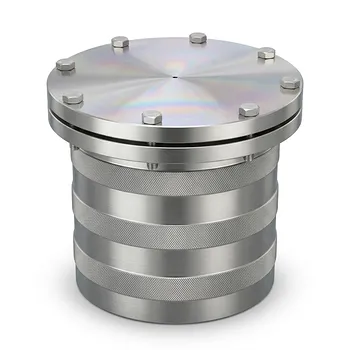
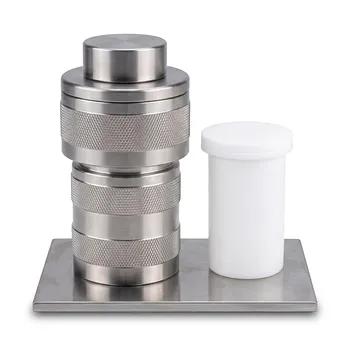
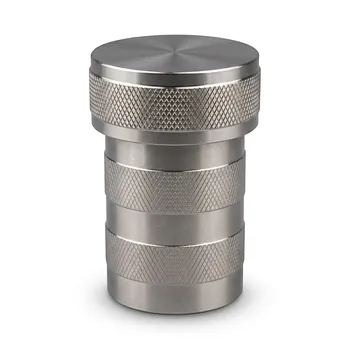
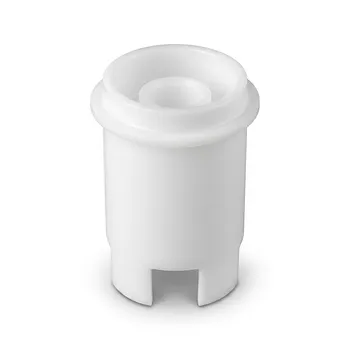
The hydrothermal synthesis of Strontium Titanate ($SrTiO_3$) requires a precisely controlled environment to facilitate crystalline growth. A Teflon-lined stainless steel high-pressure autoclave provides this by combining mechanical strength with chemical inertness. This dual-material system enables the reaction to occur at temperatures and pressures far exceeding standard atmospheric conditions while protecting the purity of the final ceramic product.
Core Takeaway: The autoclave functions as a specialized pressure vessel where the stainless steel shell provides the structural integrity to withstand high internal pressures, while the Teflon liner ensures a chemically inert environment that prevents contamination and corrosion from alkaline precursors.
Structural Integrity and Pressure Management
The Role of the Stainless Steel Casing
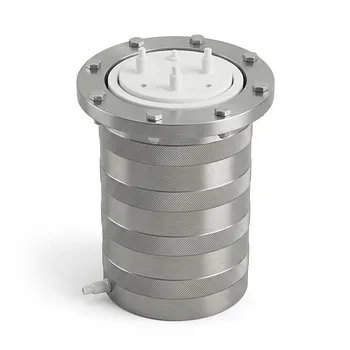
The primary function of the external stainless steel shell is to provide the mechanical strength required to contain high internal pressures. During hydrothermal synthesis, the heating of the aqueous precursor solution generates autogenous pressure, which can become significant as temperatures rise toward or beyond the boiling point. Without this robust outer casing, the vessel would be unable to maintain the sealed, high-pressure environment necessary for the synthesis of $SrTiO_3$.
Facilitating High-Temperature Reactions
By maintaining a sealed environment, the autoclave allows the reaction liquid to reach temperatures well above its standard boiling point. This high-temperature, high-pressure state increases the solubility of precursors and provides the energy required for the chemical transformation into Strontium Titanate. This "solvothermal" or "hydrothermal" effect is essential for achieving the thorough reaction and crystallization of the metal components.
Chemical Protection and Product Purity
The Inertness of the PTFE Liner
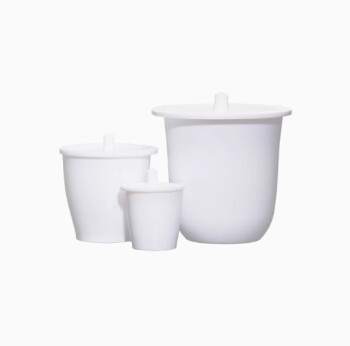
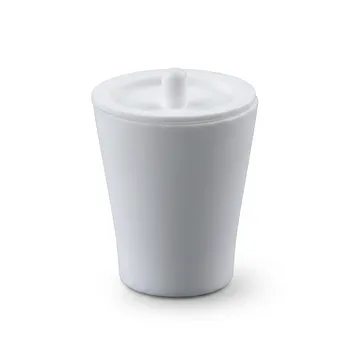
The internal Teflon (PTFE) liner is utilized for its exceptional chemical inertness and resistance to corrosion. Synthesis of $SrTiO_3$ often involves corrosive alkaline solutions which would aggressively attack and erode standard metal surfaces. The Teflon barrier ensures that these harsh chemicals do not come into direct contact with the stainless steel walls.
Preventing Metal Contamination
A critical aspect of $SrTiO_3$ synthesis is achieving high phase purity. Because the Teflon liner prevents the reaction medium from eroding the metal casing, it eliminates the risk of metallic impurities leaching into the solution. This ensures that the resulting Strontium Titanate nanoparticles or crystals are not contaminated by iron, chromium, or nickel from the steel shell.
Enhancing Equipment Longevity
Beyond protecting the product, the liner also extends the service life of the autoclave itself. By shielding the load-bearing stainless steel from corrosive attack, the liner prevents structural degradation such as pitting or stress-corrosion cracking. Additionally, the smooth surface of the PTFE material makes it easier to recover solid precipitates and clean the vessel between batches.
Understanding the Trade-offs
Temperature Constraints
While Teflon is highly resistant to chemicals, it has a lower thermal ceiling than the metal shell it protects. Users must carefully monitor synthesis temperatures, as exceeding the safe operating limit of PTFE (typically around 220°C to 250°C) can lead to liner deformation or "creeping." This limitation defines the upper boundary of the hydrothermal processing window for $SrTiO_3$.
Pressure and Filling Ratios
The internal pressure is directly related to the filling degree of the autoclave. If the liner is overfilled, the expansion of the liquid at high temperatures can create excessive pressure that might exceed the safety limits of the stainless steel shell. Achieving the correct balance between the volume of the $SrTiO_3$ precursor and the remaining "headspace" is vital for safe operation.
How to Apply This to Your Project
When utilizing a Teflon-lined autoclave for the synthesis of $SrTiO_3$, your choice of parameters should align with your specific material requirements:
- If your primary focus is Maximum Purity: Ensure the Teflon liner is free of scratches or degradation, as any breach in the liner will allow the alkaline solution to leach metal ions from the outer shell into your $SrTiO_3$ sample.
- If your primary focus is High Crystallinity: Optimize the temperature within the safe limits of the PTFE liner (typically 150°C–200°C) to provide sufficient energy for the $SrTiO_3$ crystals to grow uniformly.
- If your primary focus is Equipment Safety: Always calculate the expansion of your aqueous precursors to ensure the autogenous pressure generated does not exceed the rated mechanical strength of the stainless steel casing.
The synergy between the structural power of steel and the chemical resilience of Teflon is what makes the hydrothermal production of high-quality Strontium Titanate possible.
Summary Table:
| Component | Primary Function | Material Advantage |
|---|---|---|
| Stainless Steel Shell | Structural Integrity | Withstands high autogenous pressure and mechanical stress. |
| Teflon (PTFE) Liner | Chemical Inertness | Prevents corrosion from alkaline precursors and metal leaching. |
| Sealed System | Pressure Management | Increases precursor solubility and facilitates crystallization. |
| Thermal Control | Reaction Energy | Maintains stable environment up to 220°C-250°C limits. |
Elevate Your Synthesis with KINTEK Precision
Achieve uncompromising purity in your hydrothermal research with KINTEK’s high-performance fluoropolymer solutions. We specialize in the end-to-end manufacturing of virtually every laboratory essential crafted from PTFE and PFA.
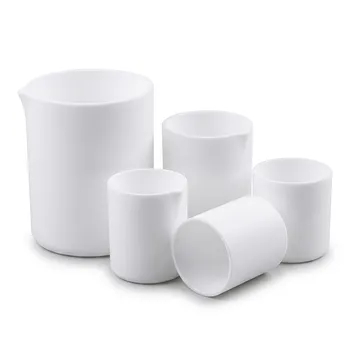
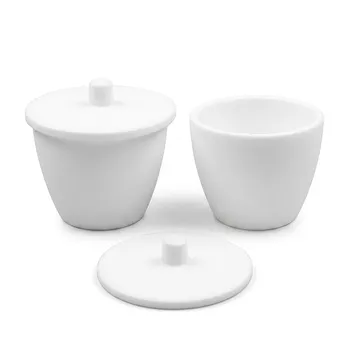
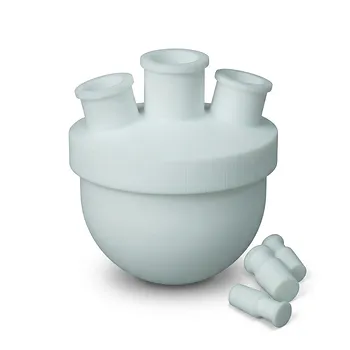
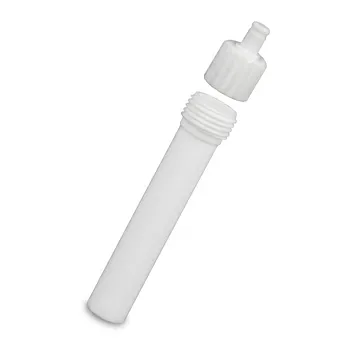
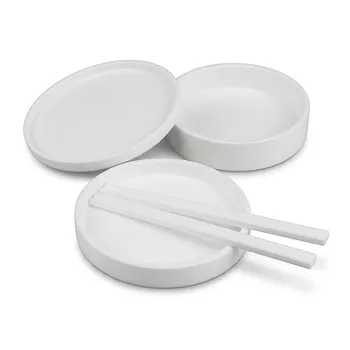
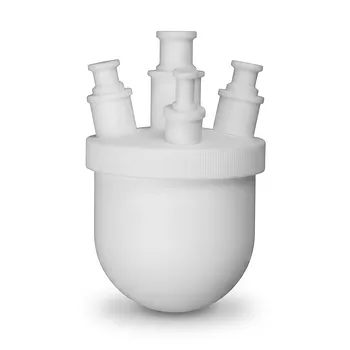
Whether you need standard labware like beakers and crucibles, or specialized reaction apparatus such as hydrothermal synthesis liners, microwave digestion vessels, and custom electrochemical cells, our expertise ensures your equipment withstands the harshest chemical environments.
Why partner with KINTEK?
- Comprehensive Range: From fluid transfer components (tubing, valves) to sample prep tools and high-volume consumables (O-rings, gaskets).
- Bespoke Engineering: Our custom CNC fabrication delivers complex, non-standard machined parts tailored to your unique experimental setups.
- Material Focus: An absolute commitment to high-performance fluoropolymers ensures maximum longevity and zero contamination for your sensitive samples.
Ready to optimize your laboratory performance? Contact us today to discuss your custom requirements and discover the KINTEK advantage.
References
- Nathália Tavares Costa, Guido Mul. Facet‐Dependent Performance of Microstructured <scp>S</scp>r<scp>T</scp>i<scp>O</scp><sub>3</sub> Particles in Photocatalytic Oxidation of Acetone. DOI: 10.1002/eem2.12862
This article is also based on technical information from Kintek Knowledge Base .
Related Products
- Custom TFM Reaction Vessel with Stainless Steel Jacket and PTFE Inner Cup for High Corrosion Resistance
- PTFE Lined High Pressure Digestion Vessel 50ml High Temperature Hydrothermal Synthesis Tank
- High Temperature Corrosion Resistant Hydrothermal Synthesis Reactor with TFM Inner Liner and Straight Cylinder Design
- High Pressure PTFE Digestion Vessel Inner Cup Holder Custom Corrosion Resistant Low Background Teflon
- Customizable PTFE Crucibles for Laboratory and Industrial Applications
People Also Ask
- Why are high-performance pressure-resistant reaction vessels required for oxygen-assisted hydrothermal conversion at 150 °C?
- Why are PTFE-lined reaction vessels necessary for forced degradation studies? Ensure high-purity results and accuracy.
- How do magnetic stirring and reaction vessels impact MOF-derived carbon quality? Optimize Your Composite Performance
- Why are PTFE-lined reaction vessels necessary for alkali stability tests? Ensure accurate ionomer degradation data.
- Why is a PTFE-lined reactor required for Mn2O3 synthesis? Achieve High Purity & Corrosion Resistance