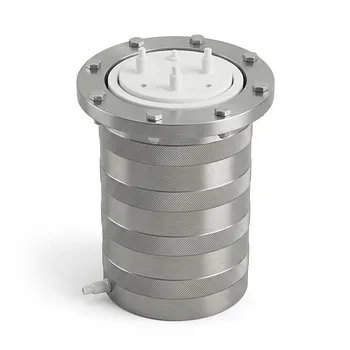
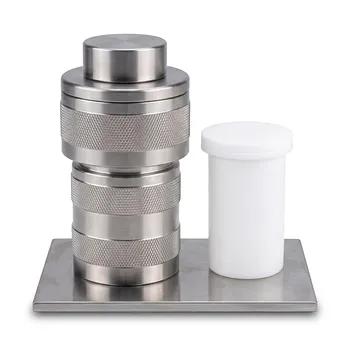
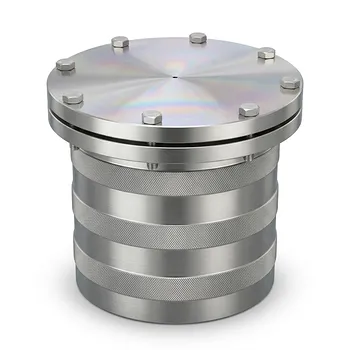
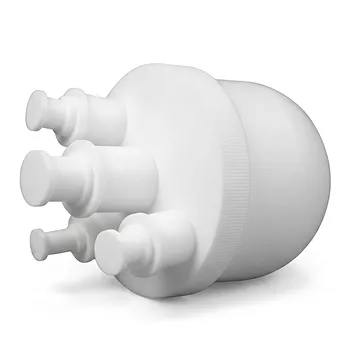
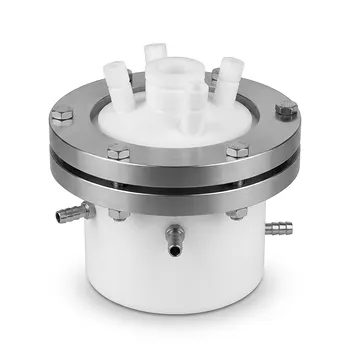
A high-pressure hydrothermal reactor acts as a specialized chemical furnace that creates a sealed, high-temperature environment necessary for the simultaneous formation of carbon quantum dots and the growth of semiconductor nanocrystals. This reactor provides the subcritical conditions required to carbonize organic precursors and facilitate the in-situ crystallization of cadmium sulfide (CdS) directly onto the resulting carbon surfaces.
Core Takeaway: The hydrothermal reactor enables a "one-pot" synthesis where high pressure and temperature (typically up to 200°C) force organic molecules to carbonize into quantum dots while simultaneously driving the nucleation of high-purity CdS nanocrystals onto those dots to form a stable nanocomposite.
The Mechanics of the Hydrothermal Environment
Creating Subcritical Conditions
The primary function of the reactor is to maintain a sealed environment where water or other solvents can be heated beyond their boiling points. These subcritical conditions significantly increase the reactivity and solubility of the precursors, allowing chemical reactions to occur that would be impossible at atmospheric pressure.
Enhancing Solvent Reactivity
Under high pressure, the solvent acts as a powerful medium for mass transfer. This accelerated reactivity is essential for reducing metal precursors and driving the dehydration and polymerization of carbon sources like mulberry molasses or glucose.
Ensuring Structural Integrity
The sealed nature of the reactor prevents the loss of volatile components and maintains a constant concentration of reactants. This stability ensures that the resulting CQD/CdS nanocomposites possess high crystallinity and a robust structural bond between the carbon and the metal sulfide.
Driving the Synthesis of Carbon Quantum Dots (CQDs)
Carbonization and Nucleation
The reactor provides the thermal energy required to break down complex organic molecules into smaller fragments. These fragments then undergo pyrolysis and carbonization, eventually nucleating into spherical nanoscale particles known as carbon quantum dots.
Surface Functionalization
High-pressure environments facilitate the passivation of the carbon surface, often resulting in the formation of hydroxyl, amino, or carboxyl groups. These functional groups are critical because they dictate the solubility of the dots and provide "anchor points" for the CdS crystals.
Achieving Quantum Size Effects
By precisely controlling the temperature and reaction time within the reactor, researchers can limit the growth of the carbon particles. This ensures they remain small enough to exhibit quantum size effects, which are responsible for the unique fluorescent properties of CQDs.
Facilitating CdS In-Situ Growth and Integration
Promoting In-Situ Crystallization
The hydrothermal process allows for in-situ growth, meaning the cadmium sulfide nanocrystals form directly on the surface of the CQDs as they are being created. This leads to a much tighter integration than simply mixing two pre-made materials together.
Controlling Crystal Morphology
The high-pressure environment allows for the fine-tuning of the CdS crystal facets. By adjusting the reactor settings, the morphology and crystallinity of the CdS can be optimized to enhance the photocatalytic or electronic properties of the final nanocomposite.
Formation of Stable Heterojunctions
The reactor’s conditions promote the efficient coupling of the nanoparticles at the heterojunction interface. This intimate contact is vital for efficient electron transfer between the CQDs and the CdS, which is a primary goal in energy and sensing applications.
Understanding the Trade-offs
Process Sensitivity and Control
While hydrothermal reactors offer superior control over crystallinity, they are highly sensitive to temperature fluctuations. Small deviations in heat can lead to variations in particle size or unintended crystal phases, compromising the batch's uniformity.
Reactor Material Limitations
The use of corrosive precursors or catalysts requires the use of high-purity PTFE or PFA liners. If these liners are compromised, the metal reactor body can leach contaminants into the reaction, significantly reducing the fluorescent purity and performance of the nanocomposites.
Scalability Challenges
Hydrothermal synthesis is typically a batch process, which can be difficult to scale for industrial production. Increasing the volume of the reactor introduces challenges in maintaining uniform heat distribution, which is essential for consistent nanoparticle quality.
Applying This to Your Project
Making the Right Choice for Your Goal
- If your primary focus is high fluorescent purity: Ensure your reactor is equipped with a clean PTFE liner to prevent metal contamination during the long carbonization process.
- If your primary focus is maximized photocatalytic activity: Prioritize higher temperatures (near 200°C) to ensure high crystallinity and a strong interface between the CdS and the CQD.
- If your primary focus is precise particle size control: Utilize shorter reaction times and carefully monitor the cooling phase to "quench" the growth of the nanocrystals at the desired size.
The high-pressure hydrothermal reactor remains the definitive tool for synthesizing CQD/CdS nanocomposites by providing the extreme, controlled environment necessary for complex molecular transformations.
Summary Table:
| Synthesis Phase | Reactor Function | Impact on Nanocomposite |
|---|---|---|
| Carbonization | High-temp thermal energy | Converts organic precursors into spherical CQDs |
| In-situ Growth | Subcritical solvent reactivity | Drives CdS nucleation directly onto carbon surfaces |
| Passivation | Sealed high-pressure environment | Creates surface functional groups (hydroxyl, amino) |
| Crystallization | Precise temperature control | Ensures high crystallinity and stable heterojunctions |
| Quality Control | PTFE/PFA Liner protection | Prevents metal contamination and ensures chemical purity |
Elevate Your Nanomaterial Synthesis with KINTEK Precision
Successful hydrothermal synthesis demands the highest levels of chemical purity and thermal stability. KINTEK specializes in high-performance fluoropolymer solutions tailored for demanding laboratory environments. From our high-purity PTFE and PFA hydrothermal synthesis liners and microwave digestion vessels to essential labware like beakers, reagent bottles, and centrifuge tubes, we ensure your reaction remains free from contamination.
Our expertise extends beyond standard supplies to comprehensive fluid transfer components (tubing, valves), sample prep tools, and advanced custom CNC fabrication for non-standard machined parts and bespoke laboratory setups. Whether you are scaling up CQD production or conducting precision electrochemical testing, KINTEK provides the end-to-end reliability your research deserves.
Ready to optimize your lab's performance? Contact us today to discuss your custom fluoropolymer requirements!
References
- Orhan Baytar, Sinan Kutluay. Facile fabrication of carbon quantum dot-based CdS and Co-doped CdS nanocomposites as effective sensitizers for solar cell applications: a hydrothermal synthesis approach. DOI: 10.1007/s10854-025-14914-9
This article is also based on technical information from Kintek Knowledge Base .
Related Products
- High Temperature Corrosion Resistant Hydrothermal Synthesis Reactor with TFM Inner Liner and Straight Cylinder Design
- High Pressure Custom TFM Reactor Stainless Steel Outer Vessel PTFE Inner Cup for Corrosive Synthesis
- PTFE Lined High Pressure Digestion Vessel 50ml High Temperature Hydrothermal Synthesis Tank
- Custom TFM Reaction Vessel with Stainless Steel Jacket and PTFE Inner Cup for High Corrosion Resistance
- High Purity PFA Constant Pressure Condensation Reaction System Acid Resistant High Temperature Customizable Teflon Labware
People Also Ask
- What is the role of a corrosion-resistant reactor in the synthesis of lignin-based carbon dots? Ensure Maximum Purity
- What are the technical advantages of using hydrothermal synthesis reactors for advanced electronic & optical nanomaterials?
- How does a hydrothermal synthesis reactor facilitate the production of crystalline materials with tailored morphologies? Precision Crystal Growth
- Why is the sealing reliability of a hydrothermal synthesis reactor critical for 24-hour cycles? Ensure Nano-Precision
- What role do hydrothermal synthesis reactors play in CQD preparation? Achieve High-Purity Nanomaterial Synthesis