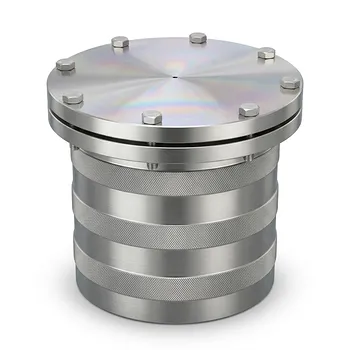
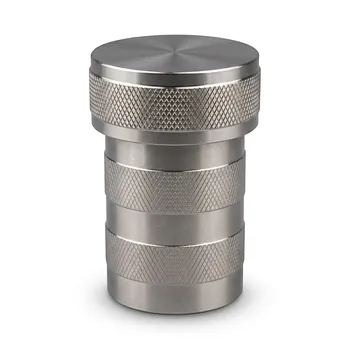
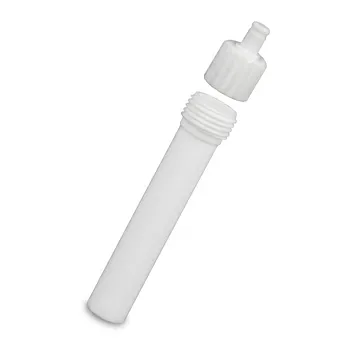
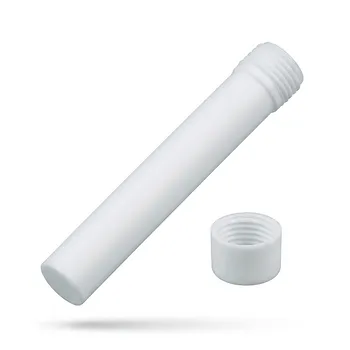
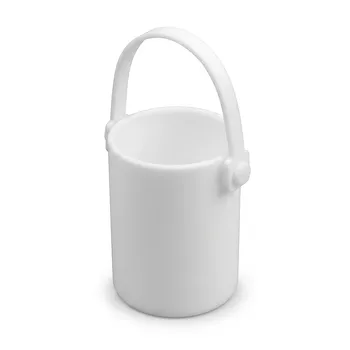
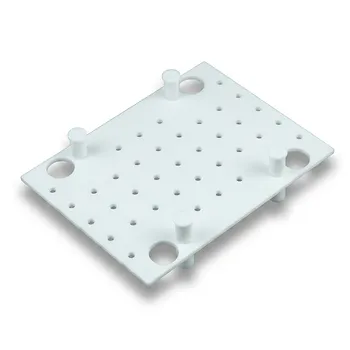
The necessity of a PTFE-lined hydrothermal autoclave stems from its dual role as a chemical shield and a pressure vessel. It provides a sealed, corrosion-resistant environment that allows the synthesis to occur at high temperatures and autogenous pressures without contaminating the rGO-ZnO product with metallic ions or damaging the structural integrity of the reactor.
A PTFE liner acts as an inert barrier that survives the aggressive alkaline conditions required for rGO-ZnO synthesis, ensuring that the resulting nanopowders maintain high chemical purity and crystallinity while protecting the stainless steel autoclave body from corrosive failure.
Protecting Equipment from Chemical Erosion
Resistance to Strong Alkaline Environments
The synthesis of rGO-ZnO typically involves strong alkaline precursors, such as sodium hydroxide. At elevated temperatures, these chemicals are highly corrosive to standard metals.
Polytetrafluoroethylene (PTFE) is exceptionally inert and resists chemical attack from these bases. Without this liner, the alkaline solution would directly erode the interior of the stainless steel autoclave.
Preservation of the Stainless Steel Housing
The stainless steel body of the autoclave provides the mechanical strength to hold high pressure but is susceptible to pitting and stress corrosion.
The PTFE liner serves as a physical isolation layer. By preventing the reaction fluid from touching the steel, it extends the lifespan of the equipment and prevents catastrophic vessel failure.
Ensuring Product Purity and Crystallinity
Elimination of Metallic Ion Contamination
In semiconductor synthesis like ZnO, the presence of trace metal impurities can drastically alter electronic and optical properties.
If the reaction solution were to react with the autoclave walls, iron, nickel, or chromium ions would leach into the nanopowder. The chemical inertness of PTFE ensures that the final rGO-ZnO product remains free of these unwanted metallic contaminants.
Facilitating High Crystallinity
The hydrothermal method relies on autogenous pressure—pressure generated by heating a liquid in a sealed volume—to guide the growth of crystals.
The PTFE liner maintains a stable, sealed environment that allows for the precise nucleation and growth of nanoparticles. This stability is critical for achieving the high crystallinity and monodispersity required for functional nanomaterials.
Improving Powder Yield
PTFE has a notably low surface energy, making it "non-stick" for most chemical compounds.
This property reduces the adhesion of rGO-ZnO particles to the vessel walls during the aging process. Consequently, researchers can achieve more stable and predictable powder yields during collection.
Understanding the Trade-offs and Limitations
Temperature Constraints
While PTFE is highly resistant to chemicals, it has a lower thermal threshold than the steel housing.
Most PTFE liners are limited to a maximum continuous operating temperature of 200°C to 250°C. Exceeding these limits can cause the liner to soften or deform, potentially leading to a seal failure or "creeping" under pressure.
Thermal Expansion Mismatch
PTFE expands at a different rate than stainless steel when heated.
Engineers must account for this thermal expansion to prevent the liner from buckling or cracking. It is essential to heat and cool the autoclave slowly to maintain the integrity of the PTFE seal and the structural safety of the assembly.
How to Apply This to Your Project
When selecting or using a hydrothermal autoclave for rGO-ZnO synthesis, consider your specific experimental parameters to ensure safety and purity.
- If your primary focus is high chemical purity: Always use a high-purity PTFE liner to eliminate the risk of iron or chromium leaching from the stainless steel reactor body.
- If your primary focus is alkaline-based synthesis: Ensure the PTFE liner is inspected regularly for thinning or "bubbling," as strong bases at high temperatures can eventually wear down the material over many cycles.
- If your primary focus is high-temperature reduction (above 200°C): Verify if your PTFE liner is rated for that specific heat, or consider a PPL (Polyphenylene polymers) liner, which offers higher temperature resistance than standard PTFE.
By utilizing a PTFE-lined system, you effectively decouple the chemical requirements of the reaction from the mechanical requirements of the pressure vessel, ensuring a high-quality synthesis of rGO-ZnO nanopowders.
Summary Table:
| Feature | Role in rGO-ZnO Synthesis | Benefit to Researcher |
|---|---|---|
| Chemical Inertness | Resists strong alkaline precursors (e.g., NaOH) | Prevents vessel corrosion and failure |
| Isolation Layer | Blocks contact between fluid and steel housing | Eliminates metallic ion contamination |
| Low Surface Energy | "Non-stick" property for nanoparticles | Increases powder yield and eases collection |
| Pressure Stability | Maintains sealed, autogenous pressure | Promotes high crystallinity and monodispersity |
| Thermal Limit | Operates safely up to 200°C - 250°C | Ideal for most hydrothermal reduction steps |
Elevate Your Research with KINTEK’s High-Performance Fluoropolymer Solutions
Achieve uncompromising purity in your nanomaterial synthesis with KINTEK. We specialize in high-performance PTFE and PFA laboratory supplies designed to withstand the most aggressive chemical environments. From everyday essentials like beakers, crucibles, and reagent bottles to advanced hydrothermal synthesis liners and microwave digestion vessels, KINTEK provides the chemical shield your experiments require.
Our expertise goes beyond standard supplies. We offer:
- Comprehensive Fluid Transfer: Tubing, fittings, and valves for precise control.
- Sample Prep & Filtration: High-purity filters, pipettes, and separatory funnels.
- Advanced Reaction Apparatus: Custom electrochemical cells, battery testing fixtures, and microchannel reactors.
- End-to-End Customization: Bespoke CNC fabrication for non-standard machined parts tailored to your unique setup.
Whether you need high-volume consumables or a one-of-a-kind experimental rig, KINTEK delivers precision-crafted solutions with an absolute focus on fluoropolymer excellence.
Ready to optimize your lab's performance? Contact us today to discuss your project!
References
- İkbal Gözde Kaptanoğlu, Iro Dianellou. Investigation of thorium(IV) removal utilizing reduced graphene oxide-zinc oxide nanofibers via response surface methodology. DOI: 10.1007/s10967-025-10095-1
This article is also based on technical information from Kintek Knowledge Base .
Related Products
- PTFE Lined High Pressure Digestion Vessel 50ml High Temperature Hydrothermal Synthesis Tank
- Custom TFM Reaction Vessel with Stainless Steel Jacket and PTFE Inner Cup for High Corrosion Resistance
- High Temperature Corrosion Resistant Hydrothermal Synthesis Reactor with TFM Inner Liner and Straight Cylinder Design
- High Purity PTFE Microwave Digestion Vessel Replacement Liner for Acid Sample Preparation and Trace Analysis
- High Purity TFM Microwave Digestion Vessels PTFE Acid Evaporation Liners Domestic GT-400 Equivalent Laboratory Reaction Containers
People Also Ask
- What are the benefits of using a PTFE-lined vessel for carbon-sulfur cathode treatment? Maximize Purity & Performance
- Why are PTFE-lined pressure digestion vessels required for the preparation of Ag/CeO2 catalysts? Purity & Performance
- What safety features are typically incorporated into high-pressure PTFE digestion vessel designs? Ensure Lab Safety
- What is the function of PTFE lined high-pressure vessels in g-C3N4 synthesis? Achieve High-Purity Material Growth
- Role of High-Pressure Digestion Tanks in Perovskite Synthesis: Achieve Superior Stability and Latent Heat