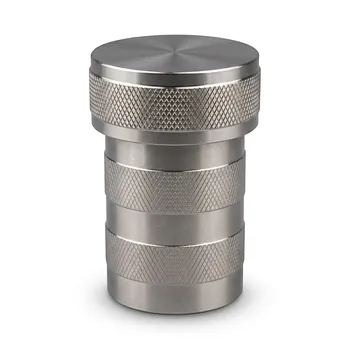
The PTFE-lined stainless steel autoclave is the specialized vessel for hematite nanorod synthesis because it uniquely combines extreme mechanical strength with total chemical passivity. This dual-layered design allows for the safe generation of high autogenous pressure while ensuring that the strong alkaline precursors do not corrode the reactor or introduce metallic impurities. By maintaining a pristine environment under high heat, the equipment facilitates the precise recrystallization of iron precursors into uniform nanorod structures.
Core Takeaway: A PTFE liner acts as a sacrificial but highly resistant barrier that protects the structural integrity of the stainless steel autoclave from corrosive synthesis gels. This setup is mandatory to achieve the high-purity, high-crystallinity environment necessary for the controlled growth of hematite nanostructures.
The Synergy of Mechanical Strength and Chemical Stability
Structural Resilience via Stainless Steel
The stainless steel exterior functions as the primary pressure vessel, providing the mechanical strength required to withstand high internal forces. During hydrothermal synthesis, temperatures often exceed the boiling point of water, creating autogenous pressure within the sealed chamber. This high-pressure environment is the physical catalyst that promotes the nucleation and growth of single-phase hematite crystals.
Chemical Inertness via PTFE
The Polytetrafluoroethylene (PTFE) liner serves as the internal "skin" that interfaces directly with the reaction media. PTFE is exceptionally resistant to strong alkaline solutions, such as high-concentration sodium hydroxide (NaOH), which are commonly used to facilitate the synthesis of iron oxide nanostructures. Without this liner, the caustic environment would rapidly erode the metallic walls of the autoclave.
Maintaining a Sealed Reaction Environment
The combination of the liner and the steel shell ensures a reliable, airtight seal during the heating process. This containment is critical for maintaining the specific thermodynamic conditions required for the transformation of raw ores into nanorods. The airtight nature prevents the loss of volatile components and ensures consistent pressure throughout the reaction duration.
Safeguarding Nanomaterial Purity and Structure
Prevention of Metallic Contamination
One of the most critical roles of the PTFE liner is to prevent metal ion leaching from the stainless steel shell into the reaction mixture. In nanomaterial synthesis, even trace amounts of chromium, nickel, or iron from the autoclave walls can act as dopants, fundamentally altering the electronic and structural properties of the hematite nanorods. PTFE ensures that the synthesized product remains high-purity.
Promoting Uniform Crystal Growth
A clean, non-reactive environment is essential for the precise recrystallization of hematite. The chemical passivity of PTFE prevents secondary reactions between the precursor solution and the vessel walls, which could otherwise trigger irregular nucleation. This results in more uniform nanorod dimensions and higher overall crystallinity.
Minimizing Product Adhesion
PTFE possesses an extremely low surface energy, which significantly reduces the likelihood of the synthesized nanorods sticking to the vessel walls. This "non-stick" property ensures higher recovery rates of the final product and simplifies the cleaning process between batches. By preventing adhesion, the liner also ensures that the growth of nanorods occurs primarily within the bulk solution rather than on the container surface.
Understanding the Technical Trade-offs
Temperature Limitations of PTFE
While PTFE is highly resistant to chemicals, it has distinct thermal limits, generally becoming unstable above 250°C. For synthesis requiring extreme temperatures beyond this range, researchers must shift to alternative materials like PPL (polyphenylene polymers) or quartz liners. Exceeding the thermal limit of PTFE can lead to liner deformation or the release of toxic vapors.
Thermal Expansion Disparity
PTFE and stainless steel have significantly different coefficients of thermal expansion. As the autoclave heats up, the PTFE liner expands more rapidly than the steel shell, which can lead to stress or "pinching" of the liner if not properly sized. This disparity requires careful engineering of the liner dimensions to prevent structural failure or leakage under high-pressure conditions.
Porosity and Memory Effects
Over repeated cycles, PTFE can become slightly porous, potentially absorbing trace amounts of precursors from previous reactions. This "memory effect" can lead to cross-contamination if the liner is not meticulously cleaned or replaced periodically. For high-stakes synthesis where absolute purity is required, liners are often dedicated to specific chemical systems.
Optimization Strategies for Hydrothermal Synthesis
How to Apply This to Your Project
To ensure the best results when using a PTFE-lined autoclave for hematite synthesis, consider the following tactical recommendations:
- If your primary focus is Maximum Purity: Dedicate a specific PTFE liner to your hematite project to eliminate the risk of cross-contamination from different metallic precursors.
- If your primary focus is Safety and Longevity: Never exceed a 70-80% fill volume in the PTFE liner to allow for liquid expansion and prevent "over-pressurization" that could deform the seal.
- If your primary focus is Structural Uniformity: Ensure the heating rate is gradual to allow the PTFE liner and the stainless steel shell to expand at a manageable rate, maintaining a consistent seal.
By balancing the structural power of steel with the chemical passivity of PTFE, researchers can reliably produce the high-quality hematite nanostructures required for advanced applications.
Summary Table:
| Feature | Component | Primary Benefit for Synthesis |
|---|---|---|
| Mechanical Strength | Stainless Steel Shell | Withstands high autogenous pressure during heating. |
| Chemical Passivity | PTFE Liner | Resists caustic alkaline precursors (e.g., NaOH). |
| Contamination Control | PTFE Liner | Prevents metal ion leaching (Cr, Ni, Fe) into the sample. |
| Product Recovery | PTFE Surface | Low surface energy prevents nanorod adhesion to walls. |
| Thermal Limit | PTFE Material | Maintains stability for reactions up to 250°C. |
Elevate Your Research Precision with KINTEK Fluoropolymer Solutions
Achieving high-purity results in hydrothermal synthesis requires equipment that refuses to compromise. KINTEK specializes in high-performance PTFE and PFA laboratory supplies designed for the most demanding chemical environments.
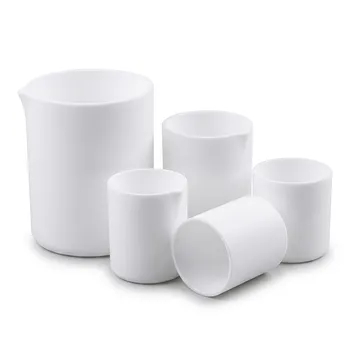
From everyday basic labware—including beakers, crucibles, and reagent bottles—to specialized hydrothermal synthesis liners, microwave digestion vessels, and custom electrochemical cells, we provide the chemical inertness your research demands. Our capabilities include:
- Comprehensive Labware: Centrifuge tubes, filtration tools, and fluid transfer components (tubing, valves, fittings).
- Advanced Apparatus: Custom reaction vessels, battery testing fixtures, and microchannel reactors.
- Bespoke Fabrication: End-to-end custom CNC machining for non-standard parts tailored to your specific reactor dimensions.
Whether you need a single custom-machined component or high-volume consumables, KINTEK’s absolute focus on high-performance fluoropolymers ensures your lab is equipped for success.
Ready to upgrade your synthesis setup? Contact KINTEK today to discuss your project requirements and experience the durability of precision-engineered PTFE.
References
- Dina Mostafa, Mostafa R. Abukhadra. Steric and energetic studies on adsorption of toxic arsenic ions by hematite nano-rods from laterite highlighting the impact of modification periods. DOI: 10.1038/s41598-025-94802-8
This article is also based on technical information from Kintek Knowledge Base .
Related Products
- Custom TFM Reaction Vessel with Stainless Steel Jacket and PTFE Inner Cup for High Corrosion Resistance
- PTFE Lined High Pressure Digestion Vessel 50ml High Temperature Hydrothermal Synthesis Tank
- High Pressure Custom TFM Reactor Stainless Steel Outer Vessel PTFE Inner Cup for Corrosive Synthesis
- High Purity PTFE Microwave Digestion Vessel Replacement Liner for Acid Sample Preparation and Trace Analysis
- High Purity TFM Microwave Digestion Vessels PTFE Acid Evaporation Liners Domestic GT-400 Equivalent Laboratory Reaction Containers
People Also Ask
- Why are high-performance pressure-resistant reaction vessels required for oxygen-assisted hydrothermal conversion at 150 °C?
- Why are high-quality fluoropolymer-lined reaction vessels required for alk-Ti3C2Tx MXene? Ensure Purity & HF Resistance
- How do magnetic stirring and reaction vessels impact MOF-derived carbon quality? Optimize Your Composite Performance
- Why are PTFE-lined reaction vessels necessary for forced degradation studies? Ensure high-purity results and accuracy.
- Why is a high-purity PTFE lined reaction vessel required for the acidic etching of MXenes? Ensure Material Purity.