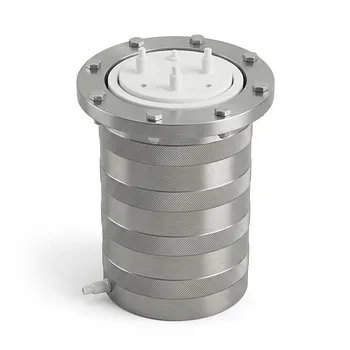
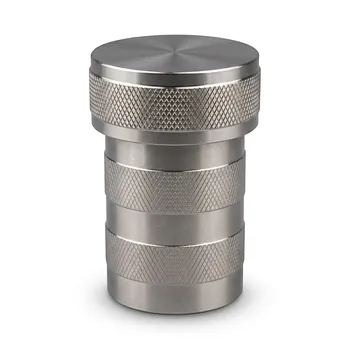
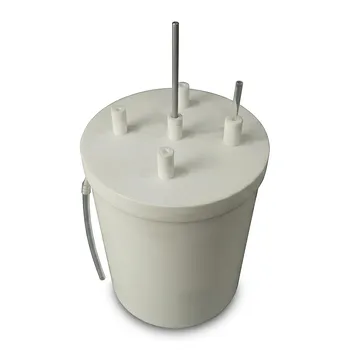
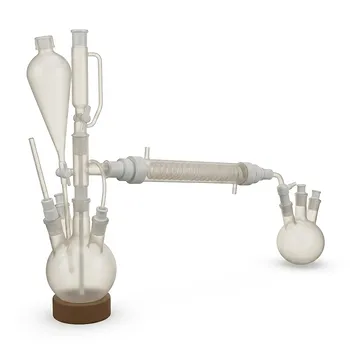
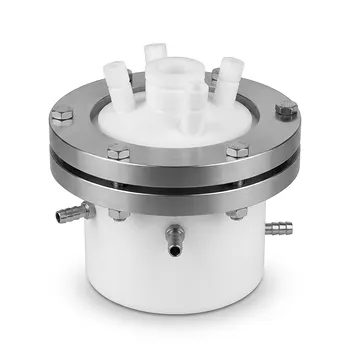
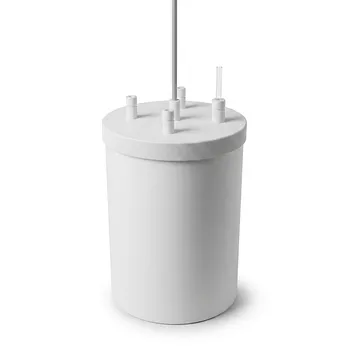
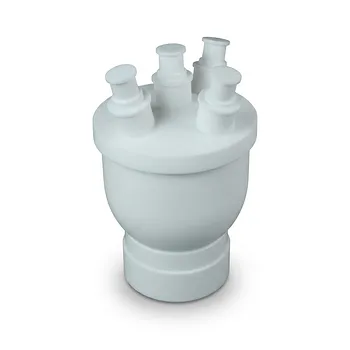
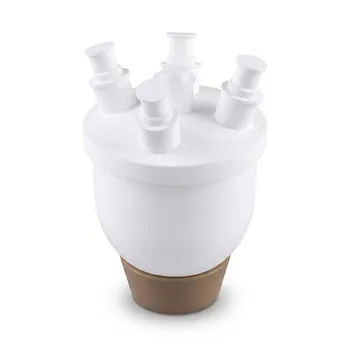
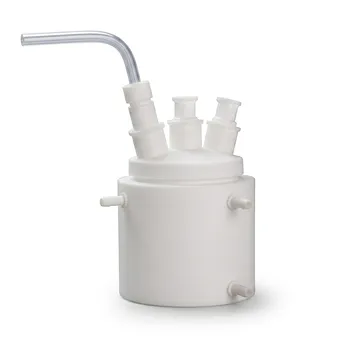
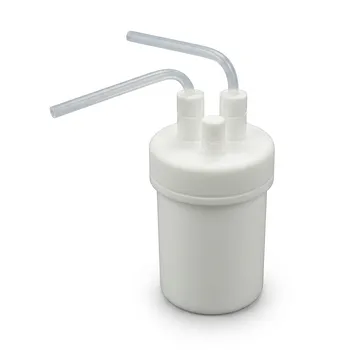
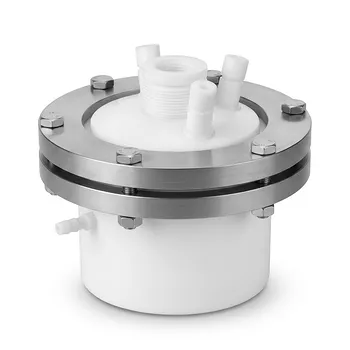
The high-pressure hydrothermal synthesis reactor and its PTFE liner function as a controlled thermodynamic vessel and a chemical isolation barrier, respectively. In the fabrication of Zinc Oxide (ZnO) nanostructures, the reactor provides a sealed environment that maintains the high temperatures and autogenous pressures necessary for precursor supersaturation. The PTFE liner ensures the integrity of this process by providing a chemically inert surface that prevents corrosive reagents from reacting with the autoclave body.
The hydrothermal reactor enables precise control over ZnO morphology and crystallinity by manipulating pressure and temperature, while the PTFE liner acts as a critical safeguard against metal ion contamination and reactor corrosion.
The Role of the High-Pressure Reactor in ZnO Synthesis
Driving Supersaturation and Nucleation
The reactor facilitates a state of moderate supersaturation within the chemical solution by maintaining a closed, high-temperature environment. This state is the primary driver for zinc source ions to nucleate and grow along specific crystallographic directions.
By adjusting the precursor concentration and reaction duration, researchers can use the reactor to precisely control morphologies. This allows for the transition from simple nanoparticles to complex, high-aspect-ratio nanorods.
Enhancing Solubility Through Autogenous Pressure
As the temperature rises within the sealed vessel, the solvent generates autogenous pressure. This pressure significantly increases the solubility and diffusion rates of the reactants, which is essential for synthesizing dense ZnO nanostructures.
These elevated conditions allow for reactions to occur at subcritical temperatures, typically between 180°C and 220°C. This promotes the growth of crystals with high crystallinity and specific structural orientations that are unattainable at atmospheric pressure.
The Critical Functions of the PTFE Liner
Chemical Isolation and Corrosion Resistance
ZnO synthesis often requires the use of strong bases such as Sodium Hydroxide (NaOH) or concentrated ammonia. The Polytetrafluoroethylene (PTFE) liner is essential because it is exceptionally resistant to these corrosive precursors.
The liner prevents the reaction solution from making direct contact with the stainless steel autoclave body. Without this barrier, the corrosive environment would degrade the reactor and compromise the safety of the high-pressure system.
Eliminating Metal Ion Contamination
The high-purity nature of PTFE ensures a reaction environment with extremely low leachable characteristics. This prevents iron or other metal ions from the reactor walls from leaching into the solution.
Maintaining this purity is vital for the optoelectronic properties of ZnO nanostructures. Even trace amounts of metal impurities can degrade the crystalline quality and alter the semiconductor performance of the final product.
Understanding the Trade-offs and Limitations
Thermal Constraints of PTFE
While PTFE offers excellent chemical resistance, it has a lower thermal ceiling compared to the steel reactor body. Operating near or above 250°C can lead to the deformation of the liner, potentially causing the seal to fail.
Reaction Kinetics and Scaling
Hydrothermal synthesis is highly effective for quality but can be a slow process compared to other fabrication methods. Achieving specific morphologies like hollow spheres or complex nanocomposites often requires extended reaction times at constant volumes.
How to Apply This to Your Project
Guidelines for Successful Synthesis
- If your primary focus is Morphology Control: Precisely calibrate the reaction duration and precursor concentration within the reactor to influence the crystallographic growth direction.
- If your primary focus is High Purity: Ensure the PTFE liner is thoroughly cleaned and free of scratches to prevent the entrapment of previous reaction residues or metal ions.
- If your primary focus is Crystalline Quality: Utilize the highest stable subcritical temperatures (up to 220°C) to maximize the diffusion rates and solubility of the zinc sources.
By mastering the balance between the reactor's thermodynamic power and the liner's chemical protection, you can achieve unprecedented precision in ZnO nanostructure fabrication.
Summary Table:
| Component | Primary Function | Key Benefits |
|---|---|---|
| Hydrothermal Reactor | Thermodynamic Environment | High solubility, morphology control, and autogenous pressure |
| PTFE Liner | Chemical & Ion Isolation | Corrosion resistance against strong bases and zero metal contamination |
| Combined System | Controlled Synthesis Vessel | High crystallinity and precisely engineered ZnO nanostructures |
Elevate your material synthesis with KINTEK’s high-performance fluoropolymer solutions. From high-purity PTFE/PFA hydrothermal synthesis liners and digestion vessels to custom CNC-machined lab components, we provide the absolute precision your ZnO research demands. Whether you need standard labware—like beakers, crucibles, and reagent bottles—or complex reaction apparatus like electrochemical cells and microwave digestion vessels, KINTEK delivers end-to-end quality for high-volume or bespoke orders. Contact us today to optimize your lab setup and ensure material purity.
References
- Phanlapa Borklom, Jiti Nukeaw. Tailoring ZnO Nanostructures through Precursor Concentration and Hydrothermal Duration: A Pathway to Efficient Solar Water Splitting. DOI: 10.55003/cast.2025.264784
This article is also based on technical information from Kintek Knowledge Base .
Related Products
- High Pressure Custom TFM Reactor Stainless Steel Outer Vessel PTFE Inner Cup for Corrosive Synthesis
- PTFE Lined High Pressure Digestion Vessel 50ml High Temperature Hydrothermal Synthesis Tank
- High Temperature Corrosion Resistant Hydrothermal Synthesis Reactor with TFM Inner Liner and Straight Cylinder Design
- Custom TFM Reaction Vessel with Stainless Steel Jacket and PTFE Inner Cup for High Corrosion Resistance
- PTFE 10L Reaction Vessel with Stirring Paddle Customizable Corrosion Resistant High Temperature Reactor for Biopharmaceutical and Chemical Processing
People Also Ask
- Why is a PTFE-lined reactor required for Mn2O3 synthesis? Achieve High Purity & Corrosion Resistance
- What is the technical value of 180 bar pressure for MgO nanostructures? Unlock Superior Crystallinity and Morphology
- What are the technical advantages of using high-pressure PTFE reaction vessels during metal digestion? Expert Insights.
- How does the regulation of initial pressure within a high-pressure reaction system affect the production of MIL-100(Fe)?
- Why is a high-pressure reactor necessary for the esterification reaction between oleic acid and methanol at 150°C? Guide