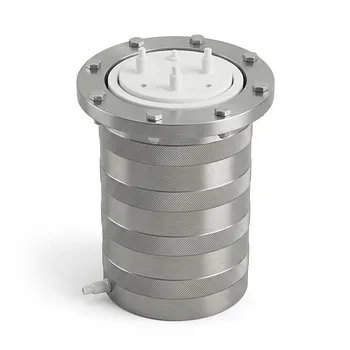
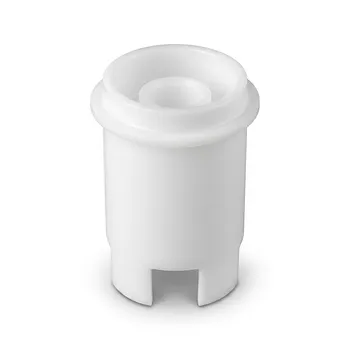
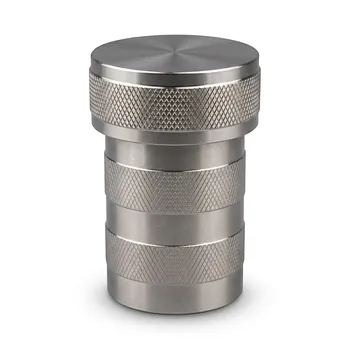
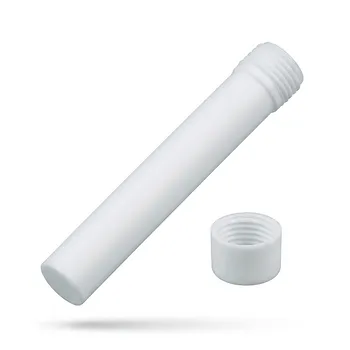
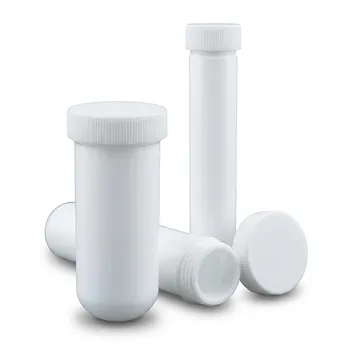
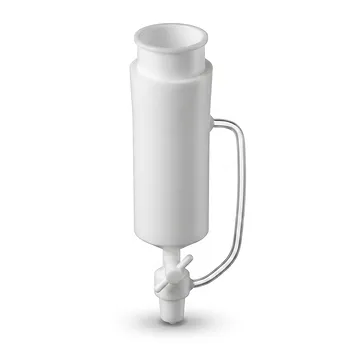
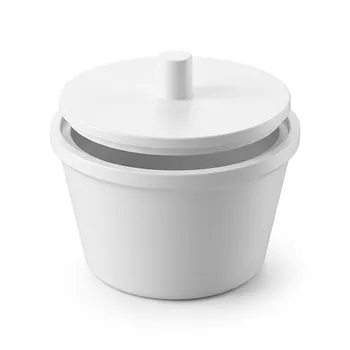
In the synthesis of chiral $Cu_2O$ catalysts, a PTFE-lined high-pressure autoclave serves as a chemically inert "micro-reactor" that maintains the precise thermodynamic conditions required for chiral induction. It provides a sealed environment that facilitates reactions at high temperatures (typically 130 °C) and elevated pressures while preventing the precursor solution from reacting with the autoclave’s metal walls. This isolation is critical for ensuring that the chiral inducer can effectively transfer its configuration to the $Cu_2O$ crystal without interference from metallic impurities.
Core Takeaway: The PTFE-lined autoclave acts as a protective, high-pressure vessel that ensures chemical purity and structural stability. By preventing ion leaching from the reactor walls, it allows for the precise, uncontaminated transfer of chirality from organic inducers to the inorganic catalyst.
The Role of Chemical Inertness in Chiral Synthesis
Preventing Metallic Contamination
The primary function of the Polytetrafluoroethylene (PTFE) liner is to provide exceptional corrosion resistance against aggressive precursor solutions. In the synthesis of chiral $Cu_2O$, even trace amounts of iron or chromium leaching from the stainless steel autoclave walls could disrupt the delicate chiral induction process.
Protecting the Structural Integrity of the Reactor
While the stainless steel outer shell provides the mechanical strength to withstand high internal pressure, it is susceptible to erosion by chemical agents. The PTFE liner acts as a impermeable barrier, protecting the external shell from corrosive precursors and ensuring the longevity of the equipment.
Ensuring Purity for Chiral Transfer
For a chiral inducer to successfully guide the growth of $Cu_2O$ crystals, the chemical environment must remain ultra-pure. The inert nature of PTFE ensures that no secondary reactions occur between the metal ions and the vessel walls, maintaining the high chemical purity required for the catalyst to function.
Thermodynamic Control and Morphology
Operating Above the Boiling Point
The sealed nature of the autoclave allows the precursor solution to reach temperatures significantly exceeding its normal boiling point. This hydrothermal environment provides the necessary energy to trigger the hydrolysis of reagents and drive the oriented growth of the inorganic crystals.
Facilitating Specific Morphologies
By maintaining constant high pressure and temperature (such as 130 °C), the autoclave creates the specific thermodynamic conditions needed for $Cu_2O$ to develop regular cubic or nanoflower structures. This stability is essential for the chiral inducer to effectively "template" the inorganic crystal into the desired handedness.
Improving Product Recovery
PTFE is known for its non-stick properties and extremely smooth surface. This characteristic is vital during the final stages of synthesis, as it allows for the easy collection of solid precipitates and prevents the loss of synthesized catalyst on the reactor walls.
Understanding the Trade-offs
Temperature Limitations
While PTFE is highly inert, it has a functional temperature ceiling, typically around 200°C to 250°C. Exceeding these temperatures can lead to the deformation of the liner or the release of toxic fluorinated vapors, limiting the hydrothermal range compared to specialized metallic alloys.
Thermal Lag and Heating Rates
PTFE is an insulator, meaning it does not conduct heat as efficiently as the surrounding stainless steel. This can create a slight delay (thermal lag) between the temperature of the oven and the actual temperature of the precursor solution, which must be accounted for in precise synthesis protocols.
How to Apply This to Your Project
Maximizing Synthesis Success
- If your primary focus is maximizing chiral purity: Ensure the PTFE liner is thoroughly cleaned with acid between runs to remove any residual metal ions that could act as competitive nucleation sites.
- If your primary focus is structural morphology: Closely monitor the "fill degree" of the liner (usually 60-80%) to ensure sufficient headspace for pressure buildup, which is critical for oriented crystal growth.
- If your primary focus is catalyst yield: Leverage the non-stick properties of the liner by using a centrifuge or vacuum filtration immediately after the autoclave cools to recover all solid precipitates.
The PTFE-lined autoclave is an indispensable tool that bridges the gap between high-energy thermodynamics and the delicate molecular requirements of chiral catalyst engineering.
Summary Table:
| Feature of PTFE-Lined Autoclave | Benefit for Chiral $Cu_2O$ Synthesis |
|---|---|
| Chemical Inertness | Prevents metal ion leaching to ensure pure chiral induction. |
| High-Pressure Capability | Enables hydrothermal synthesis above normal boiling points. |
| Non-Stick Surface | Maximizes catalyst yield and simplifies product recovery. |
| Corrosion Resistance | Protects reactor integrity from aggressive precursor solutions. |
| Thermodynamic Control | Maintains stability for oriented growth of specific morphologies. |
Elevate Your Research with KINTEK’s High-Performance Fluoropolymer Solutions
Precision in chiral synthesis demands absolute chemical purity. KINTEK specializes in high-performance PTFE and PFA laboratory supplies designed to eliminate contamination and withstand the most rigorous hydrothermal conditions.
Whether you need everyday essentials like beakers, crucibles, and reagent bottles, or specialized tools like high-purity trace analysis instruments, digestion tubes, and filtration tools, we have you covered. Our expertise extends to complex fluid transfer components and advanced reaction apparatus, including hydrothermal synthesis liners, microwave digestion vessels, and custom electrochemical cells.
Why choose KINTEK?
- End-to-End Customization: Our custom CNC fabrication delivers bespoke laboratory setups and complex non-standard parts tailored to your specific protocol.
- Material Excellence: We maintain an exclusive focus on high-performance fluoropolymers to ensure maximum chemical resistance.
- Scalable Production: From precision prototypes to high-volume orders, we deliver everything your lab needs to succeed.
Ready to optimize your catalyst synthesis? Contact us today to discuss your custom project!
References
- Hyungsoo Lee, Jooho Moon. Cu <sub>2</sub> O/Cu Chiral Catalysts for Highly Selective Solar‐Assisted CO <sub>2</sub> ‐to‐CO Electroreduction. DOI: 10.1002/adfm.202508577
This article is also based on technical information from Kintek Knowledge Base .
Related Products
- PTFE Lined High Pressure Digestion Vessel 50ml High Temperature Hydrothermal Synthesis Tank
- Custom TFM Reaction Vessel with Stainless Steel Jacket and PTFE Inner Cup for High Corrosion Resistance
- High Pressure Custom TFM Reactor Stainless Steel Outer Vessel PTFE Inner Cup for Corrosive Synthesis
- High Pressure PTFE Digestion Vessel Inner Cup Holder Custom Corrosion Resistant Low Background Teflon
- High Temperature Corrosion Resistant Hydrothermal Synthesis Reactor with TFM Inner Liner and Straight Cylinder Design
People Also Ask
- What are the benefits of using a PTFE-lined vessel for carbon-sulfur cathode treatment? Maximize Purity & Performance
- Why are PTFE-lined pressure digestion vessels required for the preparation of Ag/CeO2 catalysts? Purity & Performance
- What is the function of high-pressure PTFE digestion vessels in mineral analysis? Optimize Sample Mineralization
- What safety features are typically incorporated into high-pressure PTFE digestion vessel designs? Ensure Lab Safety
- What is the function of PTFE lined high-pressure vessels in g-C3N4 synthesis? Achieve High-Purity Material Growth