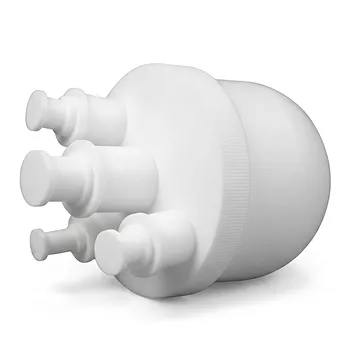
The high-pressure hydrothermal synthesis reactor acts as the primary driver for structural reorganization in POSS-PANI composites. By creating a sealed, high-temperature, and high-pressure environment, it forces the transition of loosely packed polyaniline (PANI) chains and octa-aminophenyl POSS cages into a stable, regular mesoporous framework.
The reactor’s core function is to provide the subcritical conditions necessary to reorganize rigid molecular chains into a more stable, ordered structure. This process is essential for achieving the high microstructural quality and thermal stability required for advanced composite applications.
Facilitating Molecular Reorganization
Overcoming Energy Barriers
The rigid nature of polyaniline (PANI) chains typically resists the formation of ordered structures at atmospheric pressure. The reactor provides the necessary thermal energy and autogenous pressure to overcome these barriers, allowing the chains to move and align more freely.
Integrating POSS Cages
Octa-aminophenyl polyhedral oligomeric silsesquioxane (POSS) cages must be deeply integrated into the polymer matrix to be effective. Under high-pressure conditions, these cages are forced into a more regular arrangement with the PANI chains, preventing the formation of disordered, low-quality aggregates.
Forming Mesoporous Architectures
The specific hydrothermal environment facilitates the conversion of precursors into a stable mesoporous structure. This porosity is not accidental; it is the result of the controlled nucleation and growth phases that occur when solvents are heated well above their normal boiling points.
Enhancing Material Performance
Improving Microstructural Uniformity
Because the reaction occurs in a sealed environment, the concentration of precursors remains constant throughout the process. This leads to a more uniform microstructural quality compared to open-air methods where solvent evaporation can cause inconsistencies.
Maximizing Thermal Stability
The hydrothermal process promotes a higher degree of crystallinity and stronger molecular bonding. This reorganization results in a composite material that exhibits significantly improved thermal stability, making it suitable for high-temperature industrial environments.
Accelerating Diffusion and Interaction
High pressure increases the solubility of the precursors and accelerates ion diffusion. This ensures a deep interaction between the POSS cages and the PANI matrix, which is critical for the structural integrity of the final porous composite.
Understanding the Trade-offs
Balancing Temperature and Porosity
While higher temperatures generally improve crystallinity, excessive heat can lead to the collapse of the desired mesoporous structure. Finding the "sweet spot" is critical, as over-processing can turn a porous material into a dense, non-functional block.
Equipment Limitations and Contamination
The use of high-purity liners, such as PTFE or PFA, is necessary to prevent metal ion contamination from the reactor walls. However, these liners have strict temperature limits; exceeding them can lead to liner degradation, which introduces impurities and ruins the composite's properties.
Pressure Control Risks
Hydrothermal synthesis relies on autogenous pressure, which is generated naturally as the solvent heats. This pressure must be carefully monitored because unexpected spikes can alter the reaction kinetics, leading to unintended crystalline phases or morphology changes.
Applying This to Your Synthesis Goal
Recommendations for Composite Preparation
- If your primary focus is maximum surface area: Maintain moderate temperatures and shorter reaction times to prevent the mesopores from collapsing during the reorganization phase.
- If your primary focus is thermal durability: Prioritize a higher-temperature setting within the subcritical range to ensure the most stable molecular alignment between POSS and PANI.
- If your primary focus is chemical purity: Always utilize a high-quality PTFE liner and ensure the reactor is thoroughly cleaned to prevent trace metal contamination from previous runs.
Mastering the high-pressure environment allows for the precise engineering of porous structures that are otherwise impossible to achieve.
Summary Table:
| Feature | Function in POSS-PANI Synthesis | Impact on Material |
|---|---|---|
| Autogenous Pressure | Overcomes energy barriers for rigid PANI chains | Creates stable mesoporous frameworks |
| Thermal Energy | Facilitates molecular alignment & nucleation | Improves microstructural uniformity |
| Sealed Environment | Prevents solvent evaporation/concentration shifts | Ensures consistent crystalline quality |
| Fluoropolymer Liners | Eliminates metal ion contamination (PTFE/PFA) | Guarantees high chemical purity |
Elevate Your Advanced Material Synthesis with KINTEK
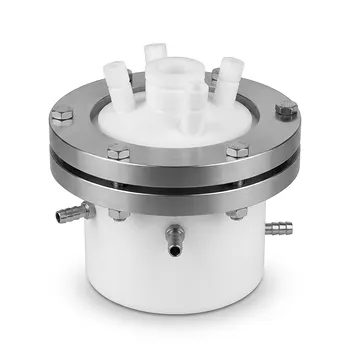
Achieving the perfect mesoporous architecture in POSS-PANI composites requires an environment of absolute purity and precision. KINTEK provides the high-performance fluoropolymer solutions essential for successful hydrothermal synthesis. We specialize in PTFE and PFA liners, microwave digestion vessels, and custom-machined reaction apparatus designed to withstand subcritical conditions without contaminating your samples.
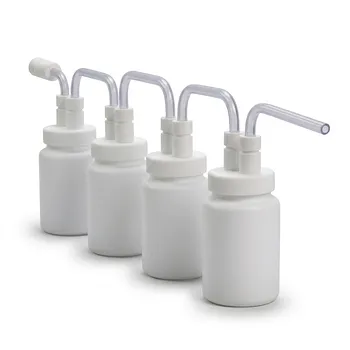
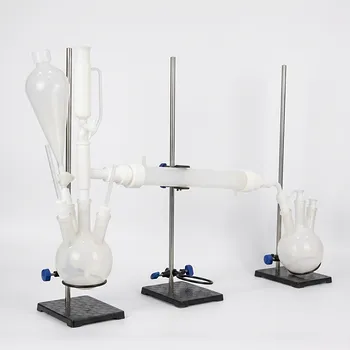
From everyday labware—like high-purity beakers, reagent bottles, and centrifuge tubes—to specialized components such as hydrothermal synthesis liners, microchannel reactors, and complex fluid transfer systems, KINTEK delivers the durability your research demands. Our end-to-end custom CNC fabrication ensures that even the most complex, non-standard laboratory setups are manufactured to your exact specifications.
Ensure the integrity of your next composite preparation.
Contact our fluoropolymer experts today to discuss your custom labware needs!
References
- Lei Liu, Xiaoxuan Xu. Porous POSS-PANI nanofibre from interfacial polymerization and hydrothermal approach. DOI: 10.1186/s40064-015-1524-3
This article is also based on technical information from Kintek Knowledge Base .
Related Products
- High Temperature Corrosion Resistant Hydrothermal Synthesis Reactor with TFM Inner Liner and Straight Cylinder Design
- High Pressure Custom TFM Reactor Stainless Steel Outer Vessel PTFE Inner Cup for Corrosive Synthesis
- PTFE Lined High Pressure Digestion Vessel 50ml High Temperature Hydrothermal Synthesis Tank
- High Temperature PTFE Reaction Flask 1000ml Single Neck Round and Flat Bottom Laboratory Bottle
- Custom TFM Reaction Vessel with Stainless Steel Jacket and PTFE Inner Cup for High Corrosion Resistance
People Also Ask
- What is the role of a corrosion-resistant reactor in the synthesis of lignin-based carbon dots? Ensure Maximum Purity
- What are the technical advantages of using hydrothermal synthesis reactors for advanced electronic & optical nanomaterials?
- How does a hydrothermal synthesis reactor facilitate the production of crystalline materials with tailored morphologies? Precision Crystal Growth
- Why is the sealing reliability of a hydrothermal synthesis reactor critical for 24-hour cycles? Ensure Nano-Precision
- What role do hydrothermal synthesis reactors play in CQD preparation? Achieve High-Purity Nanomaterial Synthesis