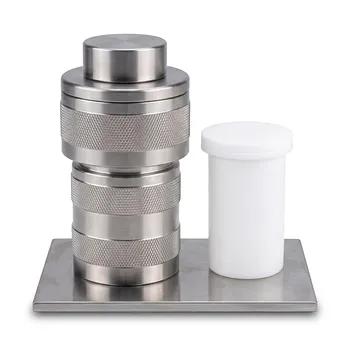
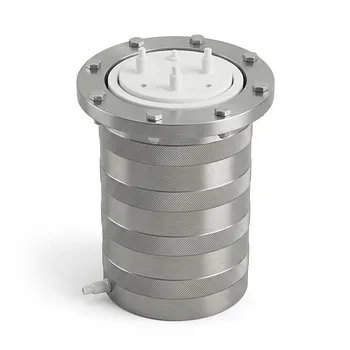
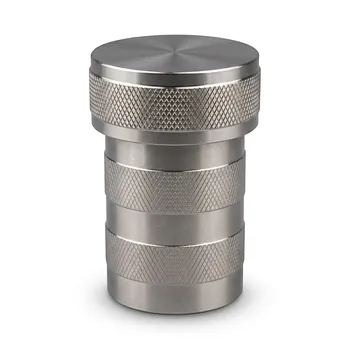
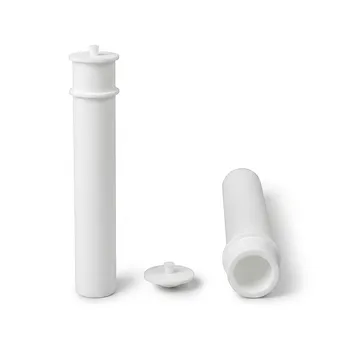
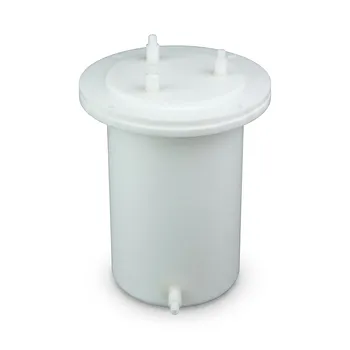
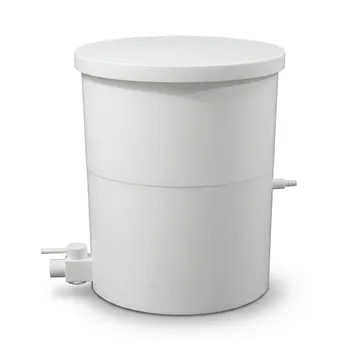
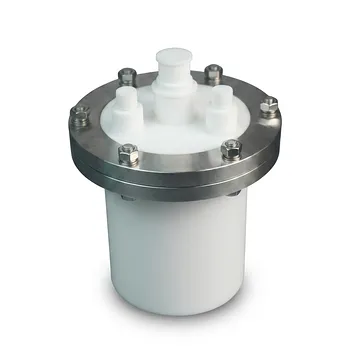
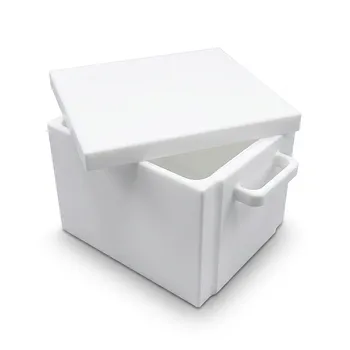
The stainless steel outer vessel is the essential mechanical foundation that enables the structural transformation of POSS-PANI nanofibers. It acts as the primary pressure-bearing shell, providing the structural integrity necessary to withstand the intense internal forces generated during hydrothermal treatment. By maintaining a perfectly sealed, high-pressure environment for 24 to 96 hours, it creates the specific thermodynamic conditions required for polyaniline chains to organize into a highly ordered hexagonal lattice.
Core Takeaway: The outer vessel functions as a high-strength containment system that stabilizes the hydrothermal environment, allowing the long-term application of heat and pressure necessary for the molecular self-assembly of POSS-PANI structures.
The Mechanical Necessity of Pressure Containment
Support for Internal Reaction Forces
The primary role of the stainless steel shell is to provide mechanical strength. During the hydrothermal process, the internal temperature causes fluids to expand and generate significant pressure that would rupture weaker materials.
The robust nature of stainless steel ensures the reactor remains intact throughout the modification process. This allows the synthesis to occur safely at conditions far exceeding standard atmospheric pressure.
Durability During Extended Synthesis
Hydrothermal modification of POSS-PANI is not instantaneous; it requires continuous treatment lasting between 24 and 96 hours. The outer vessel is designed to maintain its structural properties without deforming under these prolonged stress cycles.
This endurance is critical for experiments where even a minor drop in pressure could disrupt the chemical equilibrium. The vessel ensures that the reaction environment remains constant and predictable over several days.
Facilitating Long-Range Structural Ordering
Inducing the Hexagonal Lattice Structure
The ultimate goal of using this vessel is to force polyaniline (PANI) chains into a specific spatial arrangement. The high-pressure environment facilitates the alignment of these chains around the POSS framework.
Under these contained conditions, the nanofibers develop a long-range ordered hexagonal lattice. This structural precision is what gives the resulting material its unique electrochemical or mechanical properties.
The Importance of a Reinforced Seal
The outer vessel works in tandem with a reinforced sealing design to prevent any mass loss or pressure leakage. If the seal were to fail, the internal energy would dissipate, and the PANI chains would likely remain in a disordered state.
A consistent seal ensures that the energy remains focused on the molecular self-assembly of the nanofibers. This precision is mandatory for achieving the desired crystalline quality in the final POSS-PANI product.
Understanding the Trade-offs and Constraints
Thermal Inertia and Response Times
While stainless steel is exceptionally strong, it possesses high thermal mass. This means the vessel takes longer to reach the target temperature and longer to cool down compared to the internal reaction medium.
Researchers must account for this heating lag when timing their 24–96 hour reaction windows. Failure to consider thermal inertia can lead to under-processed or over-processed nanofibers.
Stress Corrosion and Material Fatigue
Repeated exposure to high-pressure hydrothermal cycles can eventually lead to material fatigue in the steel. Over hundreds of uses, the integrity of the vessel or its threading may degrade, increasing the risk of a seal failure.
Regular inspection of the vessel’s interior and the sealing surfaces is required to prevent catastrophic decompression. Using the vessel beyond its rated pressure or life cycle can compromise the safety of the laboratory environment.
Optimizing the Hydrothermal Environment
How to Apply This to Your Synthesis
To achieve the best results in the modification of POSS-PANI nanofibers, consider these recommendations based on your specific objectives:
- If your primary focus is Maximum Molecular Ordering: Ensure the reaction is maintained for the full 96-hour window to allow PANI chains sufficient time to settle into the hexagonal lattice.
- If your primary focus is Equipment Longevity: Monitor the reinforced seals for signs of wear after every 24-hour cycle and avoid exceeding the vessel's rated mechanical limits.
- If your primary focus is Process Repeatability: Standardize the heating ramp rate to account for the stainless steel's thermal inertia, ensuring the internal environment reaches the target pressure consistently.
By mastering the pressure-containment capabilities of the outer vessel, you ensure the precise structural evolution of POSS-PANI nanofibers.
Summary Table:
| Feature | Role in POSS-PANI Synthesis |
|---|---|
| Mechanical Strength | Acts as a pressure-bearing shell to sustain high-pressure hydrothermal conditions. |
| Structural Ordering | Drives PANI chains into a highly ordered hexagonal lattice via sustained pressure. |
| Sealing Integrity | Prevents mass loss and energy dissipation over 24–96 hour reaction windows. |
| Thermal Properties | Exhibits high thermal mass (inertia), requiring specific heating/cooling ramp planning. |
| Chemical Stability | Maintains a constant reaction environment necessary for molecular self-assembly. |
Elevate your laboratory's precision with KINTEK. From essential PFA and PTFE labware like beakers, reagent bottles, and digestion tubes to advanced reaction apparatus such as hydrothermal synthesis liners, microwave digestion vessels, and custom electrochemical cells, we provide the high-performance fluoropolymer solutions your research demands.
Backed by end-to-end custom CNC fabrication, KINTEK delivers everything from standard consumables to complex, bespoke laboratory setups with an absolute focus on material integrity and durability. Contact us today to discuss your project needs and discover how our specialized manufacturing can support your next scientific breakthrough!
References
- Lei Liu, Xiaoxuan Xu. Porous POSS-PANI nanofibre from interfacial polymerization and hydrothermal approach. DOI: 10.1186/s40064-015-1524-3
This article is also based on technical information from Kintek Knowledge Base .
Related Products
- PTFE Lined High Pressure Digestion Vessel 50ml High Temperature Hydrothermal Synthesis Tank
- High Pressure Custom TFM Reactor Stainless Steel Outer Vessel PTFE Inner Cup for Corrosive Synthesis
- High Temperature PTFE Reaction Flask 1000ml Single Neck Round and Flat Bottom Laboratory Bottle
- PFA Anti Splash Ball High Temperature HF Resistant Laboratory Buffer Vessel for Distillation and Trace Analysis
- Custom PTFE Flask Large Volume 18L Corrosion Resistant Low Background High Purity Chemical Vessel
People Also Ask
- What are the benefits of using a PTFE-lined vessel for carbon-sulfur cathode treatment? Maximize Purity & Performance
- Why are PTFE-lined pressure digestion vessels required for the preparation of Ag/CeO2 catalysts? Purity & Performance
- What is the function of high-pressure PTFE digestion vessels in mineral analysis? Optimize Sample Mineralization
- What safety features are typically incorporated into high-pressure PTFE digestion vessel designs? Ensure Lab Safety
- What is the function of PTFE lined high-pressure vessels in g-C3N4 synthesis? Achieve High-Purity Material Growth