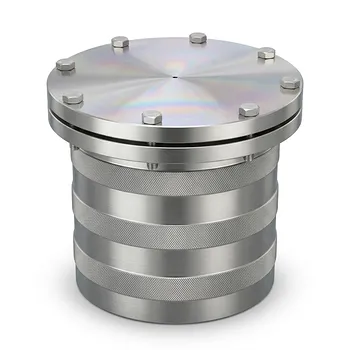
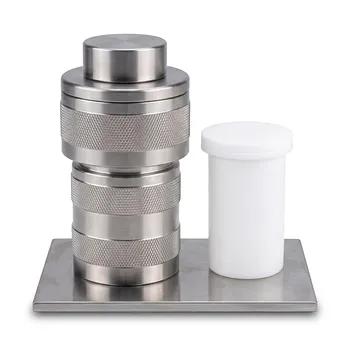
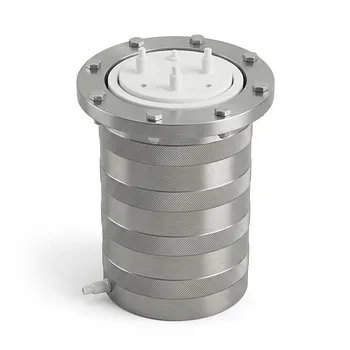
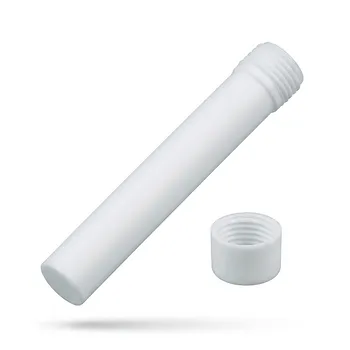
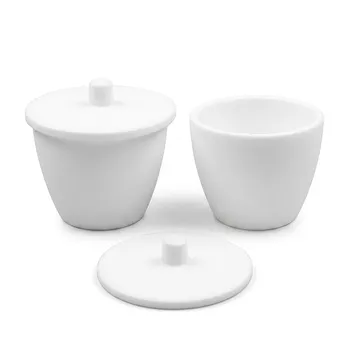
The combination of a stainless steel autoclave and a PTFE liner creates a "protected high-pressure reactor" essential for the hydrothermal process. This configuration allows for the safe use of highly corrosive alkaline solutions at elevated temperatures while ensuring that the resulting zinc oxide (ZnO) nanoparticles remain free from metallic impurities.
The PTFE liner serves as a chemically inert barrier that prevents corrosion and contamination, while the stainless steel outer shell provides the structural integrity necessary to contain the high pressures generated during synthesis. Together, they enable the controlled crystallization of high-purity ZnO in environments that would otherwise destroy standard laboratory equipment.
Chemical Protection and Product Purity
Resistance to Strong Alkaline Media
The hydrothermal synthesis of zinc oxide typically requires strong alkaline solutions, such as 3M or 6M Sodium Hydroxide (NaOH). These concentrations are highly corrosive and would aggressively attack the interior walls of a standard metal pressure vessel.
Prevention of Metal Ion Contamination
A Polytetrafluoroethylene (PTFE) liner is chemically inert, meaning it does not react with the synthesis precursors or solvents. By isolating the reaction, it prevents metal ions from the stainless steel (such as iron, chromium, or nickel) from leaching into the solution and contaminating the ZnO crystal lattice.
Maintaining Phase Purity
The use of a liner ensures high phase purity and consistent crystallinity of the synthesized powder. Without this barrier, the presence of foreign metallic elements could alter the electrical or optical properties of the zinc oxide, rendering it unsuitable for precision applications.
Structural Integrity Under Pressure
Containing Autogenous Pressure
While PTFE is chemically resilient, it lacks the mechanical strength to withstand the autogenous pressure generated when liquids are heated above their boiling points in a sealed system. The stainless steel outer shell acts as a pressure vessel, providing the necessary reinforcement to prevent the assembly from bursting at temperatures up to 200°C.
Supporting High-Temperature Synthesis
The stainless steel body maintains its shape and seal even as the internal temperature rises, ensuring a stable environment for oriented crystal growth. This mechanical stability allows researchers to reach the subcritical states required for the complete growth of complex structures like metal-organic frameworks (MOFs) or zinc tin oxide (ZTO).
Thermal Stability and Safety
The thick walls of the autoclave distribute heat evenly while protecting the laboratory environment from the high-energy state of the internal reaction. This dual-material design balances the chemical requirements of the chemistry with the safety requirements of high-pressure physics.
Operational Advantages and Yield
Low Surface Energy and Particle Adhesion
PTFE has an extremely low surface energy, which significantly reduces the tendency of ZnO nanoparticles to adhere to the vessel walls. This "non-stick" property ensures a more stable powder yield and makes the equipment much easier to clean between synthesis batches.
Compatibility with Organic Additives
Beyond simple aqueous solutions, the PTFE liner is resistant to organic amines like Ethylenediamine (EDA) and solvents like DMF. This versatility allows the same autoclave setup to be used for a wide variety of ZnO morphologies and hybrid material syntheses.
Understanding the Trade-offs and Limitations
Temperature Constraints
The primary limitation of PTFE is its thermal ceiling; it typically cannot be used safely above 250°C as the material begins to soften and may release toxic fumes. For reactions requiring higher temperatures, researchers must pivot to more expensive PPL (para-polyphenylene) liners or gold-lined vessels.
Differential Thermal Expansion
PTFE and stainless steel expand at different rates when heated, which can cause the liner to deform or "creep" over time if not properly fitted. If the liner is not correctly sized, the reaction solution can seep behind the liner, leading to hidden corrosion of the stainless steel shell and potential vessel failure.
Making the Right Choice for Your Goal
How to Apply This to Your Project
- If your primary focus is high-purity electronics: Ensure your PTFE liner is "virgin grade" and has been thoroughly acid-washed to remove any surface-level contaminants before the synthesis begins.
- If your primary focus is maximizing yield: Utilize the non-stick properties of the PTFE liner to recover the maximum amount of precipitate, and avoid using abrasive tools that could scratch the surface and create sites for particle adhesion.
- If your primary focus is safety and longevity: Regularly inspect the stainless steel threads and the integrity of the PTFE "cup" for signs of thinning or deformation to prevent accidental leaks under pressure.
By correctly utilizing this dual-material system, you can master the high-pressure environment required to produce sophisticated, high-performance zinc oxide nanomaterials.
Summary Table:
| Key Feature | Material Component | Benefit to ZnO Synthesis |
|---|---|---|
| Corrosion Resistance | PTFE Liner | Protects vessel from strong NaOH alkaline media |
| Structural Integrity | Stainless Steel Shell | Contains high autogenous pressure at temperatures up to 200°C |
| Product Purity | PTFE Liner | Prevents metal ion leaching (Fe, Cr, Ni) into the ZnO lattice |
| Yield Optimization | PTFE (Non-stick) | Reduces particle adhesion for easier recovery and cleaning |
| Safety Support | Stainless Steel Body | Distributes heat evenly and prevents vessel bursting |
Elevate Your Synthesis with KINTEK’s High-Performance Fluoropolymers
Precision research requires equipment that never compromises on purity or safety. KINTEK specializes in the absolute focus of high-performance fluoropolymer materials, offering an unparalleled range of PTFE and PFA solutions tailored for demanding laboratory environments.
From everyday essentials like beakers, reagent bottles, and centrifuge tubes to advanced reaction tools including microwave digestion vessels, hydrothermal synthesis liners, and custom electrochemical cells, we provide the chemical inertness your projects demand. Our expertise extends to comprehensive fluid transfer components (tubing, valves, fittings) and specialized sample prep tools.
Need something unique? Backed by end-to-end custom CNC fabrication, KINTEK delivers everything from complex, non-standard machined parts to high-volume bespoke laboratory setups.
Ready to upgrade your lab's capabilities? Contact us today to discover how our high-purity fluoropolymer solutions can provide the durability and contamination-free performance your research deserves.
References
- G. A. Fadhil, N. A. Jaber. Hydrothermal synthesis and surface characterization of ZnO prepared in different conditions. DOI: 10.15251/djnb.2025.204.1599
This article is also based on technical information from Kintek Knowledge Base .
Related Products
- Custom TFM Reaction Vessel with Stainless Steel Jacket and PTFE Inner Cup for High Corrosion Resistance
- PTFE Lined High Pressure Digestion Vessel 50ml High Temperature Hydrothermal Synthesis Tank
- High Pressure Custom TFM Reactor Stainless Steel Outer Vessel PTFE Inner Cup for Corrosive Synthesis
- High Purity TFM Microwave Digestion Vessels PTFE Acid Evaporation Liners Domestic GT-400 Equivalent Laboratory Reaction Containers
- High Purity PTFE Microwave Digestion Vessel Replacement Liner for Acid Sample Preparation and Trace Analysis
People Also Ask
- Why are high-performance pressure-resistant reaction vessels required for oxygen-assisted hydrothermal conversion at 150 °C?
- How do magnetic stirring and reaction vessels impact MOF-derived carbon quality? Optimize Your Composite Performance
- Why are high-quality fluoropolymer-lined reaction vessels required for alk-Ti3C2Tx MXene? Ensure Purity & HF Resistance
- Why are PTFE-lined reaction vessels necessary for forced degradation studies? Ensure high-purity results and accuracy.
- Why is a high-purity PTFE lined reaction vessel required for the acidic etching of MXenes? Ensure Material Purity.