Secondary hydrothermal deposition is a precision engineering technique used to create a CdS/ZnO heterojunction, primarily to maximize solar energy conversion. By decorating Zinc Oxide (ZnO) nanorods with Cadmium Sulfide (CdS) nanoparticles, researchers can overcome the inherent limitations of ZnO, specifically its inability to absorb visible light and its high rate of internal charge recombination.
The integration of CdS nanoparticles onto ZnO nanorods creates a Type-II heterojunction that broadens light absorption into the visible spectrum and facilitates efficient spatial separation of electrons and holes, significantly increasing photocurrent density.
Expanding the Spectral Response
The Limitation of Wide Bandgap ZnO
Zinc Oxide is naturally transparent to most visible light because of its wide bandgap. This characteristic means that unmodified ZnO nanorods only respond effectively to ultraviolet (UV) radiation, which accounts for less than 5% of the solar energy reaching Earth.
Visible Light Harvesting with CdS
Cadmium Sulfide (CdS) possesses a much narrower bandgap than ZnO. By decorating the nanorods with CdS nanoparticles, the resulting composite material is "sensitized" to the visible light spectrum, allowing it to capture and convert a significantly larger portion of available solar energy.
Optimizing Charge Carrier Dynamics
Formation of Type-II Band Alignment
The interface between CdS and ZnO creates a specific electronic structure known as a Type-II heterojunction. This alignment acts as a built-in potential barrier that dictates the direction in which energy carriers move.
Efficient Spatial Separation
In this configuration, photo-generated electrons naturally migrate toward the ZnO nanorods, while holes remain in or move toward the CdS. This spatial separation prevents the electrons and holes from recombining (annihilating each other), which ensures that more charges survive long enough to be collected as electricity.
Enhancing Device Performance
Increasing Photocurrent Density
The synergy between improved light harvesting and efficient charge separation leads to a dramatic increase in photocurrent density. Compared to pristine ZnO nanorods, the decorated structure produces a much stronger electrical current under the same lighting conditions.
Maintaining High Surface Area
Utilizing nanoparticles to decorate the nanorods maintains a high surface-to-volume ratio. This architecture provides a vast number of active sites for light interaction and chemical reactions, further boosting the overall efficiency of the system.
Understanding the Trade-offs
Material Stability and Photocorrosion
While CdS significantly improves performance, it is highly susceptible to photocorrosion in certain environments. Over time, the CdS nanoparticles can degrade when exposed to light and moisture, potentially limiting the long-term lifespan of the device.
Interface Quality and Lattice Mismatch
Growing CdS directly onto ZnO can lead to lattice mismatch, where the crystal structures do not align perfectly. If the secondary hydrothermal process is not precisely controlled, it can create surface defects that trap charges and negate the benefits of the heterojunction.
Applying This Knowledge to Photo-Electrochemical Design
Choosing the right approach depends on the specific performance requirements of your application.
- If your primary focus is maximizing visible light absorption: Focus on optimizing the secondary deposition time and precursor concentration to ensure a dense, uniform coating of CdS nanoparticles across the entire ZnO nanorod surface.
- If your primary focus is long-term device stability: Consider the addition of a thin protective "passivation" layer or the use of specific hole-scavenging electrolytes to protect the CdS from photocorrosion during operation.
By strategically engineering the band alignment through secondary deposition, you transform a UV-limited material into a high-performance visible-light harvester.
Summary Table:
| Feature | Benefit of CdS/ZnO Decoration |
|---|---|
| Spectral Response | Shifts absorption from UV to the visible light spectrum (higher solar gain). |
| Heterojunction Type | Creates a Type-II alignment for efficient spatial separation of e-/h+ pairs. |
| Recombination Rate | Reduces internal charge recombination, leading to higher photocurrent density. |
| Surface Architecture | Maintains a high surface-to-volume ratio with maximum active reaction sites. |
Achieve Precision in Your Materials Research with KINTEK
Successful hydrothermal synthesis requires equipment that can withstand rigorous conditions without compromising purity. KINTEK specializes in high-performance fluoropolymer solutions tailored for advanced laboratory needs.
From hydrothermal synthesis liners and microwave digestion vessels to custom CNC-fabricated reaction apparatus, we provide everything required for sophisticated material engineering. Our expertise covers a vast range of PTFE and PFA labware, including:
- High-Purity Tools: Trace analysis instruments, digestion tubes, and cleaning tanks.
- Fluid & Sample Prep: Tubing, fittings, valves, filtration tools, and separatory funnels.
- Custom Fabrication: Non-standard machined parts and bespoke laboratory setups designed to your exact specifications.
Whether you need high-volume consumables or complex, one-off components, KINTEK’s absolute focus on fluoropolymer excellence ensures your research remains uncompromised.
Upgrade your lab today—Contact our experts for a custom solution!
References
- Phanlapa Borklom, Jiti Nukeaw. Tailoring ZnO Nanostructures through Precursor Concentration and Hydrothermal Duration: A Pathway to Efficient Solar Water Splitting. DOI: 10.55003/cast.2025.264784
This article is also based on technical information from Kintek Knowledge Base .
Related Products
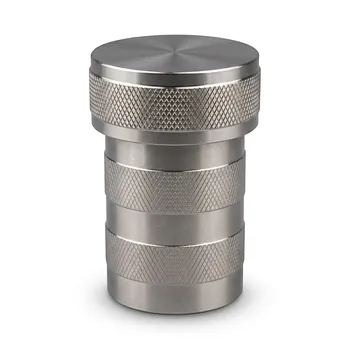
- High Temperature Corrosion Resistant Hydrothermal Synthesis Reactor with TFM Inner Liner and Straight Cylinder Design
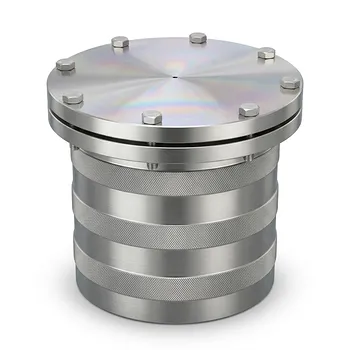
- PTFE Lined High Pressure Digestion Vessel 50ml High Temperature Hydrothermal Synthesis Tank
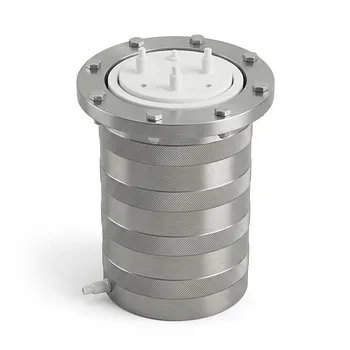
- Custom TFM Reaction Vessel with Stainless Steel Jacket and PTFE Inner Cup for High Corrosion Resistance
- High Pressure Custom TFM Reactor Stainless Steel Outer Vessel PTFE Inner Cup for Corrosive Synthesis
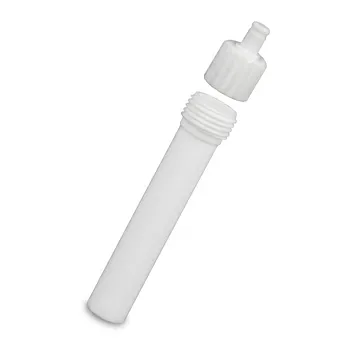
- High Purity PTFE Microwave Digestion Vessel Replacement Liner for Acid Sample Preparation and Trace Analysis
People Also Ask
- What is the role of a corrosion-resistant reactor in the synthesis of lignin-based carbon dots? Ensure Maximum Purity
- What are the technical advantages of using hydrothermal synthesis reactors for advanced electronic & optical nanomaterials?
- How does a hydrothermal synthesis reactor facilitate the production of crystalline materials with tailored morphologies? Precision Crystal Growth
- Why is the sealing reliability of a hydrothermal synthesis reactor critical for 24-hour cycles? Ensure Nano-Precision
- What role do hydrothermal synthesis reactors play in CQD preparation? Achieve High-Purity Nanomaterial Synthesis