In industrial hydrothermal synthesis, the primary role of a reactor equipped with rotating blades is to maintain solution homogeneity and eliminate local concentration gradients. By providing continuous mechanical stirring, the blades ensure that the polymer solution remains uniform throughout the reaction. This steady environment allows the molecular sieve membrane to grow evenly on the aluminum support, directly preventing structural defects and enhancing the final compactness of the membrane layer.
Core Takeaway: The integration of rotating blades transforms a static hydrothermal process into a dynamic, controlled environment that ensures uniform nutrient delivery to the growth surface, resulting in a high-density, defect-free molecular sieve membrane.
Achieving Solution Homogeneity through Mechanical Action
The Elimination of Concentration Gradients
Continuous stirring by rotating blades prevents the formation of "pockets" where chemical concentrations might be higher or lower than the average. In a static reactor, reactants near the growing membrane surface can become depleted, leading to inconsistent growth rates. The mechanical action ensures a steady supply of fresh polymer solution to the reaction site at all times.
Prevention of Particle Sedimentation
In many molecular sieve synthesis processes, solid precursors or growing crystals may tend to settle at the bottom of the reactor due to gravity. Rotating blades keep these components suspended in the solution, ensuring that the chemical potential remains consistent throughout the entire volume of the vessel. This suspension is critical for maintaining the stoichiometric balance required for high-quality membrane formation.
Optimizing the Growth Interface on Aluminum Supports
Promoting Uniform Surface Deposition
The aluminum support provides the structural foundation for the molecular sieve membrane. For the membrane to be effective, it must grow at a consistent rate across the entire surface area of this support. The turbulence generated by the blades ensures that the interface between the liquid solution and the solid support is constantly refreshed, promoting a synchronized growth pattern.
Reducing Film Defects and Pinholes
Uneven film formation is often the result of localized variations in temperature or concentration at the support surface. By neutralizing these variations, the rotating blades prevent the development of "islands" or gaps in the membrane. This results in a continuous, integrated layer that lacks the structural weaknesses commonly found in unstirred hydrothermal processes.
Understanding the Trade-offs and Technical Challenges
Balancing Shear Forces and Growth Stability
While stirring is beneficial, excessive rotational speed can introduce high shear forces that may physically detach the growing membrane from the aluminum support. Engineers must find the "sweet spot" where the speed is high enough to ensure uniformity but low enough to protect the delicate crystalline structure.
Mechanical Integrity in Harsh Environments
Hydrothermal synthesis often involves high pressures, high temperatures, and corrosive chemical environments. The seals and bearings of the rotating blade assembly are common points of failure and require specialized materials to prevent contamination of the polymer solution.
Energy Consumption and Scaling
In large industrial-grade reactors, the energy required to maintain constant agitation in high-viscosity solutions can be significant. Additionally, as the reactor size increases, achieving uniform stirring in every corner of the vessel becomes exponentially more complex, requiring sophisticated blade geometries.
How to Optimize Your Synthesis Process
Implementing Effective Agitation Strategies
Effective membrane synthesis requires a balance between mechanical intensity and chemical stability.
- If your primary focus is Membrane Density: Maintain a consistent, moderate stirring speed to ensure a steady supply of reactants to the aluminum support, which minimizes voids.
- If your primary focus is Batch-to-Batch Consistency: Utilize automated RPM controls to ensure the mechanical energy input remains identical across every production cycle.
- If your primary focus is Reducing Defect Rates: Focus on blade geometries that eliminate "dead zones" in the reactor where stagnant solution could lead to uneven film growth.
By mastering the mechanical dynamics of the hydrothermal reactor, you ensure the production of molecular sieve membranes that meet the most rigorous industrial standards for compactness and durability.
Summary Table:
| Feature | Mechanism | Benefit to Membrane |
|---|---|---|
| Mechanical Stirring | Eliminates concentration gradients | Ensures uniform nutrient delivery and film density |
| Particle Suspension | Prevents precursor sedimentation | Maintains stoichiometric balance for crystal growth |
| Interface Refreshing | Reduces boundary layer thickness | Promotes synchronized growth and prevents pinholes |
| Automated RPM | Precise shear force control | Protects delicate crystalline structures from detachment |
Elevate Your Synthesis Precision with KINTEK
Achieving the perfect molecular sieve membrane requires more than just the right process—it demands the highest quality materials and equipment. KINTEK specializes in high-performance fluoropolymer solutions tailored for rigorous hydrothermal environments.
From high-purity PTFE and PFA hydrothermal synthesis liners and microwave digestion vessels to custom-machined reaction apparatus, our products ensure zero contamination and extreme chemical resistance. Whether you need everyday basic labware (beakers, reagent bottles, tubing) or complex, bespoke laboratory setups via our end-to-end custom CNC fabrication, we deliver the reliability your research demands.
Optimize your laboratory efficiency today. Contact us now to discuss your custom requirements and see how our absolute focus on high-performance materials can transform your results.
References
- Honda Wu. Particulate and membrane molecular sieves prepared to adsorb carbon dioxide in packed and staggered adsorber. DOI: 10.2298/ciceq170821007w
This article is also based on technical information from Kintek Knowledge Base .
Related Products
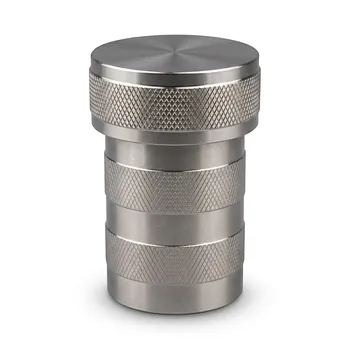
- High Temperature Corrosion Resistant Hydrothermal Synthesis Reactor with TFM Inner Liner and Straight Cylinder Design
- PTFE Lined High Pressure Digestion Vessel 50ml High Temperature Hydrothermal Synthesis Tank
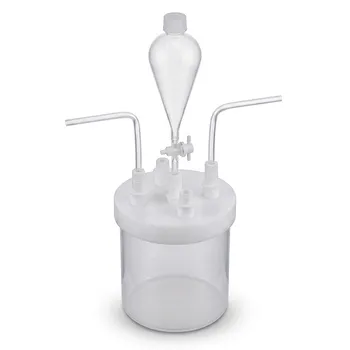
- Custom PTFE Reaction System with Hose Barb Fittings Corrosion Resistant High Sealing 2L 4L Lab Reactor with Separatory Funnel
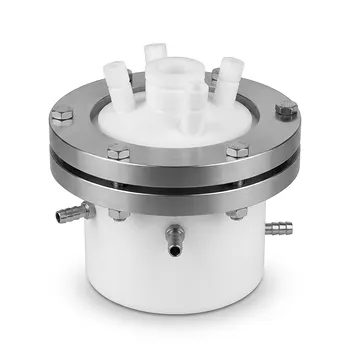
- High Pressure Custom TFM Reactor Stainless Steel Outer Vessel PTFE Inner Cup for Corrosive Synthesis
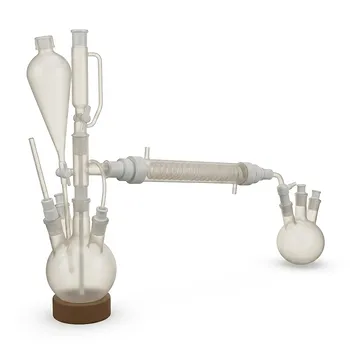
- High Purity PFA Reaction Vessel for Biopharmaceutical Synthesis and Corrosive Chemical Fluid Handling with Customizable Tube Fittings
People Also Ask
- What is the role of a corrosion-resistant reactor in the synthesis of lignin-based carbon dots? Ensure Maximum Purity
- What are the technical advantages of using hydrothermal synthesis reactors for advanced electronic & optical nanomaterials?
- How does a hydrothermal synthesis reactor facilitate the production of crystalline materials with tailored morphologies? Precision Crystal Growth
- Why is the sealing reliability of a hydrothermal synthesis reactor critical for 24-hour cycles? Ensure Nano-Precision
- What role do hydrothermal synthesis reactors play in CQD preparation? Achieve High-Purity Nanomaterial Synthesis