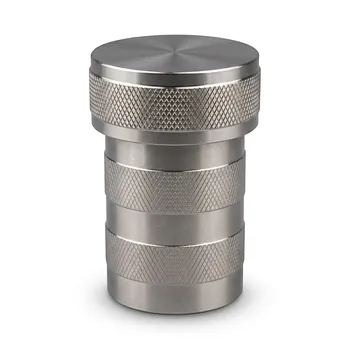
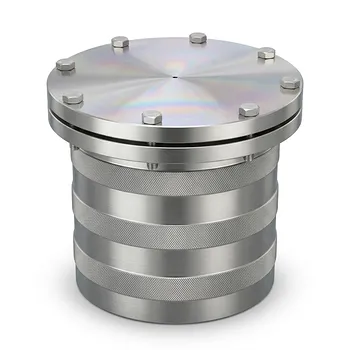
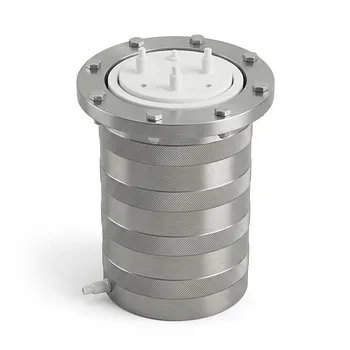
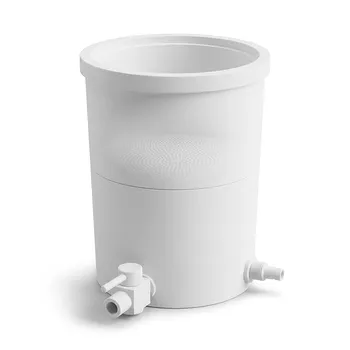
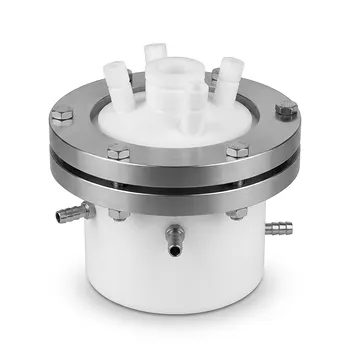
In the hydrothermal synthesis of alpha-[Fe2O3-FeOOH] nanocomposites, a PTFE-lined autoclave serves as a chemically inert, pressurized reactor that facilitates the growth of high-purity crystals. It provides a sealed environment where strong alkaline solutions can react under high temperatures and autogenous pressures without corroding the vessel or introducing metallic impurities.
The PTFE-lined autoclave is essential because it isolates the reaction from the metallic reactor body, ensuring that the resulting alpha-[Fe2O3-FeOOH] nanocomposites maintain their specific single-crystal phase and high purity.
The Role of Chemical Inertness and Purity
Preventing Metallic Contamination
The Polytetrafluoroethylene (PTFE) liner acts as a critical barrier between the reactive solution and the stainless steel walls of the autoclave. In the synthesis of iron-based nanocomposites, any leaching of metal ions from the reactor body would contaminate the sample and disrupt the crystal phase.
Resisting Aggressive Chemical Environments
The synthesis of alpha-[Fe2O3-FeOOH] often requires strong alkaline conditions that would otherwise erode metal surfaces. PTFE is chosen for its exceptional chemical resistance, allowing it to withstand these harsh pH levels without degrading or reacting with the precursors.
Ensuring Phase Integrity
By providing a non-reactive surface, the liner ensures that the nucleation and growth of the nanocomposites are governed strictly by the intended chemical precursors. This control is vital for achieving the desired single-crystal characteristics and uniform morphology of the iron oxide-hydroxide structure.
Mastering High-Pressure and Temperature Dynamics
Creating Subcritical Conditions
The sealed autoclave environment allows solvents to be heated well beyond their atmospheric boiling points while remaining in a liquid state. These subcritical conditions significantly enhance the solubility and reactivity of the iron precursors.
Facilitating Nucleation and Growth
The high-pressure environment creates a state of supersaturation, which is the driving force for the slow, controlled growth of high-quality crystals. This process is necessary for the formation of complex nanostructures like alpha-[Fe2O3-FeOOH] that require precise kinetic control.
Structural Support of the Outer Shell
While the PTFE liner provides chemical protection, the stainless steel outer shell provides the mechanical strength to withstand the internal autogenous pressure. This combination allows for safe operation at the elevated temperatures (often up to 200°C) required for hydrothermal synthesis.
Understanding the Trade-offs
Temperature Limitations
While PTFE is highly versatile, it has a functional thermal ceiling, typically around 200°C to 250°C. Exceeding these temperatures can cause the liner to soften or deform, potentially compromising the seal and the safety of the experiment.
Pressure Sensitivity
The autogenous pressure generated inside the vessel is a function of the filling degree and temperature. If the autoclave is overfilled, the resulting pressure can exceed the mechanical limits of the PTFE liner, leading to "creep" or structural failure.
Heat Transfer Delays
PTFE is a thermal insulator, meaning it does not conduct heat as efficiently as the metal shell. This can lead to a lag between the furnace temperature and the actual internal reaction temperature, requiring careful calibration of heating cycles.
How to Apply This to Your Project
When utilizing a PTFE-lined autoclave for your synthesis, consider the specific requirements of your material to ensure safety and product quality.
- If your primary focus is Maximum Product Purity: Always use a PTFE liner to prevent the introduction of iron, nickel, or chromium ions from the stainless steel autoclave body.
- If your primary focus is High-Temperature Synthesis (Above 230°C): Consider alternative liners like PPL (polyphenylene polymers) or quartz, as standard PTFE may lose its structural integrity at these extremes.
- If your primary focus is Morphology Control: Ensure the autoclave is filled to the recommended volume (usually 60-80%) to maintain the consistent autogenous pressure necessary for uniform crystal growth.
The PTFE-lined autoclave remains the gold standard for synthesizing alpha-[Fe2O3-FeOOH] because it perfectly balances chemical isolation with the physical rigors of hydrothermal processing.
Summary Table:
| Feature | Function in Synthesis | Benefit to Nanocomposites |
|---|---|---|
| Chemical Inertness | Prevents liner-precursor reactions | Ensures high phase purity & no metallic leaching |
| Corrosion Resistance | Withstands strong alkaline solutions | Protects reactor integrity and sample quality |
| Sealed Environment | Generates autogenous high pressure | Enables subcritical growth of single-crystals |
| Thermal Isolation | Acts as a barrier to the steel shell | Maintains a stable, controlled reaction zone |
Elevate Your Synthesis with KINTEK’s Precision Fluoropolymers
Achieving the perfect morphology in alpha-[Fe2O3-FeOOH] nanocomposites requires labware that never compromises on purity. KINTEK specializes in high-performance fluoropolymer solutions, offering an exhaustive range of PTFE and PFA products designed for the most demanding hydrothermal and trace analysis applications.
Our expertise extends across your entire workflow:
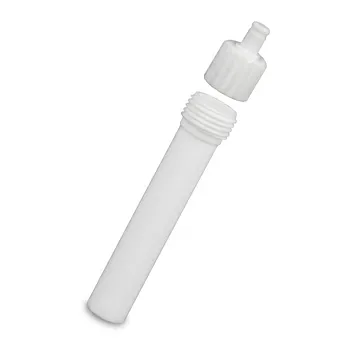
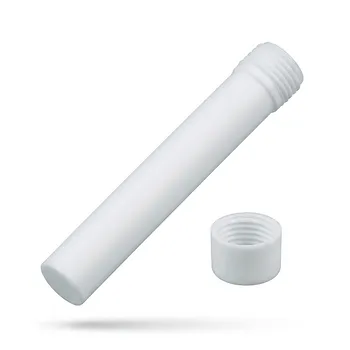
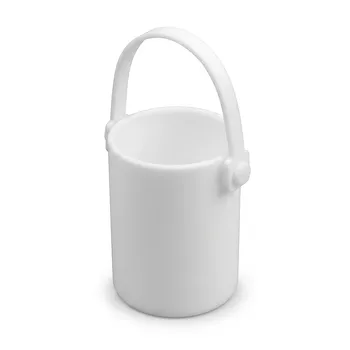
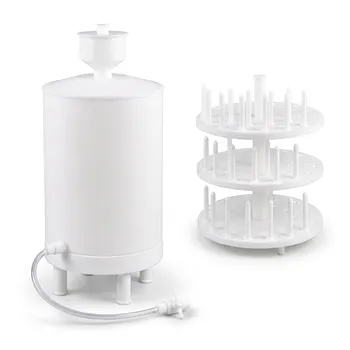
- Core Labware: High-purity beakers, crucibles, reagent bottles, and digestion tubes.
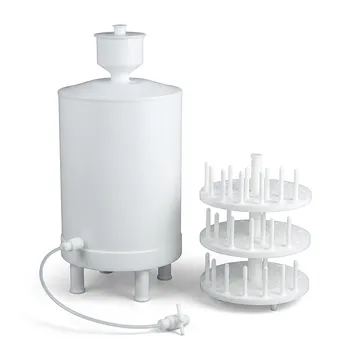
- Fluid Handling: Advanced tubing, fittings, valves, and filtration tools like separatory funnels and burettes.
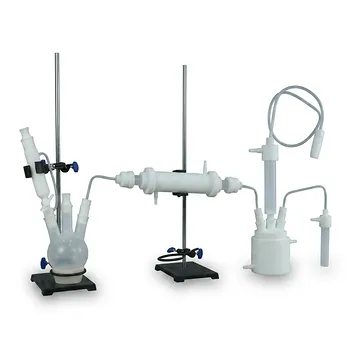
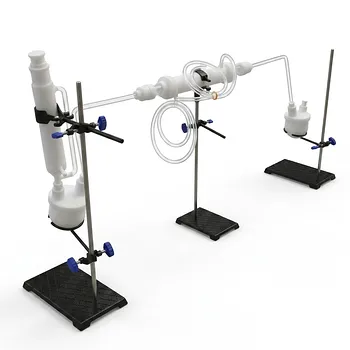
- Specialized Reaction Vessels: Custom-machined hydrothermal synthesis liners, microwave digestion vessels, and electrochemical cells.
- Custom Fabrication: End-to-end CNC machining for non-standard parts and bespoke laboratory setups.
Whether you need high-volume consumables or a complex, one-of-a-kind reactor component, KINTEK delivers absolute focus on material integrity and performance. Contact our technical team today to discuss your specific custom requirements and secure the high-purity environment your research deserves.
References
- John Godwin. Hydrothermal Synthesis of Mixed Nanocomposite of α-[Fe2 O3 -FeOOH] from Iron Nitrate Salt in Teflon Autoclave. DOI: 10.61440/jmset.2025.v3.32
This article is also based on technical information from Kintek Knowledge Base .
Related Products
- PTFE Lined High Pressure Digestion Vessel 50ml High Temperature Hydrothermal Synthesis Tank
- High Temperature Corrosion Resistant Hydrothermal Synthesis Reactor with TFM Inner Liner and Straight Cylinder Design
- Custom TFM Reaction Vessel with Stainless Steel Jacket and PTFE Inner Cup for High Corrosion Resistance
- High Pressure Custom TFM Reactor Stainless Steel Outer Vessel PTFE Inner Cup for Corrosive Synthesis
- Large Scale PTFE Double Layer Reaction Tank with Integrated Filter Plate for Chemical Processing
People Also Ask
- What are the benefits of using a PTFE-lined vessel for carbon-sulfur cathode treatment? Maximize Purity & Performance
- Why are PTFE-lined pressure digestion vessels required for the preparation of Ag/CeO2 catalysts? Purity & Performance
- What is the function of high-pressure PTFE digestion vessels in mineral analysis? Optimize Sample Mineralization
- What safety features are typically incorporated into high-pressure PTFE digestion vessel designs? Ensure Lab Safety
- What is the function of PTFE lined high-pressure vessels in g-C3N4 synthesis? Achieve High-Purity Material Growth