The hydrothermal synthesis of Cd–Mn–O nanocomposites relies on a PTFE-lined stainless steel autoclave to create a controlled, high-pressure, subcritical environment. This specialized vessel allows precursor solutions to react at temperatures far exceeding their atmospheric boiling points, facilitating the dissolution and recrystallization of poorly soluble cadmium and manganese precursors. The result is a precise transformation of chemical precursors into high-purity nanostructures with uniform morphologies like nanorods or nanoparticles.
Core Takeaway: The autoclave functions as a two-part system where the stainless steel shell provides the mechanical strength to contain autogenous pressure, while the PTFE liner ensures chemical purity and corrosion resistance. This environment is essential for driving the nucleation and growth of Cd–Mn–O nanocomposites that cannot be synthesized under standard atmospheric conditions.
The Synergistic Design of the Hydrothermal Vessel
The Stainless Steel Shell as a Pressure Containment System
The outer stainless steel body provides the necessary mechanical integrity to withstand the high autogenous pressure generated during heating. As the internal temperature rises, the liquid phase expands and generates pressure, which is critical for maintaining the solvent in a liquid state above its boiling point.
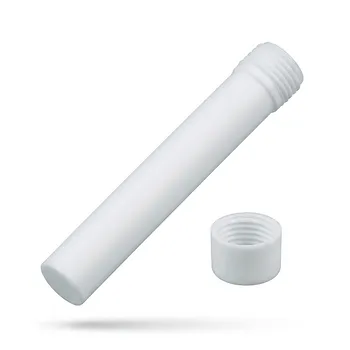
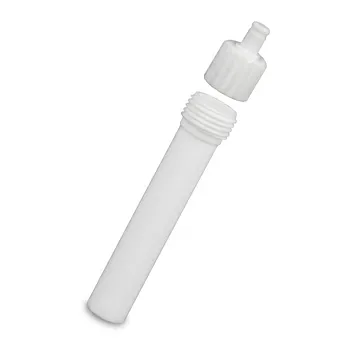
The PTFE Liner as a Chemical Shield
The Polytetrafluoroethylene (PTFE) liner offers exceptional chemical inertness, protecting the stainless steel from corrosive precursors such as strong bases or acidic salts. This barrier prevents metallic impurities from leaching into the reaction, ensuring the synthesized Cd–Mn–O nanocomposites remain high-purity "active materials."
Creating the Subcritical Reaction Environment
Driving Solubility and Reactivity
Under the high-temperature and high-pressure conditions within the autoclave, the dielectric constant and viscosity of the solvent change significantly. These subcritical conditions enhance the solubility of cadmium and manganese precursors, allowing them to undergo heterogeneous reactions that are impossible at 100°C.
Promoting Controlled Nucleation and Growth
The sealed environment creates a supersaturated state that is the physical basis for the nucleation and slow growth of crystals. By controlling the temperature and duration within the autoclave, researchers can dictate the final morphology of the Cd–Mn–O structures, achieving uniform shapes such as nanowires or nanorods.
Understanding the Trade-offs and Limitations
Temperature Constraints of PTFE
While PTFE is highly resistant to chemicals, it has a strict upper thermal limit, typically around 220°C to 250°C. Exceeding these temperatures can cause the liner to soften or deform, compromising the seal and potentially releasing toxic fluorinated vapors.
Thermal Lag and Pressure Risks
There is a significant thermal lag between the oven temperature and the internal temperature of the precursor solution due to the thickness of the steel and PTFE layers. Additionally, overfilling the liner (typically beyond 70-80% capacity) can lead to dangerous pressure spikes that exceed the structural limits of the stainless steel shell.
Applying This Technology to Your Synthesis Goals
Success in synthesizing Cd–Mn–O nanocomposites depends on balancing the internal chemistry with the physical limits of the autoclave.
- If your primary focus is Morphology Control: Maintain a constant temperature between 120°C and 180°C to allow for the slow, uniform growth of one-dimensional nanostructures like nanorods.
- If your primary focus is Material Purity: Ensure the PTFE liner is pristine and free of scratches, as even minor surface degradation can trap precursors or allow metal ions to leach from the outer shell.
- If your primary focus is High Crystallinity: Utilize the autogenous pressure by increasing the "fill degree" of the liner (up to 75%) to promote the formation of single-phase, high-quality nanocrystals.
The PTFE-lined autoclave is the indispensable engine of hydrothermal synthesis, providing the extreme physical conditions required to engineer advanced Cd–Mn–O nanocomposites with precision.
Summary Table:
| Component | Key Role | Primary Benefit |
|---|---|---|
| Stainless Steel Shell | Pressure Containment | Maintains mechanical integrity under high autogenous pressure |
| PTFE Liner | Chemical Shielding | Prevents corrosion and ensures high-purity, metal-free reactions |
| Subcritical Environment | Solubility Enhancement | Drives nucleation and growth of complex nanostructures (nanorods/wires) |
Optimize Your Nanomaterial Synthesis with KINTEK
Elevate your research precision with KINTEK’s high-performance fluoropolymer solutions. From everyday basic labware—including PTFE beakers, measuring cylinders, and reagent bottles—to advanced reaction apparatus like hydrothermal synthesis liners and microwave digestion vessels, KINTEK manufactures virtually all laboratory supplies crafted from PTFE and PFA.
Whether you need standard consumables such as stirring bars, O-rings, and gaskets, or complex custom CNC-fabricated parts and bespoke laboratory setups for electrochemical cells and battery testing, we provide the absolute focus on material performance you require. Backed by end-to-end fabrication capabilities, we deliver everything from high-volume orders to unique, non-standard machined parts.
Ready to upgrade your lab equipment? Contact us today to discuss your custom requirements!
References
- Azam Sobhani, Mehdi Mousavi‐Kamazani. First photocatalytic investigation on Cd–Mn–O nanocomposites for the degradation of Eriochrome Black T. DOI: 10.1007/s13201-025-02627-7
This article is also based on technical information from Kintek Knowledge Base .
Related Products
- Custom TFM Reaction Vessel with Stainless Steel Jacket and PTFE Inner Cup for High Corrosion Resistance
- PTFE Lined High Pressure Digestion Vessel 50ml High Temperature Hydrothermal Synthesis Tank
- High Pressure Custom TFM Reactor Stainless Steel Outer Vessel PTFE Inner Cup for Corrosive Synthesis
- High Purity TFM Microwave Digestion Vessels PTFE Acid Evaporation Liners Domestic GT-400 Equivalent Laboratory Reaction Containers
- High Purity PTFE Microwave Digestion Vessel Replacement Liner for Acid Sample Preparation and Trace Analysis
People Also Ask
- Why are high-performance pressure-resistant reaction vessels required for oxygen-assisted hydrothermal conversion at 150 °C?
- Why are high-quality fluoropolymer-lined reaction vessels required for alk-Ti3C2Tx MXene? Ensure Purity & HF Resistance
- How do magnetic stirring and reaction vessels impact MOF-derived carbon quality? Optimize Your Composite Performance
- Why are PTFE-lined reaction vessels necessary for forced degradation studies? Ensure high-purity results and accuracy.
- Why is a high-purity PTFE lined reaction vessel required for the acidic etching of MXenes? Ensure Material Purity.