Knowledge Hydrothermal synthesis reactor How does a high-pressure hydrothermal autoclave facilitate the synthesis of WO3 nanoparticles? Expert Synthesis Guide.
Author avatar

Tech Team · Kintek

Updated 2 months ago

How does a high-pressure hydrothermal autoclave facilitate the synthesis of WO3 nanoparticles? Expert Synthesis Guide.


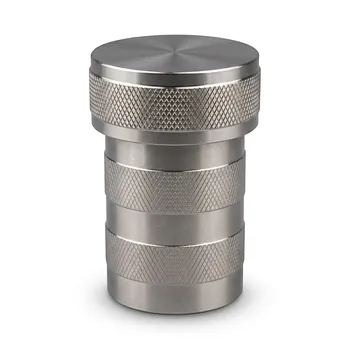
The high-pressure hydrothermal autoclave facilitates Tungsten Trioxide ($WO_3$) synthesis by creating a sealed, subcritical environment that allows solvents to remain liquid at temperatures far exceeding their atmospheric boiling points. This specific condition, typically maintained around $160^\circ C$ to $180^\circ C$, dramatically increases the solubility of precursors and accelerates the reaction kinetics, enabling the controlled nucleation of highly crystalline nanostructures.

The core mechanism of a hydrothermal autoclave is its ability to manipulate the thermodynamic state of a precursor solution, forcing a dissolution-recrystallization process that produces $WO_3$ nanoparticles with superior crystallinity and specific morphologies. By operating under high pressure, the system overcomes the limitations of atmospheric synthesis, allowing for precise structural engineering at the nanoscale.

The Thermodynamics of the Sealed Environment

Overcoming the Boiling Point Barrier

In an open system, water evaporates at $100^\circ C$, limiting the energy available for chemical reactions. The autoclave’s sealed design generates internal pressure as the liquid expands, allowing the solvent to reach a subcritical state where it remains liquid at elevated temperatures.

Enhancing Solvent Power

At these high temperatures and pressures, the dielectric constant and density of water change, significantly increasing the solubility of tungsten precursors. This "super-solvent" behavior ensures that solid reactants are fully dissolved, providing a homogeneous medium for the reaction to occur.

Mechanism of Nanoparticle Formation

Driven Dissolution-Recrystallization

The synthesis relies on a dissolution-recrystallization process, where the initial tungsten precursor molecules break down and then reform into more stable $WO_3$ structures. The high-energy environment provides the necessary activation energy for $WO_3 \cdot 0.33H_2O$ to undergo controlled nucleation.

Precision in Oriented Growth

High-pressure conditions promote oriented nucleation, meaning the nanoparticles grow along specific crystallographic planes. This is critical for creating specialized shapes, such as nanoneedles or ordered arrays, which offer high specific surface areas for applications like catalysis or sensor development.

Achieving High Crystallinity

The hydrothermal method acts as a form of "pressure-assisted thermal treatment" that minimizes structural defects. The result is a highly crystalline nanostructure that serves as a robust foundation for building complex composite heterojunctions.

The Role of Material Integrity and Purity

Chemical Inertness with PTFE Liners

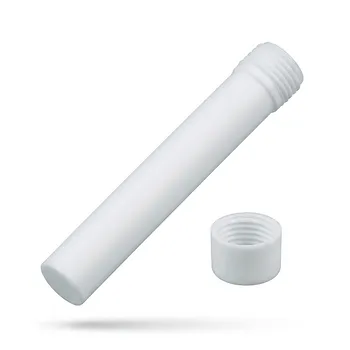
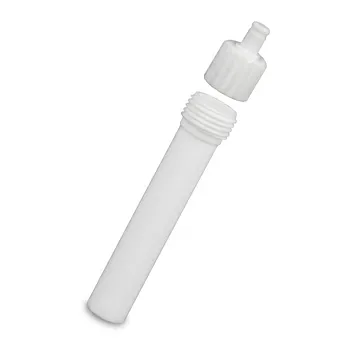
Most high-pressure autoclaves utilize Polytetrafluoroethylene (PTFE) or PFA liners to contain the precursor solution. These materials are chemically inert, preventing the highly reactive tungsten solution from corroding the stainless steel body of the autoclave.

Preventing Contamination

The liner ensures that metal ion impurities from the reactor walls do not leach into the solution. This isolation is vital for maintaining the high purity of the synthesized $WO_3$, as even trace contaminants can disrupt the electronic properties of the nanoparticles.

Understanding the Trade-offs and Challenges

The "Black Box" Limitation

One primary disadvantage of hydrothermal synthesis is that it occurs in a sealed, opaque vessel, making it impossible to monitor the reaction in real-time. Researchers must rely on precise timing and temperature calibration, as over-processing can lead to unwanted grain growth or morphological changes.

Safety and Pressure Management

Operating at subcritical pressures involves significant mechanical stress on the equipment. If the filling ratio of the precursor solution is too high, the internal pressure can exceed the safety limits of the autoclave, requiring careful calculation of the "expansion space" within the liner.

How to Apply This to Your Synthesis Goals

Strategic Recommendations

When utilizing a high-pressure autoclave for $WO_3$ synthesis, your parameters should align with your desired material properties:

  • If your primary focus is Maximum Surface Area: Utilize lower temperatures (approx. $150^\circ C$) with longer reaction times to encourage the growth of thin, high-aspect-ratio nanoneedles.
  • If your primary focus is Crystal Purity and Stability: Operate at higher temperatures (above $170^\circ C$) to ensure the complete transformation of precursors and the removal of hydrated phases.
  • If your primary focus is Heterojunction Construction: Prioritize the use of a substrate (like copper mesh) within the autoclave to facilitate oriented growth directly onto a conductive surface.

By leveraging the unique thermodynamic environment of the autoclave, you can transform simple chemical precursors into sophisticated, high-performance Tungsten Trioxide nanostructures.

Summary Table:

Parameter/Feature Mechanism in WO3 Synthesis Key Benefit
Operating Temp (160-180°C) Creates a subcritical solvent state Accelerates reaction kinetics and nucleation
Internal Pressure Overcomes solvent boiling points Increases precursor solubility for uniform growth
PTFE/PFA Liners Provides a chemically inert barrier Prevents metal ion contamination and corrosion
Dissolution-Recrystallization Thermodynamic structural engineering Produces highly crystalline, specific morphologies
Sealed Environment Controlled oriented nucleation Enables growth of specialized nanoneedles/arrays

Elevate Your Synthesis Precision with KINTEK Fluoropolymer Expertise

Successful nanoparticle synthesis demands uncompromising material purity and chemical resistance. KINTEK specializes in high-performance fluoropolymer solutions designed to withstand the rigorous conditions of hydrothermal synthesis. From high-purity PTFE and PFA autoclave liners that prevent contamination to custom-engineered reaction vessels, we provide the tools necessary for advanced material research.

Our extensive range covers everything from everyday basic labware—including beakers, reagent bottles, and digestion tubes—to complex fluid transfer components like tubing, valves, and fittings. For researchers pushing the boundaries of material science, we offer advanced apparatus such as electrochemical cells, hydrothermal synthesis liners, and microwave digestion vessels, all backed by our end-to-end custom CNC fabrication capabilities.

Whether you require high-volume standard consumables or a bespoke, non-standard machined part, KINTEK’s absolute focus on high-performance fluoropolymers ensures your lab achieves superior results.

Ready to optimize your laboratory setup? Contact KINTEK today to discuss your custom fabrication needs and discover how our expertise can drive your research forward!

References

  1. Mostafa A. Sayed, Alaa Mohsen. Hydrothermal synthesis and structural optimization of Bi2O3/Bi2WO6 nanocomposites for synergistic photodegradation of Indigo Carmine dye. DOI: 10.1038/s41598-025-01925-z

This article is also based on technical information from Kintek Knowledge Base .

Related Products

People Also Ask

Related Products

PTFE Lined High Pressure Digestion Vessel 50ml High Temperature Hydrothermal Synthesis Tank

PTFE Lined High Pressure Digestion Vessel 50ml High Temperature Hydrothermal Synthesis Tank

This premium 50ml high pressure digestion vessel features a precision-engineered PTFE lining for superior chemical resistance. Ideal for trace metal analysis and hydrothermal synthesis, this unit ensures high-purity results through robust, fully customizable industrial-grade construction and specialized engineering.

Custom TFM Reaction Vessel with Stainless Steel Jacket and PTFE Inner Cup for High Corrosion Resistance

Custom TFM Reaction Vessel with Stainless Steel Jacket and PTFE Inner Cup for High Corrosion Resistance

Premium custom TFM reaction vessel featuring a stainless steel jacket and PTFE liner for ultimate chemical resistance. This high-pressure system ensures zero contamination in aggressive synthesis environments, providing industrial-grade reliability for critical laboratory applications and advanced materials research.

High Temperature Corrosion Resistant Hydrothermal Synthesis Reactor with TFM Inner Liner and Straight Cylinder Design

High Temperature Corrosion Resistant Hydrothermal Synthesis Reactor with TFM Inner Liner and Straight Cylinder Design

Professional grade high-pressure hydrothermal synthesis reactors featuring corrosion-resistant TFM liners and straight-wall geometry. These units are ideal for demanding chemical synthesis, trace analysis, and advanced material research where absolute purity and customizable performance are required for industrial lab excellence.

High Pressure Custom TFM Reactor Stainless Steel Outer Vessel PTFE Inner Cup for Corrosive Synthesis

High Pressure Custom TFM Reactor Stainless Steel Outer Vessel PTFE Inner Cup for Corrosive Synthesis

Engineered for extreme chemical resistance, this custom TFM reactor combines a robust stainless steel outer vessel with a high-purity PTFE liner, ensuring safe, durable performance in demanding laboratory and industrial synthesis applications.

High Purity TFM Microwave Digestion Vessels PTFE Acid Evaporation Liners Domestic GT-400 Equivalent Laboratory Reaction Containers

High Purity TFM Microwave Digestion Vessels PTFE Acid Evaporation Liners Domestic GT-400 Equivalent Laboratory Reaction Containers

Premium PTFE and TFM microwave digestion vessels designed as high-performance replacements for GT-400 systems ensuring trace metal purity and chemical resistance for demanding laboratory digestion and acid evaporation processes with full custom fabrication capabilities available for unique requirements and specifications.

High Purity PTFE Microwave Digestion Vessel Replacement Liner for Acid Sample Preparation and Trace Analysis

High Purity PTFE Microwave Digestion Vessel Replacement Liner for Acid Sample Preparation and Trace Analysis

Premium PTFE microwave digestion vessels designed for extreme acid resistance and high-pressure performance. Engineered for trace analysis and sample preparation in industrial laboratories, these customizable liners provide superior durability and chemical inertness.

High Purity PTFE Microwave Digestion Vessel for Soil and Food Analysis Acid Resistant Fluoropolymer Sample Preparation Liners

High Purity PTFE Microwave Digestion Vessel for Soil and Food Analysis Acid Resistant Fluoropolymer Sample Preparation Liners

Engineered for high-pressure microwave digestion these ultra-pure PTFE liners provide exceptional resistance to concentrated acids during soil and food sample preparation ensuring zero contamination and uniform heating for precise heavy metal trace analysis in laboratory environments.

High Pressure PTFE Digestion Vessel Inner Cup Holder Custom Corrosion Resistant Low Background Teflon

High Pressure PTFE Digestion Vessel Inner Cup Holder Custom Corrosion Resistant Low Background Teflon

Optimize trace analysis with custom PTFE high pressure digestion vessel cup holders. These corrosion resistant low background laboratory components provide exceptional chemical purity and precision fit for demanding sample preparation in metal free environments and high purity industrial laboratory workflows.

PTFE Condensation Reflux and Gas Collection Apparatus for Corrosive Biochemical Processing Customizable High Temperature System

PTFE Condensation Reflux and Gas Collection Apparatus for Corrosive Biochemical Processing Customizable High Temperature System

High-performance PTFE condensation reflux and gas collection apparatus designed for corrosive biochemical processing. This customizable system offers superior thermal stability and chemical inertness, ensuring reliable performance in demanding laboratory environments where standard materials fail.

High Temperature Teflon Continuous Reaction System and HF Resistant Three Neck Flask for Petrochemical Processing

High Temperature Teflon Continuous Reaction System and HF Resistant Three Neck Flask for Petrochemical Processing

Optimize your petrochemical laboratory with our high-temperature Teflon continuous reaction systems and HF-resistant flasks, featuring precision CNC fabrication for superior chemical resistance, unmatched thermal stability, and complete custom engineering to meet your most demanding industrial synthesis requirements today.

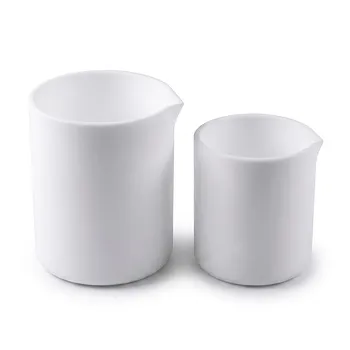
Large Scale PTFE Beakers and Flasks for High Temperature Corrosion Resistant Laboratory Applications with Custom CNC Fabrication

Large Scale PTFE Beakers and Flasks for High Temperature Corrosion Resistant Laboratory Applications with Custom CNC Fabrication

High-performance PTFE beakers and flasks offering superior chemical resistance and thermal stability for demanding laboratory environments. Fully customizable large-scale labware engineered with precision CNC fabrication to meet specific industrial requirements for high-purity trace analysis and chemical processing.

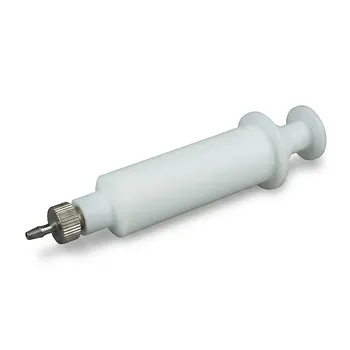
High Temperature Chemical Resistant 50ml PTFE Syringe Customized Teflon Injector with Threaded Seal for Trace Analysis

High Temperature Chemical Resistant 50ml PTFE Syringe Customized Teflon Injector with Threaded Seal for Trace Analysis

Engineered from virgin PTFE, this 50ml high-purity injector offers exceptional chemical resistance and thermal stability from -200°C to +250°C. Perfect for trace analysis, aggressive solvent handling, and precision dispensing in demanding laboratory environments.

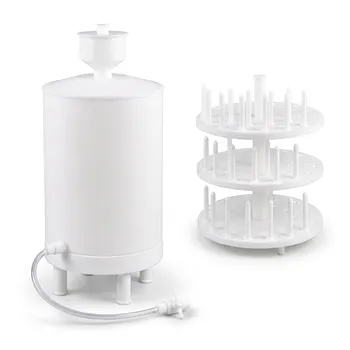
High Purity PTFE Acid Steam Cleaning System Trace Analysis Labware Decontamination Unit with Leak Proof Closed Reflux Technology and Customizable Multi Position Capacity

High Purity PTFE Acid Steam Cleaning System Trace Analysis Labware Decontamination Unit with Leak Proof Closed Reflux Technology and Customizable Multi Position Capacity

Optimize trace analysis workflows with this high-purity PTFE acid steam cleaning system. Featuring a leak-proof closed-loop design for significant acid savings and superior decontamination, this customizable unit ensures ultra-low background levels for sensitive ICP-MS and ICP-OES laboratory applications.

Custom PTFE Multilayer Reaction Apparatus High Temperature Corrosion Resistant Threaded Modular Sieve System

Custom PTFE Multilayer Reaction Apparatus High Temperature Corrosion Resistant Threaded Modular Sieve System

Enhance chemical processing with this custom PTFE multilayer reaction apparatus featuring corrosion-resistant threaded connections and integrated sieve plates. Designed for high-temperature stability and precision filtration in demanding laboratory environments across pharmaceutical and semiconductor research and advanced industrial applications.

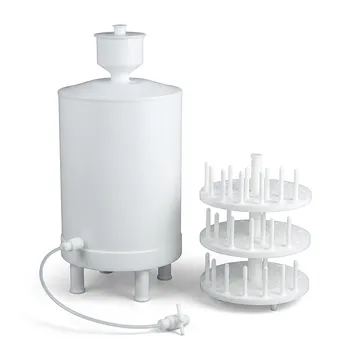
PTFE Acid Steam Cleaning System HF Resistant Trace Analysis Beaker Digestion Tank Customizable

PTFE Acid Steam Cleaning System HF Resistant Trace Analysis Beaker Digestion Tank Customizable

Precision-engineered PTFE acid steam cleaning systems provide contaminant-free trace analysis environments. These high-purity PFA systems resist hydrofluoric acid, ensuring non-polluting results for digestion tanks and laboratory beakers through automated, customizable vapor cleaning protocols for demanding scientific laboratory research.

High Purity Custom PTFE Beaker 5000ml With Lid Hot Plate Heating Compatible High Temperature Chemical Labware

High Purity Custom PTFE Beaker 5000ml With Lid Hot Plate Heating Compatible High Temperature Chemical Labware

Engineered for excellence, our custom 5000ml PTFE beakers provide superior chemical inertness and thermal stability up to 260°C. Perfect for hot plate heating, these bespoke vessels ensure high-purity results for aggressive industrial laboratory and chemical processing applications.

Custom PTFE Condenser Tube Hydrofluoric Acid Resistant Reflux Device Constant Pressure Separatory Funnel

Custom PTFE Condenser Tube Hydrofluoric Acid Resistant Reflux Device Constant Pressure Separatory Funnel

Engineered for extreme chemical environments, our custom PTFE condenser tubes and hydrofluoric acid resistant reflux devices offer unparalleled corrosion resistance and non-stick performance. These high-purity laboratory tools ensure zero sample contamination and long-term durability in demanding industrial applications.

Corrosion Resistant Hot Plate with Modified PTFE Coating and Optional Heating Rack for Chemical Laboratory Custom Solutions

Corrosion Resistant Hot Plate with Modified PTFE Coating and Optional Heating Rack for Chemical Laboratory Custom Solutions

Engineered for extreme chemical environments, this high-performance corrosion resistant hot plate features a modified PTFE coating and custom dimensions. Perfect for acid digestion and trace analysis, offering optional heating racks and bespoke configurations to optimize laboratory workflows.

High Purity TFM Microwave Digestion Vessels for Trace Analysis and Custom Sample Preparation Systems

High Purity TFM Microwave Digestion Vessels for Trace Analysis and Custom Sample Preparation Systems

Premium TFM microwave digestion vessels designed for high-pressure sample preparation. These customizable fluoropolymer liners ensure superior chemical resistance and thermal stability for trace metal analysis across diverse industrial laboratory applications.

Customizable 22ml PTFE Cup Deep Layer Sampler and Corrosion Resistant Cylinder with Handle

Customizable 22ml PTFE Cup Deep Layer Sampler and Corrosion Resistant Cylinder with Handle

This high-purity PTFE sampler and deep-layer cylinder offers ultimate corrosion resistance for demanding industrial environments. Fully customizable to meet specific laboratory or field sampling requirements, this robust system ensures precise and contaminant-free fluid collection in harsh chemical processes.


Leave Your Message