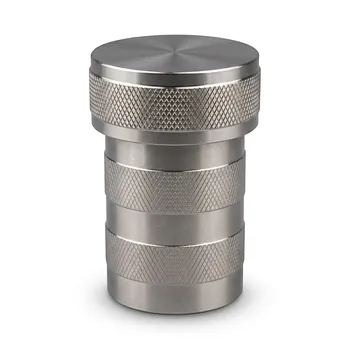
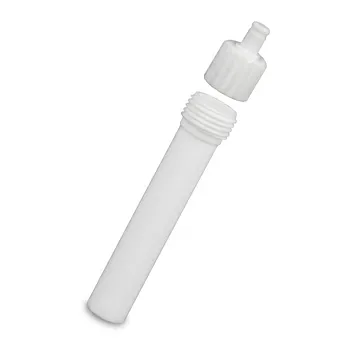
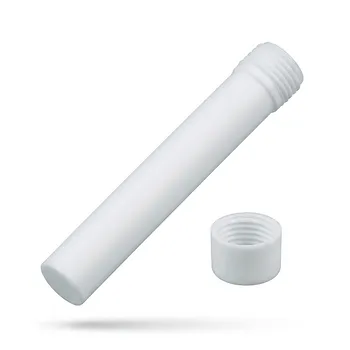
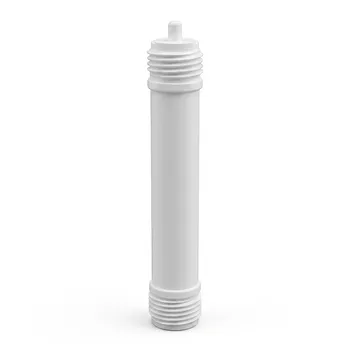
Hydrothermal and solvothermal synthesis methods are widely utilized because they create a high-pressure, supercritical environment that allows for the precise manipulation of solvent properties. By altering the dielectric constant and solubility of the medium within a closed autoclave, these techniques enable the formation of high-purity, well-crystallized nanoparticles with specific crystal phases that are difficult to achieve through conventional heating.
These techniques leverage high-pressure environments to "tune" solvent behavior, facilitating controlled nucleation and particle growth at relatively low temperatures. This level of control is essential for engineering complex heterostructures and specific crystal phases that define the performance of modern nanomaterials.
The Influence of Supercritical Environments
Modifying Solvent Properties
In a high-pressure autoclave, solvents reach a supercritical or near-supercritical state where their physical properties shift dramatically. This environment significantly alters the dielectric constant and the solubility of precursors, creating a highly reactive medium for chemical synthesis. These changes are fundamental because they lower the energy barriers for particle nucleation, allowing crystals to form under highly specific, reproducible conditions.
Enhanced Nucleation and Growth
The unique environment of these techniques provides superior control over the reaction kinetics, which is the speed and manner in which a chemical reaction occurs. By adjusting the pressure and temperature, researchers can promote the growth of specific phases, such as the hexagonal phase in NiCo2O4. This precision ensures that the resulting nanoparticles possess the exact crystalline structure required for their intended application, such as energy storage or catalysis.
Achieving Structural Precision
Low-Temperature Diffusion
Unlike traditional solid-state reactions that require extreme heat, the closed high-pressure system allows for controlled diffusion at significantly lower temperatures. This lower thermal energy prevents unwanted phase transitions or grain growth, resulting in high-purity nanomaterials with uniform characteristics. Maintaining lower temperatures also allows for the preservation of delicate hollow structures, such as hollow CoWO4, which might otherwise collapse under intense heat.
Formation of Complex Heterostructures
The hydrothermal and solvothermal environments are uniquely suited for designing complex heterostructures where different materials are joined at the molecular level. These structures are often more electrochemically stable because the high-pressure environment facilitates a more robust interface between different components. This capability is a primary reason why these methods are the "gold standard" for designing materials used in advanced battery and supercapacitor technologies.
Understanding the Trade-offs
Equipment and Safety Requirements
The primary drawback of these methods is the reliance on high-pressure autoclaves, which must be engineered to withstand extreme internal stresses. This requirement increases the initial equipment cost and necessitates strict safety protocols to prevent vessel failure during the heating cycle.
Monitoring and Scalability
Because the reaction occurs within a sealed, opaque vessel, it is nearly impossible to monitor the crystal growth in real-time. This "black box" nature can make the initial optimization of a new material a time-consuming process of trial and error. Additionally, while perfect for lab-scale precision, transitioning these high-pressure processes to large-scale industrial production presents significant engineering and cost challenges.
How to Apply This to Your Project
Making the Right Choice for Your Goal
To successfully utilize hydrothermal or solvothermal techniques, you must align your processing parameters with your specific material objectives.
- If your primary focus is phase purity: Utilize the closed system to maintain constant pressure, which stabilizes the desired crystal phase at lower temperatures.
- If your primary focus is morphological control: Adjust the solvent type (solvothermal) to manipulate the dielectric constant, which directly influences the shape and "hollowness" of the nanoparticles.
- If your primary focus is electrochemical stability: Leverage the unique kinetics of the autoclave to create heterostructures with strong interfacial bonding.
Mastering these high-pressure environments allows you to unlock material properties and crystal phases that are simply unreachable by traditional synthetic routes.
Summary Table:
| Feature | Hydrothermal/Solvothermal Benefit | Impact on Nanoparticles |
|---|---|---|
| Environment | Supercritical / High-Pressure | Precise control over solvent dielectric constant and solubility. |
| Nucleation | Enhanced Reaction Kinetics | Enables formation of high-purity, specific crystalline phases. |
| Temperature | Low-Temperature Diffusion | Prevents grain growth and protects delicate hollow structures. |
| Structure | Interfacial Bonding | Ideal for creating electrochemically stable complex heterostructures. |
Elevate Your Synthesis Precision with KINTEK
Unlock the full potential of your nanoparticle research with high-performance fluoropolymer solutions from KINTEK. Whether you are optimizing supercritical environments or engineering complex heterostructures, our premium PTFE and PFA laboratory supplies provide the chemical inertness and thermal stability essential for hydrothermal and solvothermal success.
From hydrothermal synthesis liners and microwave digestion vessels to everyday basic labware (beakers, crucibles, reagent bottles) and precision fluid transfer components (tubing, fittings, valves), KINTEK manufactures virtually every laboratory supply you need. Our end-to-end custom CNC fabrication allows us to deliver everything from complex non-standard machined parts to high-volume orders with an absolute focus on high-performance materials.
Ready to enhance your lab's efficiency and material purity? Contact us today to discuss your custom requirements or browse our comprehensive catalog of fluoropolymer-crafted tools.
References
- Ahmed Alharbi. Boosting supercapacitor performance through innovative transition metal-based electrode materials. DOI: 10.1039/d5ra02905h
This article is also based on technical information from Kintek Knowledge Base .
Related Products
- High Temperature Corrosion Resistant Hydrothermal Synthesis Reactor with TFM Inner Liner and Straight Cylinder Design
- PTFE Lined High Pressure Digestion Vessel 50ml High Temperature Hydrothermal Synthesis Tank
- Custom TFM Reaction Vessel with Stainless Steel Jacket and PTFE Inner Cup for High Corrosion Resistance
- High Pressure Custom TFM Reactor Stainless Steel Outer Vessel PTFE Inner Cup for Corrosive Synthesis
- High Purity PTFE Microwave Digestion Vessel Replacement Liner for Acid Sample Preparation and Trace Analysis
People Also Ask
- What is the role of a corrosion-resistant reactor in the synthesis of lignin-based carbon dots? Ensure Maximum Purity
- What are the technical advantages of using hydrothermal synthesis reactors for advanced electronic & optical nanomaterials?
- How does a hydrothermal synthesis reactor facilitate the production of crystalline materials with tailored morphologies? Precision Crystal Growth
- Why is the sealing reliability of a hydrothermal synthesis reactor critical for 24-hour cycles? Ensure Nano-Precision
- What role do hydrothermal synthesis reactors play in CQD preparation? Achieve High-Purity Nanomaterial Synthesis