A tumbling or rotating state is essential because it provides continuous mechanical agitation during the hydrothermal process. This dynamic movement ensures chemical homogeneity, prevents the sedimentation of solid particles, and facilitates uniform heat and mass transfer throughout the synthesis gel. These factors are the primary drivers for achieving MFI zeolite crystals with high crystallinity and a narrow, uniform particle size distribution.
Mechanical agitation via rotation eliminates localized variations in temperature and chemistry, ensuring that every part of the synthesis gel experiences the same conditions for crystal nucleation and growth.
Ensuring Compositional Homogeneity
Maintaining Uniform Chemical Concentration
In a static environment, chemical gradients can form as reactants are consumed locally, leading to inconsistent crystal growth. Tumbling ensures a constant redistribution of precursors, which maintains a uniform concentration gradient across the entire reaction vessel.
Preventing Reactant Sedimentation
MFI zeolite synthesis involves complex gels and solid particles that are prone to settling at the bottom of the reactor due to gravity. Continuous rotation prevents sedimentation, keeping all components suspended and available for reaction, which is vital for high-quality MFI production.
Facilitating Consistent Nucleation
For zeolites like MFI and CHA, the quality of the final product depends on "consistent nucleation." When the gel is constantly mixed, nucleation sites form simultaneously throughout the volume rather than in isolated pockets, resulting in a more predictable particle size.
Optimizing Heat and Mass Transfer
Achieving Uniform Thermal Distribution
Hydrothermal synthesis requires precise temperature control, often around 120°C for various zeolite types. Rotation eliminates "cold spots" within the vessel by ensuring the heat from the oven or heating jacket is distributed evenly through the internal synthesis gel.
Enhancing Mass Transfer Rates
The movement of ions and molecules to the surface of a growing crystal is known as mass transfer. Mechanical agitation accelerates this movement, allowing the MFI crystals to grow more efficiently and reach higher levels of crystallinity than they would in a stagnant environment.
Supporting High-Pressure Stability
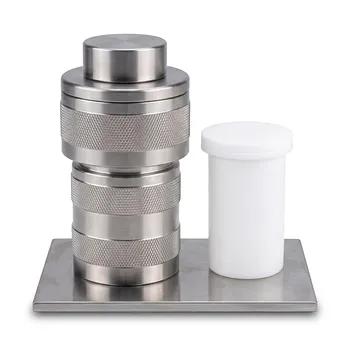
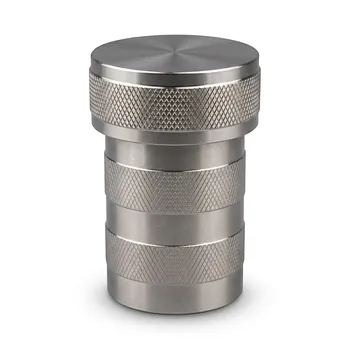
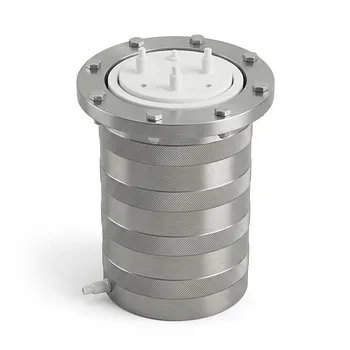
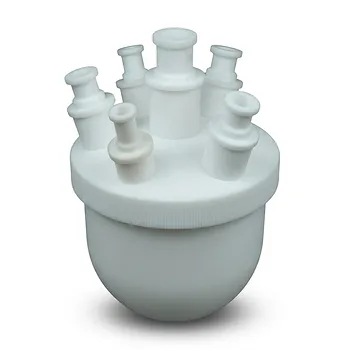
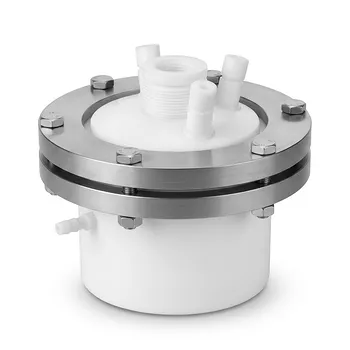
While rotation manages the gel, the physical container—often utilizing Polytetrafluoroethylene (PTFE) liners—must withstand autogenous pressures. The combination of chemical inertness from the liner and dynamic agitation from rotation creates the stable, sealed environment necessary for complex zeolite structures.
Understanding the Trade-offs
Equipment Complexity and Maintenance
Implementing a rotating system (often at speeds like 60 rpm) requires specialized ovens or rotators capable of operating at high temperatures. This increases the initial capital cost and requires regular maintenance of mechanical parts compared to simple static synthesis.
Potential for Crystal Attrition
Excessive agitation or high rotation speeds can lead to mechanical collision between crystals. This can cause "attrition," where the edges of the zeolite crystals are rounded or broken, potentially negatively impacting the desired morphology of the MFI zeolite.
Scaling Challenges
Moving from a small laboratory tumbling vessel to a large-scale industrial reactor introduces significant engineering hurdles. Maintaining the same level of uniform agitation in a multi-ton reactor as seen in a small PTFE-lined vessel is technically difficult and energy-intensive.
How to Apply This to Your Synthesis Project
When designing your hydrothermal synthesis protocol, the decision to use rotation should be based on your specific requirements for the final material.
- If your primary focus is Uniform Particle Size: Utilize a rotating state (60 rpm) to ensure that nucleation occurs simultaneously throughout the gel, preventing a wide distribution of crystal sizes.
- If your primary focus is High Crystallinity: Prioritize continuous agitation to maximize mass transfer and heat distribution, which supports the formation of a well-defined MFI framework.
- If your primary focus is Chemical Purity: Ensure your reaction vessel uses a PTFE liner to prevent corrosion from highly alkaline environments, such as those containing sodium hydroxide.
By transitioning from a static to a tumbling environment, you gain precise control over the microscopic conditions that dictate the macroscopic properties of your zeolite.
Summary Table:
| Feature | Impact on MFI Zeolite Synthesis |
|---|---|
| Chemical Homogeneity | Redistributes precursors to maintain uniform concentration and consistent nucleation. |
| Sedimentation Control | Prevents solid particles from settling, ensuring all components remain reactive. |
| Heat Distribution | Eliminates thermal gradients and "cold spots" for precise temperature control. |
| Mass Transfer | Accelerates ion movement to crystal surfaces, enhancing growth rates and crystallinity. |
| Particle Size Control | Facilitates simultaneous nucleation, leading to a narrow and uniform size distribution. |
Elevate Your Zeolite Synthesis with KINTEK’s Precision Fluoropolymer Solutions
Achieving the perfect MFI zeolite structure requires more than just the right chemistry—it demands high-performance equipment that can withstand the rigors of hydrothermal synthesis. KINTEK specializes in manufacturing virtually all imaginable laboratory supplies crafted from premium PTFE and PFA, ensuring your reactions remain contaminant-free and chemically stable.
Whether you need standard labware like beakers and reagent bottles, or advanced derivative apparatus such as hydrothermal synthesis liners, microwave digestion vessels, and custom reaction vessels, our end-to-end CNC fabrication is ready to deliver. From everyday consumables (O-rings, seal tapes, and stir bars) to complex, non-standard machined parts designed for rotating systems, we provide the high-performance materials your research deserves.
Ready to optimize your lab’s efficiency and results? Contact KINTEK today to discuss your custom laboratory needs
References
- Joaquin Martínez-Ortigosa, Teresa Blasco. New insights into fluoride's role in MFI zeolites: unveiling the link between location and synthesis conditions. DOI: 10.1039/d4qi03001j
This article is also based on technical information from Kintek Knowledge Base .
Related Products
- PTFE Lined High Pressure Digestion Vessel 50ml High Temperature Hydrothermal Synthesis Tank
- High Temperature Corrosion Resistant Hydrothermal Synthesis Reactor with TFM Inner Liner and Straight Cylinder Design
- High Purity PFA Reaction Vessel for Biopharmaceutical Synthesis and Corrosive Chemical Fluid Handling with Customizable Tube Fittings
- High Temperature PTFE Reaction Flask 1000ml Single Neck Round and Flat Bottom Laboratory Bottle
- High Pressure Custom TFM Reactor Stainless Steel Outer Vessel PTFE Inner Cup for Corrosive Synthesis
People Also Ask
- What are the benefits of using a PTFE-lined vessel for carbon-sulfur cathode treatment? Maximize Purity & Performance
- Why are PTFE-lined pressure digestion vessels required for the preparation of Ag/CeO2 catalysts? Purity & Performance
- What is the function of high-pressure PTFE digestion vessels in mineral analysis? Optimize Sample Mineralization
- What safety features are typically incorporated into high-pressure PTFE digestion vessel designs? Ensure Lab Safety
- What is the function of PTFE lined high-pressure vessels in g-C3N4 synthesis? Achieve High-Purity Material Growth