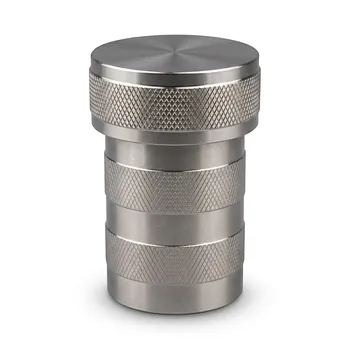
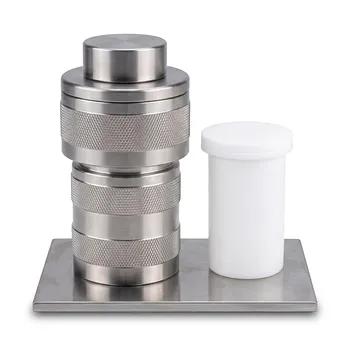
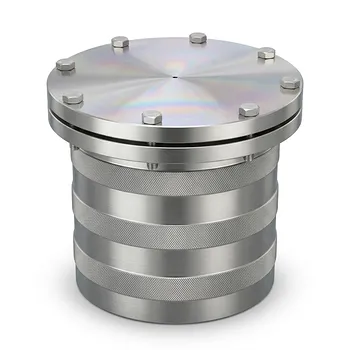
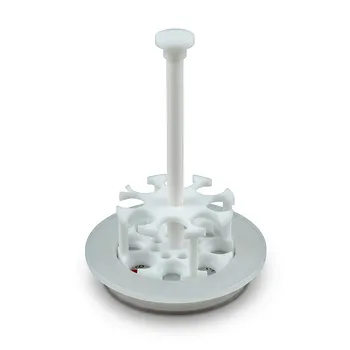
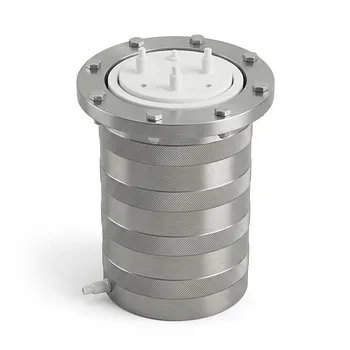
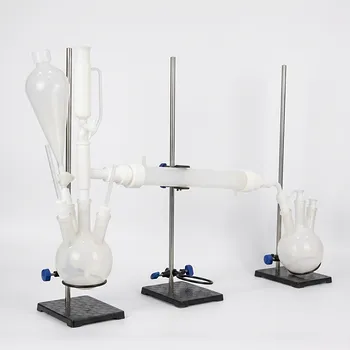
The high-pressure hydrothermal autoclave is the critical reactor that enables the precise chemical environment required to fuse NiFe2O4 and ZnO into a functional hybrid material. By maintaining a sealed, high-temperature system, the autoclave forces precursors into a state of complete dissolution and subsequent recrystallization. This process is the only reliable way to ensure a tight heterojunction interface, which is essential for the material’s ability to degrade organic pollutants like Congo red.
The autoclave acts as a thermodynamic catalyst, using high pressure to keep solvents liquid at temperatures well above their boiling points. This unique environment facilitates the formation of high-quality crystal structures and intimate interfaces between disparate metal oxides that cannot be achieved under ambient conditions.
The Mechanisms of Hydrothermal Synthesis
Solubility and Nucleation Control
The autoclave creates a high-pressure environment that significantly increases the solubility of metal oxide precursors. This allows raw materials to dissolve completely into the aqueous solution, providing a homogeneous medium for reaction.
Once dissolved, the system allows for uniform nucleation. This ensures that the NiFe2O4 and ZnO components begin to form simultaneously and consistently across the reaction vessel, preventing clumping or phase separation.
Facilitating Recrystallization
Under constant high pressure, the dissolved ions undergo a dissolution-recrystallization process. This is the mechanism by which the material transitions from raw precursor salts into a structured crystalline solid.
The autoclave environment promotes oriented crystallization. By controlling the temperature and duration within the sealed vessel, researchers can program the growth of specific morphologies, such as nanotubes or nanosheets, which maximize the surface area of the hybrid.
Optimizing the NiFe2O4/ZnO Interface
Formation of Tight Heterojunctions
The most vital role of the autoclave in this specific synthesis is the creation of a tight heterojunction interface. Because the recrystallization happens under pressure, the NiFe2O4 and ZnO crystals grow in direct, atomic-level contact with one another.
This "tight integration" is not merely physical mixing; it is a structural bond. This bond is necessary for the stability of the composite material, ensuring it does not degrade or separate during intensive chemical processes.
Enhancing Charge Separation
The quality of the heterojunction directly dictates the separation efficiency of photo-generated charges. When the interface is seamless, electrons can move freely between the NiFe2O4 and ZnO phases.
Improved charge separation prevents the recombination of electrons and holes. This efficiency is what allows the hybrid material to achieve superior adsorption and degradation performance when treating organic pollutants.
Understanding the Trade-offs
Equipment Limitations and Safety
High-pressure autoclaves require specialized hardware and rigorous safety protocols to manage the extreme internal forces. The sealed nature of the reactor means that real-time monitoring of the crystal growth is often impossible, requiring a "black box" approach to synthesis.
Scalability vs. Precision
While the hydrothermal method produces high-purity bulk crystals, the process is inherently slower than open-air chemical methods. Achieving the desired crystal facets or morphology requires precise programmatic control over heating and cooling cycles, which can be energy-intensive.
How to Apply This to Your Project
Recommendations for Synthesis
- If your primary focus is photocatalytic efficiency: Prioritize the "soak time" at maximum temperature within the autoclave to ensure the tightest possible heterojunction between the two oxides.
- If your primary focus is morphological control (e.g., nanowires): Utilize the autoclave’s ability to maintain constant pressure while precisely regulating the temperature to favor specific crystal growth directions.
- If your primary focus is industrial throughput: Invest in large-scale, high-pressure vessels that can handle bulk single-crystal growth at relatively lower temperatures to reduce long-term production costs.
The high-pressure hydrothermal autoclave is not just a container, but the fundamental hardware foundation that allows for the precise engineering of advanced NiFe2O4/ZnO hybrid nanostructures.
Summary Table:
| Mechanism | Role in Synthesis | Impact on Material Quality |
|---|---|---|
| Solubility Control | Increases precursor dissolution in aqueous media | Ensures a homogeneous reaction medium |
| Uniform Nucleation | Facilitates simultaneous crystal growth | Prevents phase separation and clumping |
| Recrystallization | Transitions raw salts into structured solids | Produces high-purity crystalline structures |
| Heterojunction Formation | Creates atomic-level contact between oxides | Improves charge separation and stability |
| Morphological Control | Regulates temperature/pressure cycles | Enables growth of specific shapes (nanosheets) |
Elevate Your Synthesis Precision with KINTEK
Unlock the full potential of your material research with KINTEK’s high-performance laboratory solutions. Specialized in high-performance fluoropolymers, we provide the critical hardware foundation for advanced chemical synthesis. Whether you are developing NiFe2O4/ZnO hybrids or complex nanostructures, our extensive range includes:
- Advanced Reaction Apparatus: Hydrothermal synthesis liners, microwave digestion vessels, and custom electrochemical cells.
- Precision Labware: PTFE and PFA beakers, crucibles, reagent bottles, and high-purity trace analysis instruments.
- Fluid & Sample Tools: Comprehensive fluid transfer components (tubing, valves), filtration tools, and general consumables like stirring bars and O-rings.
- Bespoke Engineering: End-to-end custom CNC fabrication for non-standard machined parts and tailored laboratory setups.
From everyday basic labware to high-volume orders of complex reaction vessels, KINTEK is committed to delivering the durability and purity your lab demands. Contact our technical experts today to discuss your project requirements!
References
- Madina Bissenova, Chingis Daulbayev. Hybrid adsorption–photocatalysis composites: a sustainable route for efficient water purification. DOI: 10.1007/s40243-025-00319-5
This article is also based on technical information from Kintek Knowledge Base .
Related Products
- High Temperature Corrosion Resistant Hydrothermal Synthesis Reactor with TFM Inner Liner and Straight Cylinder Design
- PTFE Lined High Pressure Digestion Vessel 50ml High Temperature Hydrothermal Synthesis Tank
- Custom TFM Reaction Vessel with Stainless Steel Jacket and PTFE Inner Cup for High Corrosion Resistance
- High Performance TFM Microwave Digestion Vessel Rack 15 Position Customizable Sample Preparation Support
- High Pressure Custom TFM Reactor Stainless Steel Outer Vessel PTFE Inner Cup for Corrosive Synthesis
People Also Ask
- What is the role of a corrosion-resistant reactor in the synthesis of lignin-based carbon dots? Ensure Maximum Purity
- What are the technical advantages of using hydrothermal synthesis reactors for advanced electronic & optical nanomaterials?
- How does a hydrothermal synthesis reactor facilitate the production of crystalline materials with tailored morphologies? Precision Crystal Growth
- Why is the sealing reliability of a hydrothermal synthesis reactor critical for 24-hour cycles? Ensure Nano-Precision
- What role do hydrothermal synthesis reactors play in CQD preparation? Achieve High-Purity Nanomaterial Synthesis