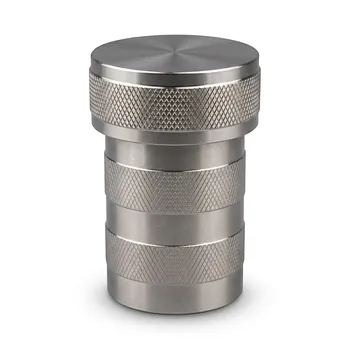
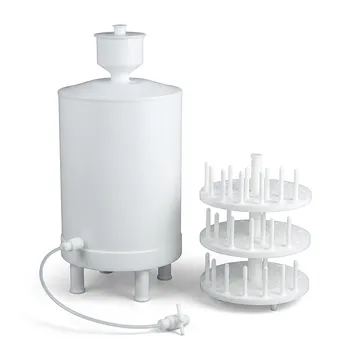
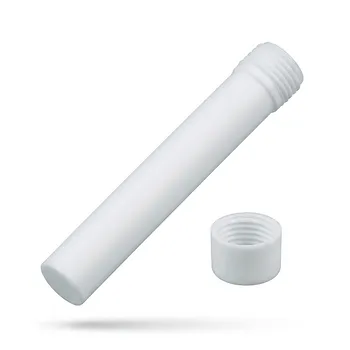
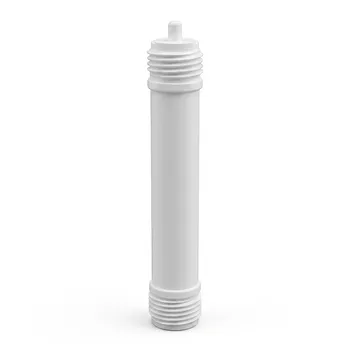
The requirement for a PTFE-lined hydrothermal autoclave is driven by the need for chemical isolation and precise stoichiometric control. During the synthesis of high-entropy doped sodium vanadium fluorophosphate (HE-NVPF), the PTFE liner acts as a chemically inert barrier that prevents the reaction solution from corroding the stainless steel autoclave body. This isolation ensures that no unwanted metal ions leach into the mixture, preserving the exact high-entropy doping ratio and the overall purity of the precursor.
The PTFE liner provides a non-reactive environment that withstands high autogenous pressure and temperatures up to 200°C, ensuring the structural integrity and chemical purity of complex high-entropy materials.
Maintaining Stoichiometric Precision in High-Entropy Systems
Preventing Metal Ion Contamination
In high-entropy materials like HE-NVPF, the specific ratio of various dopants is critical to the material's performance and "high-entropy" state. If the reaction solution contacts the stainless steel walls of an autoclave, metal ions like iron, nickel, or chromium can leach into the precursor. This contamination alters the intended chemical composition and degrades the electrochemical properties of the resulting sodium vanadium fluorophosphate.
Ensuring Chemical Inertness
Polytetrafluoroethylene (PTFE), commonly known as Teflon, is selected for its exceptional chemical stability. It does not react with the salts or precursors used in HE-NVPF synthesis, even under the aggressive conditions of hydrothermal processing. This inertness allows the complex chemical reactions required for high-entropy doping to occur in a "clean room" environment within the vessel.
Preserving Doping Ratios
The "high-entropy" aspect of HE-NVPF relies on the successful integration of multiple elements into a single crystal structure. Any introduction of external metallic impurities from the reactor walls can disrupt this delicate balance. By using a PTFE liner, researchers ensure that the final product reflects the precise stoichiometry of the initial precursor mix.
The Role of the Hydrothermal Environment
Withstanding High Autogenous Pressure
Hydrothermal synthesis occurs in a sealed environment where heating the liquid creates internal autogenous pressure. While the PTFE liner provides chemical protection, the outer stainless steel shell provides the mechanical strength to contain this pressure safely. This high-pressure environment is essential for facilitating the crystallization and phase development of the NVPF framework.
Managing High-Temperature Conditions
The synthesis of HE-NVPF often requires temperatures reaching 200 °C. At these levels, standard containers would fail or react with the solution. PTFE is uniquely suited for this range, maintaining its structural integrity and non-reactive properties while allowing the precursors to reach the energy levels necessary for high-entropy stabilization.
Facilitating Crystal Growth
The sealed, pressurized nature of the PTFE-lined autoclave promotes uniform heating and conformal crystalline development. This environment allows for the precise control of the crystal growth and morphology of the HE-NVPF nanosheets or particles. Without the stable pressure provided by the sealed liner and shell, the material might exhibit poor crystallinity or irregular morphology.
Understanding the Trade-offs
Temperature Limitations
While PTFE is excellent for many hydrothermal processes, it has a clear thermal ceiling. It typically begins to soften or undergo creeping deformation at temperatures exceeding 250°C to 260°C. For reactions requiring higher temperatures, researchers must switch to more expensive PPL (Polyphenylene polymers) or quartz liners.
Heat Transfer Efficiency
PTFE is an effective thermal insulator, which means it does not conduct heat as quickly as the surrounding metal. This can lead to a lag between the oven temperature and the actual temperature of the reaction solution inside the liner. Precise timing and calibration are necessary to ensure the reaction reaches the required thermal state for the intended duration.
Seal Integrity and Wear
Repeated use at high pressures can cause the PTFE liner to deform or "flare" at the edges. If the seal is compromised, the autogenous pressure will drop, and the precursor solution may leak, potentially corroding the stainless steel shell from the inside out. Regular inspection of the liner's physical condition is mandatory to maintain experimental safety and purity.
How to Apply This to Your Synthesis
The choice of a PTFE-lined autoclave is a fundamental requirement for ensuring the quality of high-performance battery materials.
- If your primary focus is precise stoichiometric doping: Use a high-quality, virgin PTFE liner to ensure zero contamination from the reactor walls, which is vital for the "high-entropy" characteristics.
- If your primary focus is high-pressure crystal growth: Ensure the stainless steel outer shell is rated for at least twice the expected autogenous pressure to maintain a safe, sealed environment.
- If your primary focus is material purity and longevity: Regularly replace PTFE liners that show signs of discoloration or deformation to prevent accidental leaching or leakage during long-duration synthesis.
By isolating the chemical reaction from the structural vessel, you ensure that the complex chemistry of high-entropy doping remains pure and predictable.
Summary Table:
| Key Requirement | Role of PTFE Liner | Impact on HE-NVPF Synthesis |
|---|---|---|
| Chemical Purity | Provides an inert, non-reactive barrier | Prevents metal ion leaching (Fe, Ni, Cr) from the steel shell |
| Stoichiometric Control | Eliminates external contamination | Preserves the precise ratio of high-entropy dopants |
| Pressure Resistance | Seals the reaction for autogenous pressure | Facilitates uniform crystal growth and phase development |
| Thermal Stability | Operates safely up to 200°C - 250°C | Provides a stable environment for precursor stabilization |
Elevate Your Synthesis with KINTEK’s Precision Fluoropolymers
To achieve the delicate stoichiometric balance required for high-entropy materials like HE-NVPF, your equipment must be as precise as your chemistry. KINTEK specializes in high-performance fluoropolymer solutions designed to eliminate contamination and withstand the rigors of hydrothermal synthesis.
From everyday basic labware like beakers, crucibles, and reagent bottles to specialized PTFE and PFA-lined hydrothermal autoclaves, we provide the inert environment your research demands. Our expertise extends to comprehensive fluid transfer components (tubing, fittings, valves), sample prep tools, and advanced reaction apparatus such as electrochemical cells and custom-machined microwave digestion vessels.
Whether you need standard consumables or bespoke CNC-fabricated components tailored to your specific reactor designs, KINTEK ensures an absolute focus on high-performance materials.
Ready to secure the purity of your next high-entropy breakthrough?
Contact our technical team today to discuss your custom laboratory requirements!
References
- Yingkai Hua, Zheng‐Long Xu. High‐Entropy Doped KTiOPO <sub>4</sub> ‐Type Vanadium‐Based Fluorophosphate Cathodes for High‐Energy Sodium‐Ion Batteries. DOI: 10.1002/adfm.202512341
This article is also based on technical information from Kintek Knowledge Base .
Related Products
- PTFE Lined High Pressure Digestion Vessel 50ml High Temperature Hydrothermal Synthesis Tank
- Custom TFM Reaction Vessel with Stainless Steel Jacket and PTFE Inner Cup for High Corrosion Resistance
- High Temperature Corrosion Resistant Hydrothermal Synthesis Reactor with TFM Inner Liner and Straight Cylinder Design
- PTFE Acid Steam Cleaning System HF Resistant Trace Analysis Beaker Digestion Tank Customizable
- High Purity TFM Microwave Digestion Vessels PTFE Acid Evaporation Liners Domestic GT-400 Equivalent Laboratory Reaction Containers
People Also Ask
- What are the benefits of using a PTFE-lined vessel for carbon-sulfur cathode treatment? Maximize Purity & Performance
- Why are PTFE-lined pressure digestion vessels required for the preparation of Ag/CeO2 catalysts? Purity & Performance
- What is the function of high-pressure PTFE digestion vessels in mineral analysis? Optimize Sample Mineralization
- What safety features are typically incorporated into high-pressure PTFE digestion vessel designs? Ensure Lab Safety
- What is the function of PTFE lined high-pressure vessels in g-C3N4 synthesis? Achieve High-Purity Material Growth