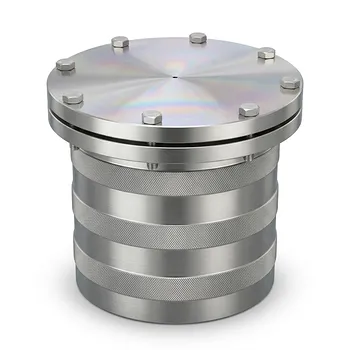
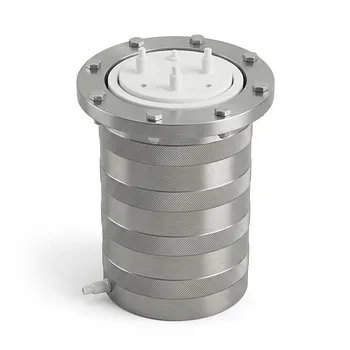
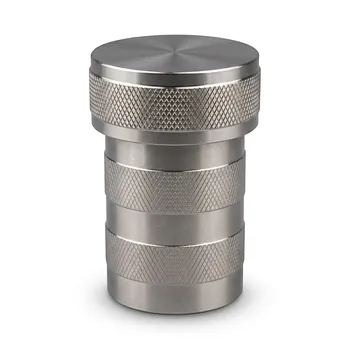
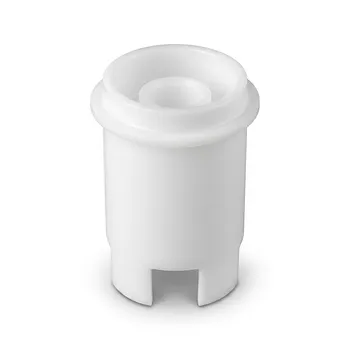
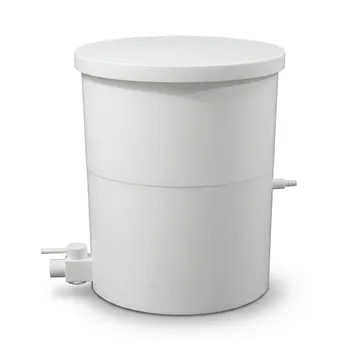
The stainless steel hydrothermal autoclave acts as a high-pressure reactor that enables the seamless integration of graphite and reduced Graphene Oxide (rGO). By generating autogenous pressure in a sealed environment, the vessel forces rGO components to embed and anchor deeply into graphite domains. This process facilitates the essential synergistic bonding between the sp2 and partially reduced sp3 domains required for a high-performance carbon hybrid.
Core Takeaway: The autoclave provides the extreme thermo-mechanical environment necessary to overcome the energy barriers of carbon hybridization, ensuring that rGO is not just mixed with, but physically and chemically bonded to, the graphite structure while maintaining high material purity.
The Mechanics of Autogenous Pressure
Driving Solvent Penetration
The primary role of the autoclave is to generate autogenous pressure, which significantly increases the penetration ability of the solvent. This pressure forces the solvent—carrying rGO precursors—into the microscopic gaps and domains of the graphite structure. Without this pressure, the rGO would simply sit on the surface rather than becoming an integral part of the hybrid matrix.
Achieving Near-Critical States
Within the sealed stainless steel environment, solvents can be heated to temperatures (typically 120°C to 250°C) that exceed their atmospheric boiling points. This allows the solvent to reach a supercritical or near-critical state. In this state, the solvent's unique properties accelerate the conversion of Graphene Oxide (GO) to reduced Graphene Oxide (rGO) while simultaneously strengthening chemical bonds.
Facilitating Molecular Synergetic Bonding
Bridging sp2 and sp3 Domains
The hydrothermal environment is critical for managing the carbon hybridization process at a molecular level. The high-pressure conditions facilitate the synergistic bonding between the conductive sp2 domains of graphite and the partially reduced sp3 domains of the rGO. This creates a more cohesive electronic and structural network throughout the hybrid material.
Promoting Uniform Anchoring
The autoclave ensures that the rGO components are effectively embedded and anchored within the graphite. This "in-situ" growth and anchoring prevent the layers from delaminating during use. The result is a hybrid material with superior structural uniformity and stable electrochemical properties.
Ensuring Material Purity and Integrity
The Protective Role of the PTFE Liner
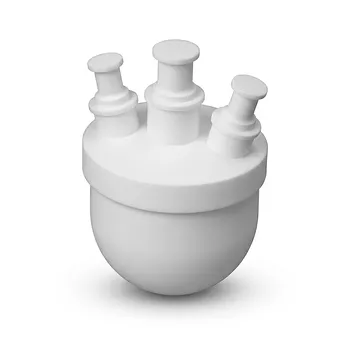
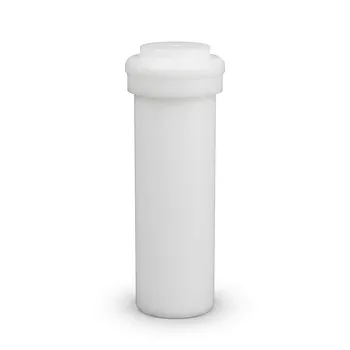
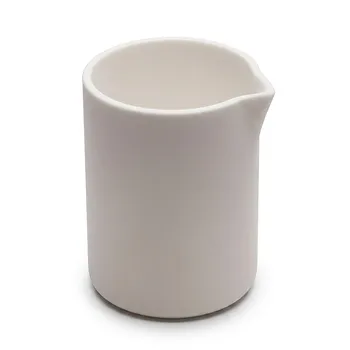
Most stainless steel autoclaves utilize a high-purity PTFE liner to provide a chemically inert reaction environment. This liner prevents the reaction medium—especially if it contains strong acids or bases—from corroding the stainless steel shell. More importantly, it ensures that no metallic impurity ions leach into the carbon hybrid, preserving its electrical and chemical performance.
Mechanical Strength of the Outer Shell
While the liner handles chemical resistance, the stainless steel outer shell provides the mechanical strength required to contain the reaction. Hydrothermal synthesis can generate significant internal pressure that would rupture weaker vessels. The steel's ability to withstand these forces allows for a safe and controlled synthesis at high temperatures.
Understanding the Trade-offs
Thermal Limitations
While effective, these vessels have strict thermal limits; exceeding the maximum operating temperature of the PTFE liner (usually around 250°C) can lead to liner deformation or toxic off-gassing. Users must balance the need for higher temperatures to improve crystallinity with the physical limits of the equipment.
Scaling and Monitoring Challenges
Hydrothermal synthesis in a sealed autoclave is a "black box" process, meaning you cannot monitor the reaction in real-time. Additionally, scaling the process from a small lab-scale autoclave to industrial production is complex due to the challenges of maintaining uniform pressure and heat distribution in larger volumes.
How to Apply This to Your Project
Recommendations for Implementation
- If your primary focus is high electrical conductivity: Prioritize higher temperatures within the autoclave (200°C+) to maximize the reduction of GO and the formation of sp2 domains.
- If your primary focus is material purity: Ensure your PTFE liner is thoroughly cleaned with acid before use to prevent any cross-contamination of metallic ions from previous runs.
- If your primary focus is structural uniformity: Utilize a slower cooling rate after the hydrothermal process to allow the carbon hybrid domains to stabilize and reduce internal structural defects.
By masterfully controlling the pressure and temperature within a hydrothermal autoclave, you transform a simple mixture into a sophisticated, high-performance carbon hybrid.
Summary Table:
| Feature | Mechanism | Impact on Synthesis |
|---|---|---|
| Autogenous Pressure | Forces solvent into graphite domains | Deep anchoring of rGO into the graphite matrix |
| Near-Critical Heat | 120°C to 250°C environment | Accelerates GO reduction and sp2/sp3 bonding |
| PTFE Liner | Chemically inert reaction barrier | Prevents metallic impurity leaching for high purity |
| Steel Outer Shell | High mechanical strength | Safe containment of extreme internal pressures |
Optimize Your Material Synthesis with KINTEK Precision
Achieve superior research results with KINTEK, your specialist in high-performance fluoropolymer laboratory solutions. We manufacture virtually all imaginable lab supplies crafted from PTFE and PFA, ensuring absolute purity and chemical resistance for your most sensitive applications.
- Advanced Reaction Apparatus: From PTFE hydrothermal synthesis liners and microwave digestion vessels to custom electrochemical cells and battery testing fixtures.
- Comprehensive Labware: High-purity trace analysis instruments, beakers, crucibles, reagent bottles, and digestion tubes.
- Fluid & Sample Handling: Tubing, fittings, valves, separatory funnels, filters, and high-precision pipettes.
- General Consumables: Stirring bars, O-rings, gaskets, and seal tapes designed for durability.
Backed by end-to-end custom CNC fabrication, KINTEK is equipped to deliver everything from complex, non-standard machined parts to high-volume orders tailored to your specific requirements.
Ready to elevate your lab's performance? Contact our experts today to request a quote or discuss your custom setup!
References
- Muhammad Faizadmesa Allim, Muhammad Akmal Kosnan. Morphological, Elemental Composition and Structural Analysis of Novel Graphite/rGO Hybrid Synthesis via One-Pot Facile Hydrothermal. DOI: 10.4236/jpee.2025.1312002
This article is also based on technical information from Kintek Knowledge Base .
Related Products
- Custom TFM Reaction Vessel with Stainless Steel Jacket and PTFE Inner Cup for High Corrosion Resistance
- PTFE Lined High Pressure Digestion Vessel 50ml High Temperature Hydrothermal Synthesis Tank
- High Pressure Custom TFM Reactor Stainless Steel Outer Vessel PTFE Inner Cup for Corrosive Synthesis
- High Temperature Corrosion Resistant Hydrothermal Synthesis Reactor with TFM Inner Liner and Straight Cylinder Design
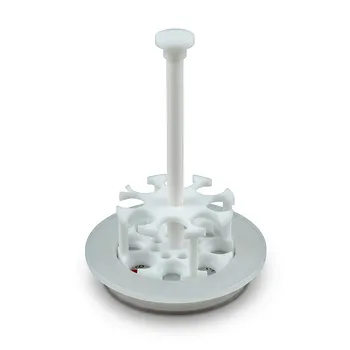
- High Pressure PTFE Digestion Vessel Inner Cup Holder Custom Corrosion Resistant Low Background Teflon
People Also Ask
- Why are high-performance pressure-resistant reaction vessels required for oxygen-assisted hydrothermal conversion at 150 °C?
- How do magnetic stirring and reaction vessels impact MOF-derived carbon quality? Optimize Your Composite Performance
- Why are PTFE-lined reaction vessels necessary for forced degradation studies? Ensure high-purity results and accuracy.
- Why are PTFE-lined reaction vessels necessary for alkali stability tests? Ensure accurate ionomer degradation data.
- Why is a PTFE-lined reactor required for Mn2O3 synthesis? Achieve High Purity & Corrosion Resistance