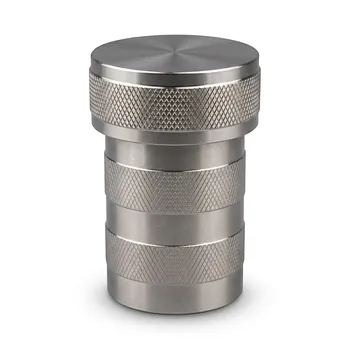
The high-pressure autoclave serves as the critical reaction vessel that enables the transformation of calcium carbonate from Green-lipped mussel shells into hydroxyapatite. By maintaining a sealed environment, the autoclave allows solvents to reach temperatures well above their atmospheric boiling points while remaining in a liquid state. This high-energy, subcritical condition provides the necessary driving force to dissolve the biogenic calcium sources and recrystallize them into high-purity biomineralized powders.
The autoclave creates a high-pressure, high-temperature environment that facilitates the chemical recombination of mussed shell precursors into hydroxyapatite. It ensures material purity by using inert liners and provides the thermodynamic conditions required for uniform crystal growth.
Thermal and Barometric Regulation
Maintaining Liquid Phase Above Boiling Point
In standard conditions, water escapes as steam at 100°C, limiting the energy available for chemical reactions. The sealed environment of the autoclave prevents this evaporation, allowing the solvent to reach temperatures often exceeding 180°C while remaining liquid.
Harnessing Autogenous Pressure
As the temperature inside the vessel rises, it generates autogenous pressure, typically ranging between 4.2 and 5.4 bar. This pressure forces the solvent into the microscopic pores of the mussel shell fragments, accelerating the extraction of calcium ions.
Increasing the Ion Product of Water
Under these subcritical conditions, the physical properties of water change, significantly increasing its ion product. This shift promotes the rapid dissolution of precursors and increases the driving force for the subsequent crystallization of hydroxyapatite.
Chemical Transformation and Material Purity
Accelerating Dissolution and Recombination
The hydrothermal environment facilitates the reversible formation and repair of chemical bonds between the calcium from the shells and phosphate sources. This process is essential for shifting the raw material from a carbonate-based structure to the desired phosphate-based hydroxyapatite framework.
The Role of the PTFE Liner in Purity
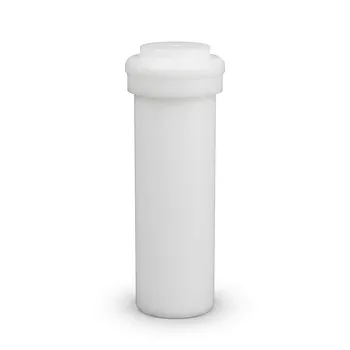
To prevent contamination, autoclaves utilize a high-purity PTFE (Polytetrafluoroethylene) liner. This liner is chemically inert, ensuring the reaction solution does not contact the stainless steel walls, which would otherwise introduce metallic impurities and alter the stoichiometric ratio of the bioceramic.
Morphology and Crystallinity Control
The stable temperature and pressure profiles within the autoclave allow for the production of high-purity, low-crystallinity powders specific to biomineralized sources. By adjusting the dwell time and heat, researchers can control the nanorod morphology and ensure the final product is suitable for medical or composite applications.
Understanding the Trade-offs
Thermal Limitations of Equipment
While higher temperatures accelerate reactions, the PTFE liners commonly used have strict thermal ceilings, often around 230°C. Exceeding these limits can cause the liner to deform or release toxic vapors, compromising the integrity of the synthesis.
Crystallinity vs. Bioactivity
Hydrothermal synthesis can produce high-crystallinity structures, but when deriving material from mussel shells, the goal is often a low-crystallinity biomineral. While highly crystalline structures are more stable, lower crystallinity often results in better bioactivity and faster integration within biological systems.
Complexity of Pressure Management
The reliance on autogenous pressure means that the fill degree of the autoclave is a critical variable. If the vessel is too full, the pressure can exceed safety limits; if it is too empty, the pressure may be insufficient to drive the necessary chemical transitions.
Making the Right Choice for Your Goal
How to Apply This to Your Project
- If your primary focus is maximum chemical purity: Ensure the use of a clean PTFE liner and deionized water to eliminate any potential for metallic ion contamination from the autoclave walls.
- If your primary focus is controlling crystal morphology: Closely monitor the temperature and reaction time, as these variables directly dictate the growth of nanorods versus spherical particles.
- If your primary focus is biological integration: Aim for the low-crystallinity parameters characteristic of mussel-shell-derived hydroxyapatite to mimic the natural structure of human bone.
By precisely controlling the subcritical environment within the autoclave, you can transform raw biogenic waste into a sophisticated, high-value medical material.
Summary Table:
| Feature | Role in Synthesis | Key Benefit |
|---|---|---|
| Thermal Regulation | Maintains liquid phase above 100°C | Increases reaction energy & ion product |
| Autogenous Pressure | Forces solvent into shell pores | Accelerates calcium ion extraction |
| PTFE Liner | Prevents metallic contamination | Ensures high-purity biomineralized powder |
| Morphology Control | Regulates crystal growth profiles | Tailors nanorod vs. spherical structures |
Elevate Your Synthesis with KINTEK’s Fluoropolymer Expertise
Achieving high-purity hydroxyapatite requires reliable, contamination-free equipment. KINTEK specializes in high-performance fluoropolymer solutions designed for the most demanding hydrothermal environments. From everyday basic labware like PTFE/PFA beakers, crucibles, and reagent bottles to advanced hydrothermal synthesis liners and microwave digestion vessels, we provide the tools necessary for precision research.
Our expertise extends to comprehensive fluid transfer components, sample prep tools, and custom CNC-fabricated non-standard parts tailored to your specific reaction apparatus. Whether you need high-volume consumables or bespoke laboratory setups for battery testing and electrochemical cells, KINTEK delivers unmatched quality backed by an absolute focus on PTFE and PFA materials.
Ready to optimize your laboratory's performance? Contact us today to discuss your custom requirements and secure the highest quality fluoropolymer supplies.
References
- Viktor Naubnome, J. Jamari. Assisted hydrothermal synthesis of green mussel shell-derived hydroxyapatite for use in filler polymer-based composites. DOI: 10.1088/1742-6596/2972/1/012053
This article is also based on technical information from Kintek Knowledge Base .
Related Products
- High Temperature Corrosion Resistant Hydrothermal Synthesis Reactor with TFM Inner Liner and Straight Cylinder Design
- PTFE Lined High Pressure Digestion Vessel 50ml High Temperature Hydrothermal Synthesis Tank
- Custom TFM Reaction Vessel with Stainless Steel Jacket and PTFE Inner Cup for High Corrosion Resistance
- High Pressure Custom TFM Reactor Stainless Steel Outer Vessel PTFE Inner Cup for Corrosive Synthesis
- High Purity PFA Reaction Vessel for Biopharmaceutical Synthesis and Corrosive Chemical Fluid Handling with Customizable Tube Fittings
People Also Ask
- What is the role of a corrosion-resistant reactor in the synthesis of lignin-based carbon dots? Ensure Maximum Purity
- What are the technical advantages of using hydrothermal synthesis reactors for advanced electronic & optical nanomaterials?
- How does a hydrothermal synthesis reactor facilitate the production of crystalline materials with tailored morphologies? Precision Crystal Growth
- Why is the sealing reliability of a hydrothermal synthesis reactor critical for 24-hour cycles? Ensure Nano-Precision
- What role do hydrothermal synthesis reactors play in CQD preparation? Achieve High-Purity Nanomaterial Synthesis