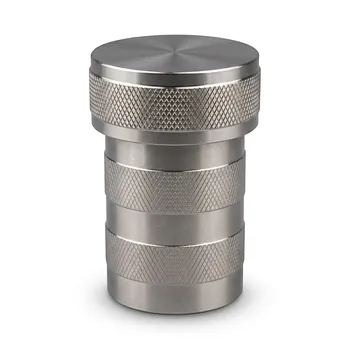
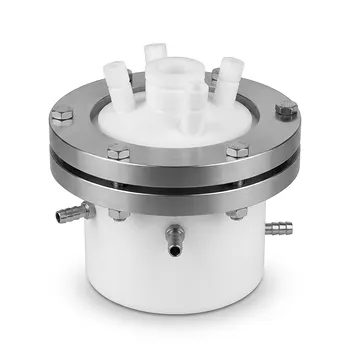
In the synthesis of Mordenite, a PTFE-lined hydrothermal synthesis autoclave serves as the critical reactor for maintaining a sealed, high-pressure, and corrosion-resistant environment. This setup allows for temperatures between 150°C and 170°C, creating the autogenous pressure necessary to dissolve aluminosilicate gels and facilitate their transformation into crystalline Mordenite.
Core Takeaway: The PTFE-lined autoclave acts as a chemically inert "pressure cooker" that enables high-temperature crystallization while preventing strong alkaline precursors from corroding the reactor or contaminating the zeolite with metal ions.
Creating the Hydrothermal Reaction Environment
Reaching Subcritical Fluid States
The primary function of the sealed autoclave is to allow solvents—typically water—to remain in a liquid state well above their atmospheric boiling points. This subcritical environment significantly increases the solubility and reactivity of the precursor materials.
Generating Autogenous Pressure
As the autoclave is heated, the internal liquid expands and vaporizes within the fixed volume, creating autogenous pressure. This pressure is essential for driving the chemical precursors into a supersaturated state, which is a prerequisite for crystal nucleation.
Ensuring Chemical Stability and Purity
Resistance to Alkaline Corrosion
Mordenite synthesis often requires a strong alkaline environment, which is highly corrosive to standard metallic containers. The Polytetrafluoroethylene (PTFE) liner is used because it is exceptionally resistant to chemical attack, protecting the outer stainless steel shell from erosion.
Eliminating Metal Ion Contamination
If the reaction media were to contact the metal walls of the autoclave, leaching of iron, nickel, or chromium could occur. The PTFE liner ensures high purity of the final product by providing a barrier that prevents these foreign metal ions from interfering with the zeolite’s stoichiometric ratio.
Facilitating Crystal Nucleation and Growth
Dissolution of Aluminosilicate Gels
The high-temperature, high-pressure environment inside the liner facilitates the dissolution of aluminosilicate gels. This process breaks down the raw precursors into mobile species that can then reorganize into the specific Mordenite framework.
Controlled Epitaxial Growth
By maintaining a strictly sealed environment, the autoclave ensures that synthesis ratios remain constant throughout the process. This stability is vital for the epitaxial growth and morphology control of the crystals, ensuring they reach the desired size and structure.
Understanding the Technical Trade-offs
Temperature Limitations
While PTFE is highly inert, it has a physical limit; it generally cannot be used for reactions exceeding 200°C to 220°C. At temperatures beyond this range, the liner can soften or deform, compromising the seal and potentially releasing toxic fluorinated vapors.
Thermal Expansion and Sealing
PTFE has a higher coefficient of thermal expansion than the stainless steel shell surrounding it. If the autoclave is cooled too rapidly or heated unevenly, the liner can warp, which may lead to leaks or difficulty in removing the liner after the synthesis is complete.
How to Apply This to Your Project
When utilizing a PTFE-lined autoclave for Mordenite or similar zeolite synthesis, your approach should vary based on your specific experimental goals.
- If your primary focus is Maximum Purity: Ensure the PTFE liner is thoroughly acid-washed between uses to remove any residual nucleation sites or trace metal ions from previous runs.
- If your primary focus is Morphology Control: Maintain a strict temperature range (150-170°C) and ensure the autoclave fill level is consistent (typically 60-80%) to produce stable autogenous pressure.
- If your primary focus is High-Temperature Synthesis (>200°C): Consider alternative liner materials like PPL (Para-polyphenylene) which offer higher thermal stability than standard PTFE.
By precisely controlling the hydrothermal environment within the PTFE liner, you ensure the consistent, high-quality production of Mordenite crystals.
Summary Table:
| Feature | Function in Mordenite Synthesis | Key Benefit |
|---|---|---|
| PTFE Liner | Provides a chemically inert reaction chamber | Prevents alkaline corrosion & metal ion contamination |
| High-Pressure Seal | Maintains subcritical fluid states (150°C-170°C) | Increases solubility & reactivity of precursors |
| Autogenous Pressure | Drives precursors into a supersaturated state | Essential for crystal nucleation and framework growth |
| Thermal Stability | Facilitates controlled epitaxial growth | Ensures consistent crystal morphology and purity |
Optimize Your Synthesis with KINTEK’s High-Performance Fluoropolymers
Precision in Mordenite synthesis requires materials that never compromise on purity or durability. KINTEK specializes in high-performance fluoropolymer solutions, manufacturing virtually all imaginable laboratory supplies crafted from PTFE and PFA.
Whether you need everyday basic labware (beakers, measuring cylinders, crucibles, reagent bottles) or advanced reaction apparatus like hydrothermal synthesis liners, microwave digestion vessels, and custom electrochemical cells, we have you covered. Our expertise extends to comprehensive fluid transfer components, sample prep tools, and high-purity trace analysis instruments.
Backed by end-to-end custom CNC fabrication, KINTEK is equipped to deliver everything from complex non-standard machined parts to high-volume orders with an absolute focus on material integrity.
Ready to upgrade your lab setup? Contact us today to discover how our bespoke fluoropolymer solutions can enhance your research outcomes.
References
- Zijian Wang, Zhaozheng Song. Exploration on the mechanism of crystal morphology transformation in mordenite. DOI: 10.1039/d5ra00666j
This article is also based on technical information from Kintek Knowledge Base .
Related Products
- PTFE Lined High Pressure Digestion Vessel 50ml High Temperature Hydrothermal Synthesis Tank
- High Temperature Corrosion Resistant Hydrothermal Synthesis Reactor with TFM Inner Liner and Straight Cylinder Design
- Custom TFM Reaction Vessel with Stainless Steel Jacket and PTFE Inner Cup for High Corrosion Resistance
- High Pressure Custom TFM Reactor Stainless Steel Outer Vessel PTFE Inner Cup for Corrosive Synthesis
- PTFE Acid Steam Cleaning System HF Resistant Trace Analysis Beaker Digestion Tank Customizable
People Also Ask
- What are the benefits of using a PTFE-lined vessel for carbon-sulfur cathode treatment? Maximize Purity & Performance
- Why are PTFE-lined pressure digestion vessels required for the preparation of Ag/CeO2 catalysts? Purity & Performance
- What safety features are typically incorporated into high-pressure PTFE digestion vessel designs? Ensure Lab Safety
- What is the function of PTFE lined high-pressure vessels in g-C3N4 synthesis? Achieve High-Purity Material Growth
- Role of High-Pressure Digestion Tanks in Perovskite Synthesis: Achieve Superior Stability and Latent Heat