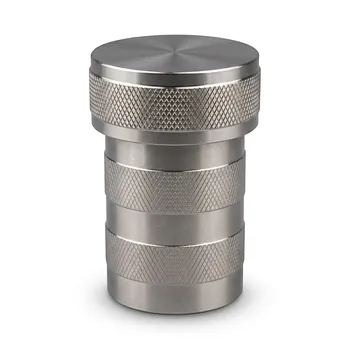
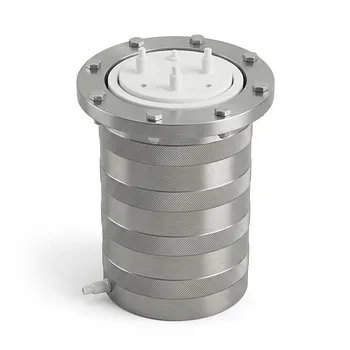
The high-pressure hydrothermal autoclave acts as a specialized reaction vessel that creates a superheated liquid environment for synthesizing Lithium Iron Phosphate ($LiFePO_4$). By maintaining a sealed chamber, the autoclave generates autogenous pressure that allows water or solvents to remain in a liquid state at temperatures far exceeding their normal boiling points. This specific environment is essential for increasing reactant solubility and facilitating the growth of high-crystallinity, phase-pure nanostructures that are difficult to achieve through standard atmospheric heating.
The autoclave provides the necessary thermodynamic conditions—high pressure and high temperature—to transform chemical precursors into high-quality $LiFePO_4$ by optimizing solubility, nucleation, and crystal growth within a sealed system.
The Thermodynamic Role of the Autoclave
Facilitating Superheated Liquid States
In conventional synthesis, water boils at 100°C, limiting the energy available for chemical reactions in an open system. The autoclave’s sealed environment allows solvents to reach much higher temperatures while remaining liquid, which is critical for the hydrothermal process.
Generating Autogenous Pressure
As the internal temperature rises, the liquid expands and creates autogenous pressure within the fixed volume of the vessel. This pressure forces the solvent into the pores of the precursors, accelerating the transformation into $LiFePO_4$.
Enhancing Chemical Reactivity and Material Quality
Increasing Precursor Solubility
High-temperature and high-pressure conditions significantly boost the solubility of lithium and phosphate precursors. This ensures that the reactants are fully dissolved and available for a more uniform chemical reaction.
Promoting High Crystallinity and Phase Purity
The autoclave environment allows for the precise formation of $LiFePO_4$ nanostructures with high phase purity. The controlled cooling and pressure levels help eliminate unwanted secondary phases, resulting in a more efficient battery material.
Accelerating Reaction Kinetics
Because the environment is more energetic than a standard reflux setup, material growth occurs much faster. This allows researchers to produce high-quality $LiFePO_4$ at lower overall processing temperatures compared to solid-state sintering methods.
The Importance of Hardware Integrity
Structural Strength of the Stainless Steel Shell
The outer shell of the autoclave is typically constructed from high-strength stainless steel. This component is designed to safely contain the intense internal pressures generated during the heating cycle, preventing vessel failure.
Chemical Protection via PTFE Liners
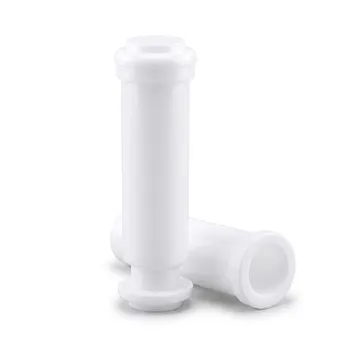
A Polytetrafluoroethylene (PTFE) liner is used inside the steel shell to provide chemical inertness. This prevents the $LiFePO_4$ precursors from reacting with or being contaminated by the metal walls of the autoclave.
Maintaining Stoichiometric Purity
By isolating the reaction within a chemically inert liner, the autoclave ensures the final product maintains its intended stoichiometric ratio. This is vital for the electrochemical performance of the $LiFePO_4$ in lithium-ion batteries.
Understanding the Trade-offs
Safety Risks and Pressure Management
The primary risk of using a high-pressure autoclave is the potential for mechanical failure or explosion if pressure limits are exceeded. Users must strictly adhere to temperature limits to ensure the autogenous pressure remains within the vessel's safety rating.
Scalability and Monitoring Limitations
Hydrothermal synthesis is often limited to batch processing, making it harder to scale for mass production compared to continuous methods. Additionally, it is impossible to monitor the reaction in real-time or adjust precursors once the vessel is sealed.
How to Apply This to Your Project
Recommendations for Effective Synthesis
- If your primary focus is material purity: Ensure you use a high-quality PTFE or PPL liner to prevent metal ion contamination from the autoclave walls.
- If your primary focus is particle size control: Carefully calibrate the temperature-to-pressure ratio, as higher pressures generally promote smaller, more uniform nucleation.
- If your primary focus is energy efficiency: Utilize the autoclave's ability to synthesize materials at lower temperatures than solid-state methods to reduce overall power consumption.
The high-pressure autoclave is the definitive tool for transforming $LiFePO_4$ precursors into high-performance battery materials through the precise control of superheated liquid environments.
Summary Table:
| Key Role | Function | Impact on LiFePO4 Quality |
|---|---|---|
| Superheated Environment | Keeps solvents liquid above 100°C | Increases precursor solubility and reaction energy |
| Autogenous Pressure | Generated via thermal expansion | Accelerates reaction kinetics and material transformation |
| PTFE/PPL Lining | Provides a chemically inert barrier | Prevents metal contamination and ensures phase purity |
| Sealed System | Maintains stoichiometric ratios | Results in high-crystallinity nanostructures |
Optimize Your Synthesis with KINTEK’s High-Performance Fluoropolymers
Achieving phase-pure $LiFePO_4$ requires hardware that stands up to extreme chemical and thermal stress. KINTEK specializes in high-performance fluoropolymer solutions designed specifically for advanced material research. From high-purity PTFE and PFA liners for hydrothermal synthesis to essential labware like beakers, crucibles, and reagent bottles, we ensure your precursors remain uncontaminated.
Whether you need standard consumables—such as stirring bars, tubing, and filters—or bespoke laboratory setups crafted through our end-to-end custom CNC fabrication, KINTEK delivers the precision your project demands. We provide everything from complex non-standard machined parts to high-volume orders, all maintaining an absolute focus on material integrity.
Ready to elevate your battery material research? Contact our experts today for custom solutions and high-quality lab supplies!
References
- N.U. Kalugade, G. M. Lohar. Machine Learning Analysis of Hydrothermally Synthesized LiFePO<sub>4</sub> for Lithium‐Ion Battery. DOI: 10.1002/bte2.20250021
This article is also based on technical information from Kintek Knowledge Base .
Related Products
- High Temperature Corrosion Resistant Hydrothermal Synthesis Reactor with TFM Inner Liner and Straight Cylinder Design
- PTFE Lined High Pressure Digestion Vessel 50ml High Temperature Hydrothermal Synthesis Tank
- Custom TFM Reaction Vessel with Stainless Steel Jacket and PTFE Inner Cup for High Corrosion Resistance
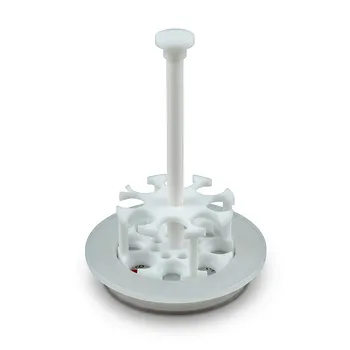
- High Performance TFM Microwave Digestion Vessel Rack 15 Position Customizable Sample Preparation Support
- High Pressure Custom TFM Reactor Stainless Steel Outer Vessel PTFE Inner Cup for Corrosive Synthesis
People Also Ask
- What is the role of a corrosion-resistant reactor in the synthesis of lignin-based carbon dots? Ensure Maximum Purity
- What are the technical advantages of using hydrothermal synthesis reactors for advanced electronic & optical nanomaterials?
- How does a hydrothermal synthesis reactor facilitate the production of crystalline materials with tailored morphologies? Precision Crystal Growth
- Why is the sealing reliability of a hydrothermal synthesis reactor critical for 24-hour cycles? Ensure Nano-Precision
- What role do hydrothermal synthesis reactors play in CQD preparation? Achieve High-Purity Nanomaterial Synthesis