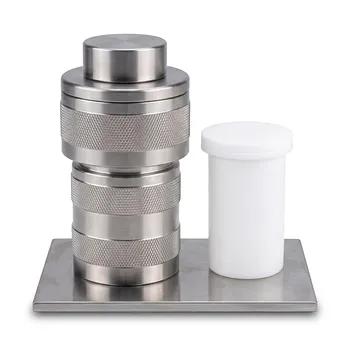
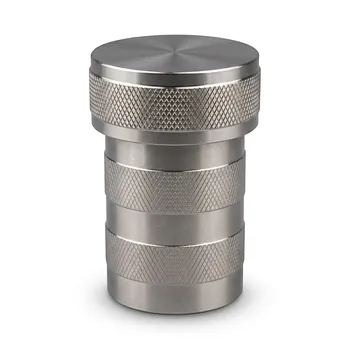
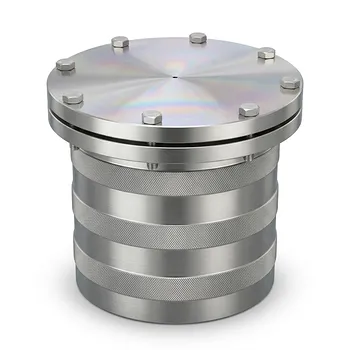
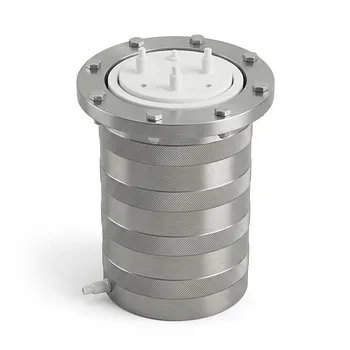
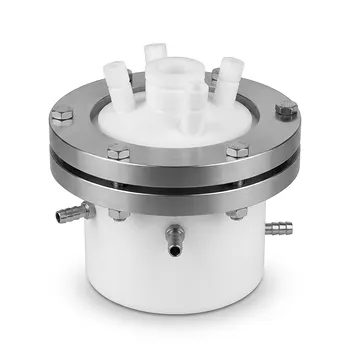
The PTFE-lined hydrothermal synthesis autoclave acts as a specialized chemical reactor designed to create subcritical fluid environments. In the preparation of Metal-Organic Frameworks (MOFs), this vessel provides a sealed, high-pressure, and high-temperature chamber that allows solvents to remain in a liquid state far above their atmospheric boiling points. These conditions significantly enhance the solubility and reactivity of metal salts and organic ligands, facilitating the controlled nucleation and slow growth of high-purity crystalline structures.
The core function of a PTFE-lined autoclave is to enable solvothermal synthesis by maintaining high autogenous pressure and chemical inertness. This environment forces precursors into a supersaturated state, allowing for the precise assembly of complex, high-quality metal-organic frameworks that cannot be synthesized under ambient conditions.
Creating the Subcritical Reaction Environment
Overcoming Atmospheric Boiling Points
In a standard open vessel, solvents evaporate once they reach their boiling point, limiting the maximum reaction temperature. The sealed autoclave prevents evaporation, generating autogenous pressure that keeps solvents like water, DMF, or methanol in a liquid state at temperatures exceeding 100°C–200°C.
Enhancing Precursor Solubility and Reactivity
At these elevated temperatures and pressures, the dielectric constant and viscosity of the solvent change, significantly increasing the solubility of organic ligands and metal precursors. This environment accelerates chemical kinetics, allowing reactants that are otherwise poorly soluble to interact and form the desired framework.
Facilitating Crystal Nucleation and Growth
The transition to a supersaturated state under subcritical conditions is essential for the formation of MOFs. This controlled environment promotes the slow nucleation of crystals, which is a prerequisite for achieving the high-quality, non-centrosymmetric single crystals required for advanced material applications.
The Role of the Polytetrafluoroethylene (PTFE) Liner
Ensuring Absolute Chemical Inertness
The PTFE liner provides a barrier that is highly resistant to corrosion from the aggressive chemical mixtures often used in MOF synthesis, such as aluminum chloride or terephthalic acid. It effectively withstands strong alkaline, acidic, or oxidative conditions that would otherwise degrade the reaction vessel.
Preventing Metallic Contamination
Without a liner, the high-pressure reaction environment would cause the solvent to leach metal ions (like iron or nickel) from the stainless steel autoclave walls. The PTFE liner ensures a high-purity environment, preventing these impurities from being incorporated into the MOF structure and maintaining the material's specific phase characteristics.
Protecting the Structural Integrity of the Reactor
The stainless steel outer shell provides the mechanical strength to withstand high internal pressures, but it is vulnerable to chemical attack. The PTFE liner protects this outer shell from pitting and stress corrosion, ensuring the reactor remains safe for repeated use across hundreds of reaction cycles.
Understanding the Trade-offs and Limitations
Temperature Constraints of Fluoropolymers
While PTFE is exceptionally inert, it has a functional temperature limit, typically around 220°C to 250°C. Exceeding these temperatures can cause the liner to soften or undergo thermal decomposition, potentially releasing toxic vapors and compromising the seal.
Heat Transfer and Cooling Rates
The thick walls of the stainless steel jacket and the insulating properties of the PTFE liner mean that thermal lag is a significant factor. Researchers must account for the time it takes for the internal reaction mixture to reach the set oven temperature and the slow cooling rates that influence crystal size.
Volumetric Expansion and Safety Fill Limits
Autoclaves should never be filled to capacity; typically, a 60% to 80% fill level is recommended. This headspace is critical to accommodate the thermal expansion of the liquid and prevent dangerous pressure spikes that could lead to a mechanical failure of the vessel.
How to Apply This to Your Project
Optimizing Your Synthesis Parameters
- If your primary focus is high crystallinity: Utilize lower temperatures and longer reaction times (e.g., 12–48 hours) within the autoclave to allow for slower, more orderly crystal growth.
- If your primary focus is phase purity: Ensure the PTFE liner is pristine and free of residue from previous reactions to prevent cross-contamination of metal ions.
- If your primary focus is safety and longevity: Never exceed the pressure or temperature ratings of your specific autoclave model, and inspect the PTFE liner regularly for signs of deformation or "creep."
By mastering the high-pressure environment of the PTFE-lined autoclave, you can unlock the precise chemical conditions necessary to engineer the next generation of porous, high-performance materials.
Summary Table:
| Feature | Function in MOF Synthesis | Key Benefit |
|---|---|---|
| Subcritical Environment | Keeps solvents liquid above boiling points via autogenous pressure | Enhances precursor solubility and chemical kinetics |
| PTFE Liner | Provides absolute chemical inertness and corrosion resistance | Prevents metallic contamination and ensures high crystal purity |
| Phase Control | Maintains a stable, supersaturated reaction state | Facilitates slow nucleation for high-quality single crystals |
| Stainless Steel Shell | Provides mechanical strength for high-pressure containment | Allows for safe operation during long-term solvothermal reactions |
| Volumetric Safety | Recommended 60%–80% fill level | Prevents pressure spikes from liquid thermal expansion |
Elevate Your Material Synthesis with KINTEK’s High-Performance Fluoropolymer Solutions
Achieving precision in Metal-Organic Framework (MOF) synthesis requires equipment that guarantees absolute chemical inertness and purity. KINTEK specializes in manufacturing premium laboratory supplies crafted exclusively from high-performance PTFE and PFA. From everyday basic labware like beakers, crucibles, and reagent bottles to specialized hydrothermal synthesis liners, microwave digestion vessels, and custom electrochemical cells, we provide the tools necessary for advanced material research.
Whether you require high-volume consumables (such as stirring bars, O-rings, and filters) or complex, non-standard machined parts, our end-to-end custom CNC fabrication ensures your setup meets exact specifications. Contact us today to discover how KINTEK’s fluoropolymer expertise can enhance your lab's efficiency and prevent contamination in your most sensitive reactions.
References
- Y.J Kim, Kang Min Ok. Structure–property relationships in noncentrosymmetric solid‐state materials. DOI: 10.1002/bkcs.70058
This article is also based on technical information from Kintek Knowledge Base .
Related Products
- PTFE Lined High Pressure Digestion Vessel 50ml High Temperature Hydrothermal Synthesis Tank
- High Temperature Corrosion Resistant Hydrothermal Synthesis Reactor with TFM Inner Liner and Straight Cylinder Design
- Custom TFM Reaction Vessel with Stainless Steel Jacket and PTFE Inner Cup for High Corrosion Resistance
- High Pressure Custom TFM Reactor Stainless Steel Outer Vessel PTFE Inner Cup for Corrosive Synthesis
- PTFE Acid Steam Cleaning System HF Resistant Trace Analysis Beaker Digestion Tank Customizable
People Also Ask
- What are the benefits of using a PTFE-lined vessel for carbon-sulfur cathode treatment? Maximize Purity & Performance
- Why are PTFE-lined pressure digestion vessels required for the preparation of Ag/CeO2 catalysts? Purity & Performance
- What safety features are typically incorporated into high-pressure PTFE digestion vessel designs? Ensure Lab Safety
- What is the function of PTFE lined high-pressure vessels in g-C3N4 synthesis? Achieve High-Purity Material Growth
- Role of High-Pressure Digestion Tanks in Perovskite Synthesis: Achieve Superior Stability and Latent Heat