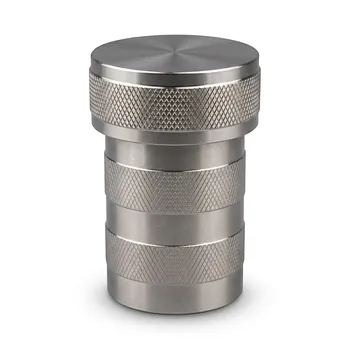
A high-pressure hydrothermal autoclave is the indispensable foundation for Mn-doped ZnO synthesis because it forces the incorporation of manganese ions into the zinc oxide lattice through a specialized "dissolution-recrystallization" process. By creating a sealed environment that exceeds the solvent's boiling point, the autoclave generates the extreme thermodynamic conditions necessary to maximize reactant solubility and produce highly crystalline powders with precise atomic structures.
The autoclave acts as a high-energy chemical reactor that enables transition metal doping and morphology control by maintaining solvents in a superheated liquid state. This specific environment is the only way to achieve a uniform solid solution of manganese within zinc oxide while ensuring high purity and well-defined crystal phases.
Driving Chemical Activity Through Superheating
Overcoming Solubility Barriers
Under normal atmospheric pressure, many precursors for zinc and manganese have limited solubility in aqueous solutions. The autoclave’s sealed environment allows temperatures to rise significantly above the solvent's boiling point, which drastically increases the solubility and reaction activity of these reactants.
Maintaining the Liquid State
The high pressure generated inside the vessel keeps solvents in a liquid state even when heated to temperatures like 150°C or 250°C. This "subcritical" water environment acts as a powerful medium for chemical transport, allowing ions to move freely and react more efficiently than they would in a standard open-container reflux.
The Mechanics of Manganese Incorporation
Facilitating Dissolution-Recrystallization
The primary role of the autoclave is to facilitate the continuous dissolution of precursors and their subsequent recrystallization into the final product. As the zinc hydroxide and manganese precursors dissolve, they reform as a single wurtzite crystal structure where manganese ions occupy sites within the zinc oxide lattice.
Achieving Uniform Solid Solutions
Successful doping requires the manganese ions to be integrated into the host lattice rather than simply sitting on the surface as an impurity. The high-pressure environment provides the kinetic energy needed to form a stable solid solution, resulting in fine crystal grains with high crystallinity.
Preventing Contamination with Liners
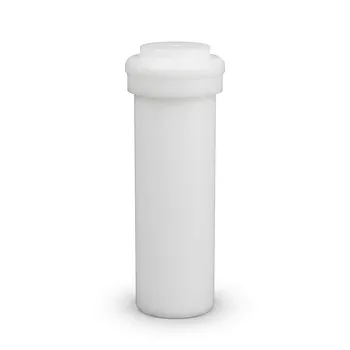
To ensure the purity of the Mn-doped ZnO, autoclaves utilize Polytetrafluoroethylene (PTFE) or Teflon liners. These liners are chemically inert and prevent the strongly alkaline reaction mixtures from corroding the stainless steel autoclave body, which would otherwise introduce unwanted metal ion impurities.
Precision Control of Material Properties
Morphological Engineering and Facet Tuning
The autoclave allows for "programmatic control" over the shape of the particles, such as nanowires, nanotubes, or nanosheets. By regulating the pressure and temperature, researchers can tune the growth kinetics to favor specific crystal planes, such as the 101 or 112 facets.
Eliminating the Need for Post-Processing
Unlike other synthesis methods that produce amorphous powders, the hydrothermal route often yields high-quality crystals directly from the liquid phase. This eliminates the need for high-temperature calcination or annealing, which can often cause particles to clump together or lose their specific morphology.
Understanding the Trade-offs
The Risk of Pressure-Induced Failure
Operating at high temperatures and pressures carries inherent safety risks, requiring robust equipment and strict adherence to filling ratios. If an autoclave is overfilled, the thermal expansion of the liquid can lead to a catastrophic pressure spike that exceeds the vessel's safety limits.
Kinetic Complexity and Scalability
While the autoclave provides superior control over crystal quality, the "black box" nature of a sealed vessel makes real-time monitoring of the reaction difficult. Furthermore, while it serves as a foundation for low-cost production, scaling hydrothermal synthesis to industrial volumes requires significant capital investment in large-scale pressure vessels compared to simple open-air precipitation.
How to Apply This to Your Project
Before beginning your synthesis, you must align your autoclave parameters with your desired material characteristics.
- If your primary focus is Maximum Doping Uniformity: Prioritize longer dwell times at higher temperatures (e.g., 200°C) to ensure the dissolution-recrystallization process completely integrates the manganese ions into the ZnO lattice.
- If your primary focus is Specific Nanostructure Morphology: Use lower temperatures and specific surfactants within the autoclave to slow the growth kinetics, allowing for the preferential development of nanowires or nanosheets.
- If your primary focus is Material Purity: Always utilize a clean PTFE liner and ensure the autoclave is sealed perfectly to prevent the evaporation of the solvent or the introduction of atmospheric contaminants.
By mastering the high-pressure environment of the hydrothermal autoclave, you gain the ability to engineer Mn-doped ZnO with the exact structural and chemical properties required for advanced applications.
Summary Table:
| Feature | Role in Mn-doped ZnO Synthesis | Key Benefit |
|---|---|---|
| Superheating | Increases precursor solubility above boiling point | Enhanced chemical reactivity |
| Recrystallization | Forces Mn ions into the ZnO wurtzite lattice | Uniform solid solution |
| PTFE Liners | Provides a chemically inert reaction environment | Prevents metal contamination |
| Kinetic Control | Regulates growth facets (e.g., 101, 112) | Precise morphology tuning |
| Pressure Seal | Maintains solvents in a subcritical liquid state | High-purity crystal growth |
Precision Engineering for High-Performance Research
At KINTEK, we understand that the integrity of your material synthesis depends on the quality of your equipment. Whether you are performing Manganese-doped Zinc Oxide synthesis or complex trace analysis, we provide the ultimate fluoropolymer solutions to ensure success.
From everyday basic labware (beakers, measuring cylinders, crucibles, dishes, reagent/wash bottles, centrifuge and digestion tubes) and high-purity trace analysis instruments to comprehensive fluid transfer components (tubing, fittings, valves), KINTEK manufactures virtually all imaginable laboratory supplies. Our specialized range includes hydrothermal synthesis liners, microwave digestion vessels, and custom electrochemical cells—all crafted from premium PTFE and PFA.
Why partner with KINTEK?
- Expert Customization: Backed by end-to-end custom CNC fabrication for complex non-standard parts.
- Material Excellence: An exclusive focus on high-performance fluoropolymers to prevent contamination.
- Comprehensive Supply: Everything from stirring bars and gaskets to bespoke laboratory setups and high-volume orders.
Elevate your research with equipment designed for extreme conditions. Contact our specialists today to discuss your project!
References
- Huiqin Li, Shumei Dou. Preparation of mn-doped zno by hydrothermal method. DOI: 10.1088/1742-6596/3060/1/012028
This article is also based on technical information from Kintek Knowledge Base .
Related Products
- High Temperature Corrosion Resistant Hydrothermal Synthesis Reactor with TFM Inner Liner and Straight Cylinder Design
- PTFE Lined High Pressure Digestion Vessel 50ml High Temperature Hydrothermal Synthesis Tank
- Custom TFM Reaction Vessel with Stainless Steel Jacket and PTFE Inner Cup for High Corrosion Resistance
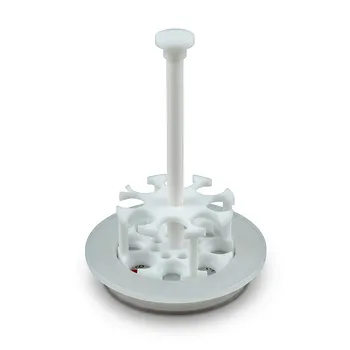
- High Performance TFM Microwave Digestion Vessel Rack 15 Position Customizable Sample Preparation Support
- High Pressure Custom TFM Reactor Stainless Steel Outer Vessel PTFE Inner Cup for Corrosive Synthesis
People Also Ask
- What is the role of a corrosion-resistant reactor in the synthesis of lignin-based carbon dots? Ensure Maximum Purity
- What are the technical advantages of using hydrothermal synthesis reactors for advanced electronic & optical nanomaterials?
- How does a hydrothermal synthesis reactor facilitate the production of crystalline materials with tailored morphologies? Precision Crystal Growth
- Why is the sealing reliability of a hydrothermal synthesis reactor critical for 24-hour cycles? Ensure Nano-Precision
- What role do hydrothermal synthesis reactors play in CQD preparation? Achieve High-Purity Nanomaterial Synthesis