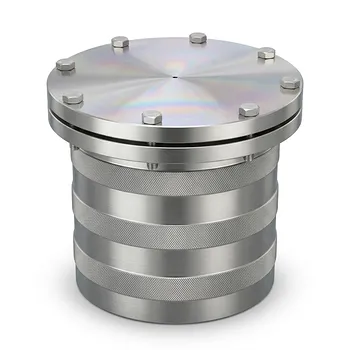
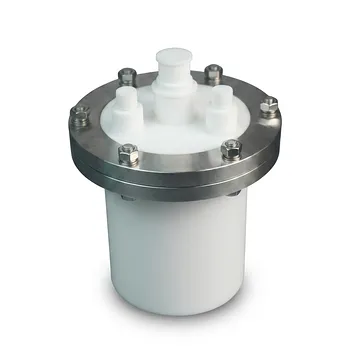
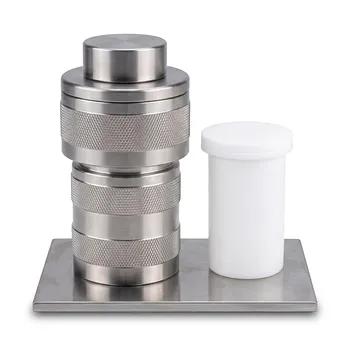
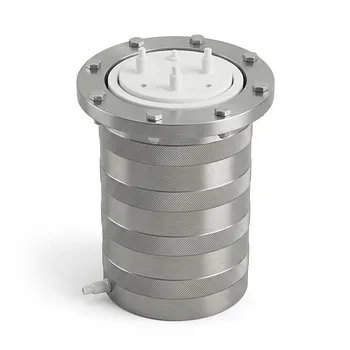
The core operating mechanism of a sealed reaction kettle for NaX zeolite synthesis is the creation of a stable, autogenous pressure environment. This system uses a constant heat source to drive the dissolution and recrystallization of aluminosilicate precursors within an alkaline medium. This process ensures uniform crystal growth and structural integrity over a typical duration of 2 to 4 hours.
The hydrothermal synthesis process relies on a self-contained thermal and pressure equilibrium to facilitate chemical transformations that are impossible at atmospheric pressure. By maintaining a sealed environment, the kettle enables the formation of high-crystallinity zeolites without the need for post-synthesis calcination or high-temperature annealing.
The Generation of Autogenous Pressure
The Vapor-Liquid Equilibrium
In a sealed hydrothermal reactor, pressure is not applied externally but is generated internally through heating. As the alkaline aqueous solution is heated, a portion of the liquid evaporates until a vapor-liquid equilibrium is reached.
Controlling the Reaction Kinetic
This autogenous pressure allows the water to remain in a liquid state at temperatures significantly above its standard boiling point. This high-energy environment accelerates the chemical reaction rates required for zeolite framework assembly.
The Mechanism of Zeolite Formation
Dissolution of Aluminosilicate Precursors
The process begins with the dissolution of aluminosilicate precursors in the alkaline medium. The combination of heat and pressure breaks down these solid raw materials into reactive species that are suspended in the solution.
Controlled Recrystallization
Once dissolved, the reactive species undergo a recrystallization process. The kettle’s ability to provide a constant heat source supports slow and uniform crystal growth, which is essential for achieving the specific porous structure of NaX zeolite.
Morphology and Crystallinity
This mechanism enables the formation of nanoparticles with well-defined morphology. Because the process occurs in a single stage within the kettle, the resulting zeolite often reaches its final crystalline state without further thermal processing.
Engineering the Hermetic Seal
Viscoelastic Deformation
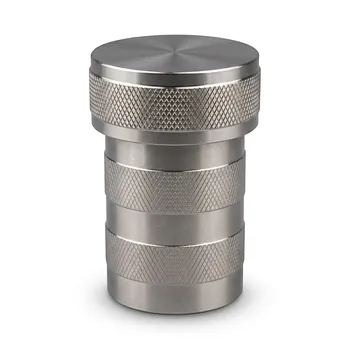
The sealing of the reactor depends on the viscoelastic deformation of a polymer lining, usually made of PTFE (Teflon) or PPL. When the outer stainless-steel cap is tightened, it compresses this lining to create an airtight barrier.
Self-Energizing Seal Design
Many reactors utilize a tongue-and-groove or flat-face design for the lining lid. These are often self-energizing seals, meaning that as the internal pressure rises during heating, the lid is pressed more firmly against the seal, further preventing the escape of vapors.
Understanding the Trade-offs and Pitfalls
Temperature and Lining Limitations
While PTFE linings are common, they have strict temperature limits (typically around 220°C). Exceeding these limits can cause the lining to deform permanently, leading to pressure leaks or contamination of the NaX zeolite.
The Risk of Overfilling
Hydrothermal kettles must never be filled to capacity; a safety headspace (usually 20-30%) is required. Without this space, the thermal expansion of the liquid can cause an exponential pressure spike, potentially leading to a mechanical failure of the vessel.
Cooling Rate Sensitivity
Rapid cooling after the 2-to-4-hour reaction period can induce thermal shock. This can damage the structural integrity of the zeolite crystals or cause the polymer lining to contract unevenly, compromising the seal for future runs.
Applying This to Your Synthesis Goals
To achieve the best results in the synthesis of NaX zeolite, your operational strategy should align with your specific material requirements.
- If your primary focus is high crystallinity: Maintain a steady, uninterrupted heat source for the full 4-hour window to allow for complete recrystallization.
- If your primary focus is morphology control: Ensure the precursor mixture is perfectly homogenized before sealing to prevent localized variations in crystal growth.
- If your primary focus is multi-component doping: Utilize the high-pressure environment to facilitate the co-precipitation of metal ions, which enhances the functional properties of the composite nanomaterial.
The success of NaX zeolite synthesis depends on the precise balance of thermal energy and internal pressure maintained within the hermetically sealed environment.
Summary Table:
| Process Phase | Mechanism Description | Critical Control Factors |
|---|---|---|
| Pressure Generation | Autogenous vapor-liquid equilibrium | Temperature & 20-30% Headspace |
| Precursor Dissolution | Breakdown of solid aluminosilicates | High-pH alkaline medium |
| Recrystallization | Uniform growth of zeolite framework | Constant heat (2-4 hour duration) |
| Hermetic Sealing | Viscoelastic deformation of PTFE lining | Tightness & self-energizing lid design |
| Cooling | Controlled thermal reduction | Prevention of crystal thermal shock |
Master Your Zeolite Synthesis with KINTEK Precision
Ensure the structural integrity and high crystallinity of your materials with KINTEK’s industry-leading fluoropolymer solutions. We manufacture virtually all imaginable laboratory supplies crafted from PTFE and PFA, specifically designed to withstand the demanding conditions of hydrothermal synthesis.
From everyday basic labware like beakers, crucibles, and reagent bottles to advanced hydrothermal synthesis liners, microwave digestion vessels, and custom reaction apparatus, our products provide the absolute chemical resistance required for high-pressure environments. Backed by end-to-end custom CNC fabrication, we deliver everything from complex non-standard machined parts to high-volume orders, maintaining an exclusive focus on high-performance materials.
Ready to optimize your lab's performance? Contact our experts today to discuss your custom requirements!
References
- Susi Nurul Khalifah, Anton Prasetyo. Synthesis of NaX Zeolite from Blitar Kaolin via Hydrothermal and Sonication Methods with Alkali Fusion Pre-treatment. DOI: 10.14710/jksa.28.5.274-282
This article is also based on technical information from Kintek Knowledge Base .
Related Products
- Custom TFM Reaction Vessel with Stainless Steel Jacket and PTFE Inner Cup for High Corrosion Resistance
- Custom PTFE Reaction Kettle 2L Flanged Fluoropolymer Reactor Tank Acid and Alkali Resistant Polytetrafluoroethylene Vessel
- PTFE Lined High Pressure Digestion Vessel 50ml High Temperature Hydrothermal Synthesis Tank
- High Pressure Custom TFM Reactor Stainless Steel Outer Vessel PTFE Inner Cup for Corrosive Synthesis
- High Purity PFA Constant Pressure Condensation Reaction System Acid Resistant High Temperature Customizable Teflon Labware
People Also Ask
- Why are high-performance pressure-resistant reaction vessels required for oxygen-assisted hydrothermal conversion at 150 °C?
- How do magnetic stirring and reaction vessels impact MOF-derived carbon quality? Optimize Your Composite Performance
- Why are high-quality fluoropolymer-lined reaction vessels required for alk-Ti3C2Tx MXene? Ensure Purity & HF Resistance
- Why are PTFE-lined reaction vessels necessary for forced degradation studies? Ensure high-purity results and accuracy.
- Why is a high-purity PTFE lined reaction vessel required for the acidic etching of MXenes? Ensure Material Purity.