Low-temperature hydrothermal treatment at 160°C provides a precise, pressure-driven alternative to traditional calcination. By utilizing autogenous pressure in a sealed reactor, this method facilitates the recrystallization of amorphous networks into a pure anatase phase without the structural damage caused by extreme heat. This approach preserves the material's nanostructure while allowing for the integration of specialized surface chemistries.
Hydrothermal treatment replaces high thermal energy with controlled pressure to achieve crystallization while protecting the physical and chemical integrity of the titanium dioxide. This process prevents the structural collapse typical of calcination and enables the addition of functional layers that enhance the material's performance.
Preserving Physical Architecture
Prevention of Particle Coarsening
High-temperature calcination often causes nanoparticles to fuse together and grow, a process known as coarsening. The 160°C hydrothermal environment provides enough energy for crystallization while keeping the particles small and uniform.
Maintaining Pore Structure
Traditional heating methods can lead to the collapse of the internal pore networks within the material. Hydrothermal treatment operates at a much lower thermal threshold, ensuring these pores remain open and accessible for future applications.
Eliminating Particle Aggregation
The method actively prevents particle aggregation by creating a stable environment for nanocrystal growth. This results in a more homogenous product that is easier to process and utilize in liquid or solid forms.
Advanced Surface Engineering
Pure Anatase Phase Transition
The use of autogenous pressure within a sealed reactor allows for the efficient reorganization of amorphous networks into the pure anatase phase. This phase is often preferred in technical applications for its superior photocatalytic and electrical properties.
Anchoring the Polyphenol Corona
At 160°C, the system can firmly anchor a phytochemical active layer, known as a polyphenol corona, onto the nanocrystal surface. This organic-inorganic bond is impossible at calcination temperatures, which would simply incinerate the organic molecules.
Inherent Radical Scavenging
By successfully integrating the polyphenol layer, the resulting titanium dioxide gains inherent radical scavenging capabilities. This provides the material with a built-in defense mechanism against oxidative degradation, extending its functional lifespan.
Understanding the Trade-offs
Equipment Complexity
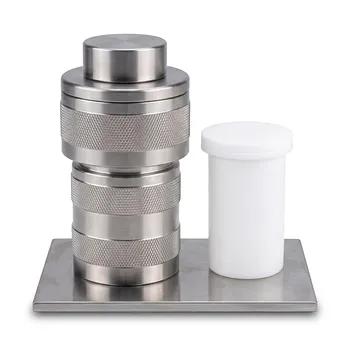
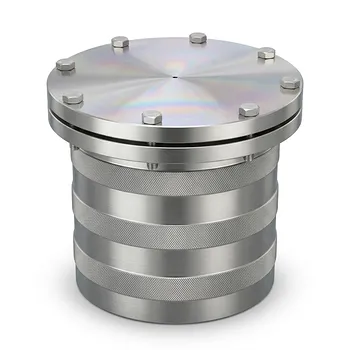
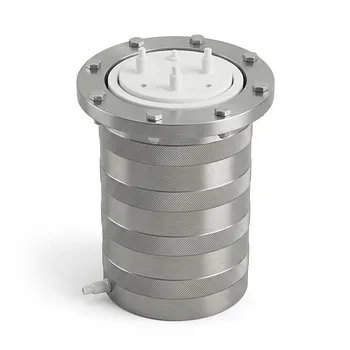
Unlike open-air kilns used in calcination, hydrothermal treatment requires pressure-resistant reactors (autoclaves). These systems must be carefully monitored and maintained to handle the internal pressure generated during the 160°C cycle.
Batch Processing Limitations
Hydrothermal synthesis is typically a batch process, which may present different scaling challenges compared to the continuous-flow kilns often used in high-temperature calcination.
Choosing the Right Synthesis Path
If your primary focus is maximizing surface area and porosity: Utilize hydrothermal treatment to ensure that the delicate internal structures do not collapse under thermal stress.
If your primary focus is creating multifunctional materials: Choose the 160°C hydrothermal method to allow for the stable attachment of organic layers like polyphenols that provide radical scavenging.
If your primary focus is achieving a specific nanocrystal phase: Leverage autogenous pressure to drive the transition to pure anatase without the risk of over-heating the material.
By opting for hydrothermal treatment over traditional calcination, you trade raw thermal power for the ability to create highly specialized, stable, and functionalized titanium dioxide.
Summary Table:
| Feature | 160°C Hydrothermal Treatment | High-Temperature Calcination |
|---|---|---|
| Energy Source | Controlled Autogenous Pressure | Extreme Thermal Energy |
| Particle Size | Prevents coarsening/aggregation | Causes particle fusion/growth |
| Pore Structure | Maintains open, accessible pores | Risk of internal pore collapse |
| Surface Chemistry | Allows organic/polyphenol anchoring | Incinerates organic molecules |
| Crystal Phase | Precise Pure Anatase transition | Risk of over-heating/phase shifts |
| Equipment | Pressure-resistant Autoclaves | Open-air Kilns / Furnaces |
Optimize Your Advanced Material Synthesis with KINTEK
Precise hydrothermal treatment requires equipment that can withstand autogenous pressure while maintaining absolute purity. KINTEK specializes in high-performance fluoropolymer solutions tailored for sophisticated laboratory environments.
From high-purity PTFE and PFA hydrothermal synthesis liners and microwave digestion vessels to custom-machined reaction apparatus and fluid transfer components (tubing, valves, and fittings), we provide the specialized tools necessary for advanced titanium dioxide production. Whether you need standard labware like beakers and centrifuge tubes or bespoke CNC-fabricated components for complex setups, KINTEK ensures your research is backed by chemical resistance and precision.
Ready to elevate your lab’s capabilities? Contact KINTEK today for custom fluoropolymer solutions!
References
- Sanjeev Thakur, Sanjeev Kumar. EGCG/ECG-controlled mesoporous and ultrafine TiO₂ nanoparticles for UV-driven pollutant mineralization and radical scavenging. DOI: 10.1038/s41598-025-24674-5
This article is also based on technical information from Kintek Knowledge Base .
Related Products
- High Temperature Corrosion Resistant Hydrothermal Synthesis Reactor with TFM Inner Liner and Straight Cylinder Design
- PTFE Lined High Pressure Digestion Vessel 50ml High Temperature Hydrothermal Synthesis Tank
- Custom TFM Reaction Vessel with Stainless Steel Jacket and PTFE Inner Cup for High Corrosion Resistance
- High Pressure Custom TFM Reactor Stainless Steel Outer Vessel PTFE Inner Cup for Corrosive Synthesis
- High Purity PTFE Microwave Digestion Vessel Replacement Liner for Acid Sample Preparation and Trace Analysis
People Also Ask
- What is the role of a corrosion-resistant reactor in the synthesis of lignin-based carbon dots? Ensure Maximum Purity
- What are the technical advantages of using hydrothermal synthesis reactors for advanced electronic & optical nanomaterials?
- How does a hydrothermal synthesis reactor facilitate the production of crystalline materials with tailored morphologies? Precision Crystal Growth
- Why is the sealing reliability of a hydrothermal synthesis reactor critical for 24-hour cycles? Ensure Nano-Precision
- What role do hydrothermal synthesis reactors play in CQD preparation? Achieve High-Purity Nanomaterial Synthesis