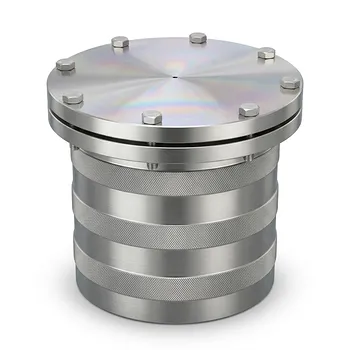
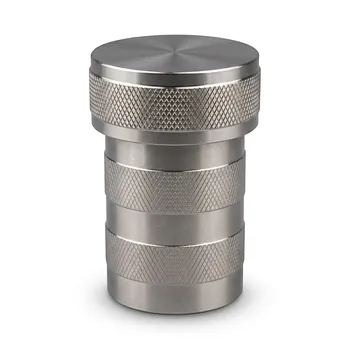
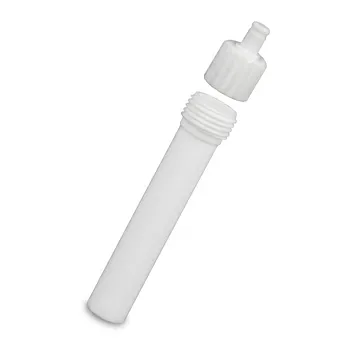
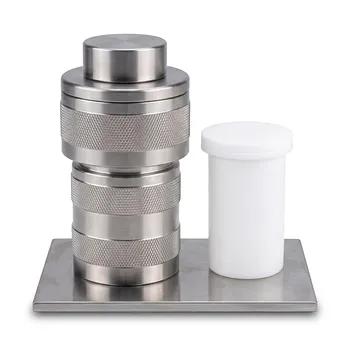
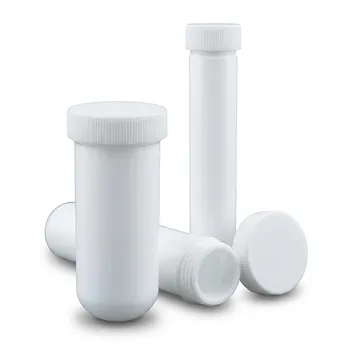
The Teflon-lined autoclave serves as the primary reaction vessel that enables high-temperature polymerization while maintaining extreme chemical purity. In the synthesis of HAQ-COF, this equipment provides a sealed environment capable of reaching temperatures up to 240°C and sustaining high saturated steam pressures. This specific setup is essential for the HAT-CN monomer to undergo polymerization in pure water without interference from external contaminants or vessel degradation.
Core Takeaway: The Teflon-lined autoclave facilitates HAQ-COF synthesis by creating a high-pressure "clean-room" environment that prevents metal ion contamination and protects the structural integrity of the reaction vessel from corrosive conditions.
Facilitating High-Temperature Polymerization
Enabling Extreme Thermal Conditions
The synthesis of HAQ-COF requires temperatures reaching 240°C, which far exceed the boiling point of water at atmospheric pressure. The autoclave's sealed design allows the internal pressure to rise, keeping water in a liquid or subcritical state.
Driving the HAT-CN Reaction
Under these high-temperature and high-pressure conditions, the HAT-CN monomer gains the necessary kinetic energy to polymerize in a pure water medium. This hydrothermal approach replaces the need for harsh organic solvents, relying instead on the unique properties of pressurized water.
Maintaining Saturated Steam Pressure
The autoclave ensures that the reaction occurs under high saturated steam pressure. This pressure is critical for the dissolution and subsequent recrystallization of precursors, which is a fundamental step in forming organized framework structures.
Ensuring Material Purity and Integrity
The Role of Chemical Inertness
The Teflon (PTFE) liner is prized for its exceptional chemical inertness, meaning it does not react with the monomers or the intermediate products. This ensures that the polymerization of HAQ-COF remains "clean" and predictable.
Prevention of Metal Contamination
Without the Teflon liner, the reaction liquid would come into direct contact with the metal walls of the autoclave. This contact would introduce metal impurities into the HAQ-COF, potentially altering its electronic properties or structural regularity.
Corrosion Protection for the Outer Vessel
The liner acts as a physical barrier that prevents the reaction environment from eroding the stainless steel walls of the autoclave. This protection is vital for the longevity of the equipment and the safety of the laboratory environment.
Understanding the Trade-offs
Temperature Limitations
While Teflon is highly resilient, it has a functional limit typically around 250°C to 260°C. Exceeding these temperatures can cause the liner to soften or release toxic fumes, which limits the thermal range of the synthesis.
Thermal Lag and Monitoring
The thick walls of the stainless steel autoclave and the internal Teflon liner create significant thermal lag. This means the temperature inside the reaction chamber may take considerably longer to reach the setpoint than the oven or heating mantle indicates.
Pressure Risks and Sealing
If the autoclave is overfilled (typically beyond 80% capacity), the internal pressure can exceed the safety limits of the vessel. Proper filling ratios are essential to prevent structural failure of the autoclave during the high-temperature synthesis of HAQ-COF.
How to Apply This to Your Synthesis
Making the Right Choice for Your Goal
- If your primary focus is maximum framework purity: Ensure the Teflon liner is pristine and free of scratches, as even minor surface defects can trap contaminants from previous reactions.
- If your primary focus is crystalline regularity: Closely monitor the cooling rate of the autoclave after the 240°C dwell time, as slow cooling often promotes better molecular ordering in COFs.
- If your primary focus is safety and equipment longevity: Never exceed the manufacturer's recommended filling volume (usually 60-80%) to allow sufficient headspace for steam expansion.
The Teflon-lined autoclave is not merely a container, but a precise reactor that bridges the gap between raw monomers and high-performance covalent organic frameworks.
Summary Table:
| Feature | Benefit for HAQ-COF Synthesis | Technical Specification |
|---|---|---|
| Thermal Stability | Enables polymerization at extreme temperatures | Operates safely up to 240°C - 250°C |
| Chemical Inertness | Prevents side reactions and contamination | PTFE liner ensures a non-reactive environment |
| Pressure Retention | Facilitates monomer dissolution/recrystallization | Sustains high saturated steam pressure |
| Corrosion Barrier | Protects vessel and ensures sample integrity | Prevents metal ions from leaching into the reaction |
Elevate Your Material Synthesis with KINTEK’s Precision Fluoropolymers
Achieving the crystalline regularity required for HAQ-COF demands an environment free from metal contamination and reactive interference. KINTEK specializes in high-performance PTFE and PFA laboratory supplies, providing the "clean-room" conditions essential for advanced hydrothermal synthesis.
From hydrothermal synthesis liners and microwave digestion vessels to high-purity trace analysis instruments, our products are designed to withstand corrosive conditions while maintaining absolute purity. Whether you need everyday essentials like beakers, reagent bottles, and digestion tubes, or complex custom CNC-fabricated reaction apparatus and electrochemical cells, KINTEK delivers end-to-end solutions tailored to your lab's specific needs.
Don’t compromise your research with substandard vessels. Contact KINTEK today to explore our full range of standard and bespoke fluoropolymer solutions and secure the highest performance for your next synthesis.
References
- Yuki Okamura, Kaname Kanai. Proton Conduction of a Hydrothermally Synthesized Hexaazatriphenylene‐Based Covalent Organic Framework. DOI: 10.1002/admi.202400928
This article is also based on technical information from Kintek Knowledge Base .
Related Products
- Custom TFM Reaction Vessel with Stainless Steel Jacket and PTFE Inner Cup for High Corrosion Resistance
- High Temperature Corrosion Resistant Hydrothermal Synthesis Reactor with TFM Inner Liner and Straight Cylinder Design
- High Purity PTFE Microwave Digestion Vessel Replacement Liner for Acid Sample Preparation and Trace Analysis
- PTFE Lined High Pressure Digestion Vessel 50ml High Temperature Hydrothermal Synthesis Tank
- High Purity Corrosion Resistant Teflon Crucible Low Background Laboratory PTFE Vessel for Trace Analysis and Acid Digestion
People Also Ask
- Why are high-performance pressure-resistant reaction vessels required for oxygen-assisted hydrothermal conversion at 150 °C?
- Why are PTFE-lined reaction vessels necessary for forced degradation studies? Ensure high-purity results and accuracy.
- Why are high-quality fluoropolymer-lined reaction vessels required for alk-Ti3C2Tx MXene? Ensure Purity & HF Resistance
- How do magnetic stirring and reaction vessels impact MOF-derived carbon quality? Optimize Your Composite Performance
- Why is a high-purity PTFE lined reaction vessel required for the acidic etching of MXenes? Ensure Material Purity.