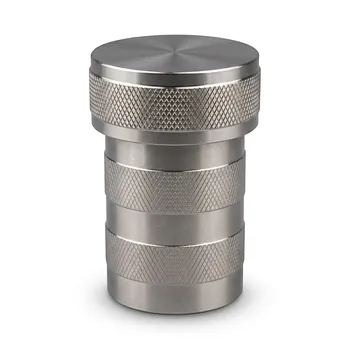
In the synthesis of Zinc Oxide (ZnO) nanostructures, the high-pressure autoclave serves as a specialized, sealed chemical reactor. Its primary function is to maintain a high-pressure environment that allows solvents to remain in a liquid state at temperatures significantly exceeding their atmospheric boiling points. This condition facilitates the complete dissolution of precursors and enables the oriented crystallization necessary to produce precise morphologies like nanowires and nanotubes.
The high-pressure autoclave enables a controlled dissolution-recrystallization process by overcoming the thermal limits of open-air solvents. This environment is the essential driver for achieving high crystallinity, phase purity, and the specific anisotropic growth required for ZnO nanostructures.
Overcoming Thermodynamic Barriers
Maintaining Liquid State Above Boiling Points
A high-pressure autoclave provides a sealed environment that prevents solvents from evaporating as they are heated. By keeping water or organic solvents in a subcritical liquid state at high temperatures, the system creates the energy necessary for complex chemical transformations that cannot occur at standard pressure.
Enhancing Precursor Solubility
High temperatures and pressures significantly increase the solubility and reaction activity of zinc precursors, such as zinc nitrate or zinc hydroxide. This allows solid reactants to dissolve more effectively into the solvent, creating a homogenous medium for subsequent crystal growth.
Facilitating Kinetic Energy
The pressurized thermal environment accelerates reaction kinetics, allowing for faster solid-phase transformations. This energy is critical for incorporating dopants or integrating ZnO into composite structures, such as metal-organic frameworks (MOFs).
Precision Control of Crystal Growth
The Dissolution-Recrystallization Mechanism
The autoclave's primary metallurgical function is to drive the dissolution-recrystallization process. Precursor materials dissolve into the heated solvent and then precipitate out as stable ZnO crystals, allowing the material to reorganize into high-purity structures.
Regulating Morphology and Size
By controlling the temperature and pressure within the reactor, researchers can achieve programmatic control over the resulting ZnO shape. This enables the preferential growth of specific structures, ranging from nanowires and nanorods to nanotubes and nanosheets.
Crystal Facet Engineering
The autoclave environment allows for the precise regulation of nucleation and growth kinetics. This facilitates "facet-tuning," where growth is directed toward specific crystal planes (such as 101, 103, or 112), which is vital for applications requiring specific surface activities.
Promoting Anisotropic Growth
For nanowires and nanotubes, the autoclave environment supports anisotropic crystal growth. This ensures that the Zinc Oxide grows faster along a specific axis—typically the c-axis in the wurtzite crystal structure—resulting in long, uniform 1D nanostructures.
Material Quality and Industrial Scalability
Improving Crystallinity and Purity
The steady-state conditions inside a high-pressure reactor minimize defects during the crystallization process. This results in high crystallinity and the formation of well-defined crystal grains that are essential for electronic and optical applications.
Industrial-Scale Production
Hydrothermal synthesis in autoclaves is considered a low-cost hardware foundation for industrial production. It allows for the growth of large-scale, high-quality ZnO single crystals at relatively low temperatures compared to vapor-phase methods.
Understanding Technical Constraints and Trade-offs
Temperature Limits of Fluoropolymer Liners
Most hydrothermal autoclaves utilize PTFE (Teflon) or PFA liners to prevent corrosion of the stainless steel shell. These liners have strict temperature thresholds (typically below 250°C), which limits the thermal energy that can be applied to the synthesis.
The "Black Box" Limitation
Because the reaction occurs inside a sealed, high-pressure metal vessel, it is difficult to monitor the growth of nanowires in real-time. Researchers must rely on precise pre-set parameters and post-synthesis analysis to determine the success of the reaction.
Safety and Pressure Management
The generation of high internal pressure carries inherent mechanical risks. Precise calculation of the solvent "filling degree" is required to ensure the pressure does not exceed the structural limits of the autoclave, which could lead to equipment failure.
Strategic Implementation of Autoclave Synthesis
To successfully utilize a high-pressure autoclave for ZnO synthesis, you must align your reactor parameters with your specific material goals.
- If your primary focus is Morphology Control (Nanowires/Nanotubes): Adjust the temperature and precursor concentration to manage supersaturation and promote anisotropic growth along the c-axis.
- If your primary focus is Crystal Facet Engineering: Use the autoclave to precisely regulate nucleation kinetics, allowing for the preferential exposure of high-energy crystal planes.
- If your primary focus is Material Purity and Crystallinity: Prioritize a steady, prolonged hydrothermal treatment to ensure the complete dissolution of precursors and the removal of lattice defects.
The high-pressure autoclave remains the definitive tool for transforming simple chemical precursors into sophisticated, high-performance Zinc Oxide nanostructures.
Summary Table:
| Key Feature | Role in ZnO Synthesis |
|---|---|
| High-Pressure Environment | Maintains solvents in liquid state above boiling points for subcritical reactions. |
| Enhanced Solubility | Increases precursor activity, ensuring homogenous dissolution for crystal growth. |
| Anisotropic Growth | Drives preferential growth along the c-axis to form nanowires and nanotubes. |
| Facet Engineering | Regulates nucleation kinetics to expose specific high-energy crystal planes. |
| Crystallinity Control | Minimizes lattice defects, resulting in high-purity wurtzite structures. |
| Fluoropolymer Liners | PTFE/PFA liners provide chemical resistance and prevent metal contamination. |
Elevate your ZnO nanostructure research with precision-engineered equipment from KINTEK. We specialize in high-performance fluoropolymer solutions essential for hydrothermal success, providing everything from hydrothermal synthesis liners and microwave digestion vessels to high-purity trace analysis instruments.
Whether you need everyday basic labware (beakers, tubes, crucibles), complex fluid transfer components, or bespoke laboratory setups crafted via our end-to-end custom CNC fabrication, KINTEK delivers unmatched material purity and performance. Let us help you achieve superior morphology control and crystallinity in your material synthesis.
Contact us today to discuss your custom lab requirements!
References
- Andriambahiny Ranto Ny Aina, Biswadeep Pal. Recent advances in ZnO based photocatalysts for industrial dye degradation. DOI: 10.1007/s42452-025-07530-z
This article is also based on technical information from Kintek Knowledge Base .
Related Products
- High Temperature Corrosion Resistant Hydrothermal Synthesis Reactor with TFM Inner Liner and Straight Cylinder Design
- PTFE Lined High Pressure Digestion Vessel 50ml High Temperature Hydrothermal Synthesis Tank
- Custom TFM Reaction Vessel with Stainless Steel Jacket and PTFE Inner Cup for High Corrosion Resistance
- High Pressure Custom TFM Reactor Stainless Steel Outer Vessel PTFE Inner Cup for Corrosive Synthesis
People Also Ask
- What is the role of a corrosion-resistant reactor in the synthesis of lignin-based carbon dots? Ensure Maximum Purity
- What are the technical advantages of using hydrothermal synthesis reactors for advanced electronic & optical nanomaterials?
- How does a hydrothermal synthesis reactor facilitate the production of crystalline materials with tailored morphologies? Precision Crystal Growth
- Why is the sealing reliability of a hydrothermal synthesis reactor critical for 24-hour cycles? Ensure Nano-Precision
- What role do hydrothermal synthesis reactors play in CQD preparation? Achieve High-Purity Nanomaterial Synthesis