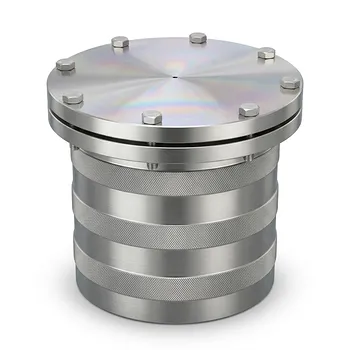
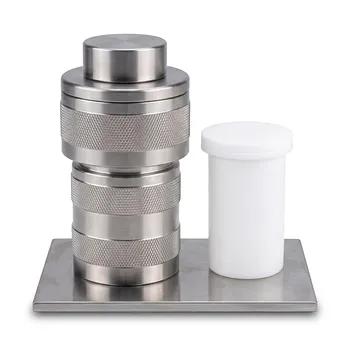
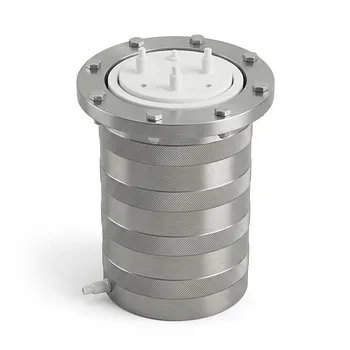
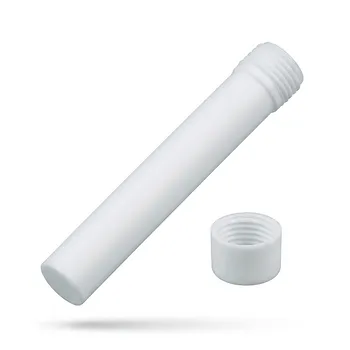
The synthesis of CHA zeolite requires a PTFE-lined stainless steel autoclave to survive the combination of extreme alkaline corrosion and high internal pressure. This specific vessel architecture ensures that the strong bases and organic structure-directing agents (OSDAs) used in the synthesis do not dissolve the reactor itself. By isolating the corrosive gel within a chemically inert liner while maintaining a sealed, pressurized environment, the autoclave allows for the precise crystallization of the zeolite framework at temperatures typically reaching 150°C.
Core Takeaway: The PTFE liner provides the chemical immunity needed to withstand strong alkaline "digestion," while the stainless steel shell provides the mechanical strength to contain the high autogenous pressures required for hydrothermal crystallization.
The Role of the PTFE Liner in Chemical Protection
Neutralizing Alkaline Corrosion
The synthesis of CHA zeolite frequently employs high concentrations of sodium hydroxide (NaOH), sometimes reaching 4M or higher. At elevated hydrothermal temperatures, these strong bases become highly aggressive and would rapidly corrode and pit a standard stainless steel surface. Polytetrafluoroethylene (PTFE) acts as an impenetrable barrier, as its carbon-fluorine bonds are among the strongest in organic chemistry, making it essentially immune to base-catalyzed degradation.
Preventing Metal Ion Contamination
If the synthesis gel were to contact the metal walls of the autoclave, iron, nickel, or chromium ions could leach into the reaction mixture. Even trace amounts of these metal ions can disrupt the delicate silicon-to-aluminum ratio or incorporate into the zeolite framework as impurities. The PTFE liner ensures a high-purity environment, which is critical for maintaining the structural integrity and catalytic performance of the final CHA zeolite.
Facilitating Product Recovery
Zeolite crystallization involves the transformation of an amorphous aluminosilicate gel into a solid crystalline powder. The extremely smooth surface of PTFE prevents the synthesized zeolite from adhering to the walls of the vessel. This non-stick property simplifies the collection of the precipitate and ensures that the yield and morphology of the crystals are not compromised during the recovery process.
The Necessity of the Stainless Steel Outer Shell
Containing Autogenous Pressure
Hydrothermal synthesis occurs in a "sealed system" where the liquid is heated above its boiling point, creating significant autogenous pressure. While PTFE is chemically inert, it is physically soft and would deform or burst under these internal pressures. The stainless steel body acts as a "pressure vessel," providing the mechanical rigidity and tensile strength necessary to safely contain the reaction environment.
Maintaining Thermal Stability
The formation of the CHA framework typically requires temperatures around 150°C to facilitate the dissolution-recrystallization of the precursor gels. Stainless steel provides the thermal mass and stability required to maintain a constant temperature throughout the crystallization period. This steady thermal environment is essential for the growth of regular, well-defined crystal structures.
Understanding the Trade-offs and Limitations
Temperature Constraints
The primary limitation of this setup is the thermal ceiling of the PTFE liner, which generally should not exceed 200°C to 220°C. Beyond these temperatures, PTFE can begin to soften, creep, or even release toxic fluorinated vapors. For syntheses requiring higher temperatures, researchers must pivot to more expensive PPL (polyphenylene polymers) liners or specialized alloy reactors.
Scaling and Heat Transfer
PTFE is a poor thermal conductor compared to metal, which can create a thermal lag between the oven temperature and the internal reaction gel. In large-scale synthesis, this can lead to temperature gradients that affect crystal uniformity. Furthermore, the mismatch in thermal expansion coefficients between the PTFE liner and the steel shell can lead to sealing failures if the autoclave is not designed with a proper spring-loaded tensioning mechanism.
Applying This to Your Synthesis Project
How to Choose the Right Configuration
- If your primary focus is high-purity catalytic applications: Prioritize high-quality, virgin PTFE liners to ensure zero metal leaching and maintain the precise Si/Al ratio of the CHA framework.
- If your primary focus is safety and high-pressure runs: Regularly inspect the stainless steel threads and the PTFE "seal face" for signs of deformation or creep, especially after repeated cycles at 150°C.
- If your primary focus is rapid crystal growth: Consider the thermal lag of the PTFE liner and allow for a "soak time" in your heating profile to ensure the internal gel reaches the target crystallization temperature.
The PTFE-lined autoclave remains the industry standard because it perfectly balances chemical "immunity" with physical "strength," providing the stable environment necessary for complex molecular engineering.
Summary Table:
| Component | Primary Function | Key Benefit |
|---|---|---|
| PTFE Liner | Chemical Barrier | Resists high-molarity NaOH and prevents metal ion leaching |
| SS Outer Shell | Pressure Vessel | Safely contains high autogenous pressure at 150°C+ |
| Non-stick Surface | Easy Recovery | Prevents zeolite adhesion for higher yield and purity |
| Thermal Mass | Heat Stability | Maintains steady crystallization temperatures for uniform growth |
Elevate Your Material Synthesis with KINTEK’s Fluoropolymer Expertise
Precise CHA zeolite crystallization demands equipment that never compromises on purity or safety. KINTEK maintains an exclusive and absolute focus on high-performance fluoropolymer materials, ensuring your sensitive reactions are protected from corrosion and contamination.
From everyday basic labware like beakers, crucibles, and reagent bottles to advanced hydrothermal synthesis liners, microwave digestion vessels, and custom electrochemical cells, we manufacture virtually all imaginable laboratory supplies crafted from PTFE and PFA.
Whether you need high-volume consumables (stirring bars, O-rings, and seal tapes) or bespoke laboratory setups produced via our end-to-end custom CNC fabrication, KINTEK is equipped to deliver high-performance solutions tailored to your exact specifications.
Ensure the integrity of your research—Contact KINTEK today to discuss your custom project or standard labware needs!
References
- Chong Liu, Ken‐ichi Shimizu. <i>In Situ</i> Spectroscopic Studies on the Redox Cycle of NH<sub>3</sub>−SCR over Cu−CHA Zeolites. DOI: 10.1002/cctc.202000024
This article is also based on technical information from Kintek Knowledge Base .
Related Products
- Custom TFM Reaction Vessel with Stainless Steel Jacket and PTFE Inner Cup for High Corrosion Resistance
- PTFE Lined High Pressure Digestion Vessel 50ml High Temperature Hydrothermal Synthesis Tank
- High Pressure Custom TFM Reactor Stainless Steel Outer Vessel PTFE Inner Cup for Corrosive Synthesis
- High Purity TFM Microwave Digestion Vessels PTFE Acid Evaporation Liners Domestic GT-400 Equivalent Laboratory Reaction Containers
- High Purity PTFE Microwave Digestion Vessel Replacement Liner for Acid Sample Preparation and Trace Analysis
People Also Ask
- Why are high-performance pressure-resistant reaction vessels required for oxygen-assisted hydrothermal conversion at 150 °C?
- How do magnetic stirring and reaction vessels impact MOF-derived carbon quality? Optimize Your Composite Performance
- Why are PTFE-lined reaction vessels necessary for forced degradation studies? Ensure high-purity results and accuracy.
- Why are PTFE-lined reaction vessels necessary for alkali stability tests? Ensure accurate ionomer degradation data.
- Why is a PTFE-lined reactor required for Mn2O3 synthesis? Achieve High Purity & Corrosion Resistance