Knowledge Hydrothermal synthesis reactor Why is a PTFE-lined hydrothermal autoclave required for SnS2@MoS2@C synthesis? Key to High-Purity Nanostructures
Author avatar

Tech Team · Kintek

Updated 3 months ago

Why is a PTFE-lined hydrothermal autoclave required for SnS2@MoS2@C synthesis? Key to High-Purity Nanostructures


A PTFE-lined hydrothermal autoclave is the essential reactor for synthesizing SnS2@MoS2@C because it creates a controlled, high-pressure environment that facilitates complex chemical transformations. This equipment allows the reaction to reach temperatures up to 220°C, far exceeding the atmospheric boiling point of the solvents, which is necessary for the sulfurization and self-assembly of the composite nanospheres.

Core Takeaway: The PTFE-lined autoclave provides the dual benefit of mechanical pressure containment and chemical isolation, ensuring that the precursors react under subcritical conditions to form high-purity, structurally sound SnS2@MoS2@C composites without corroding the reactor.

Managing High-Temperature and High-Pressure Environments

Achieving Subcritical Conditions

The synthesis of SnS2@MoS2@C requires temperatures around 220°C, which generates significant autogenous pressure within the sealed vessel. These subcritical conditions increase the solubility and reactivity of the precursors, allowing for a supersaturated state that is critical for the nucleation of the composite.

Facilitating One-Pot Sulfurization

The sealed environment ensures that volatile sulfur sources remain in the liquid phase or as highly reactive pressurized vapors. This is vital for the one-pot hydrothermal synthesis, where sulfurization of the tin and molybdenum precursors must occur simultaneously with the carbon coating process.

Maintaining Liquid-Phase Stability

By preventing the evaporation of solvents, the autoclave allows the reaction to proceed in a liquid state at temperatures that would otherwise cause boiling. This stability is necessary for the slow growth of high-quality crystals and the uniform distribution of the C (carbon) layer.

Ensuring Chemical Inertness and Material Purity

Protection Against Corrosive Precursors

The precursors used in SnS2 and MoS2 synthesis often create acidic or alkaline environments that are highly aggressive at elevated temperatures. The Polytetrafluoroethylene (PTFE) liner acts as a barrier, preventing these chemicals from attacking the stainless steel walls of the autoclave.

Preventing Metallic Contamination

Without the PTFE liner, the reaction solution would leach metallic ions from the autoclave body, such as iron, nickel, or chromium. This liner ensures the high purity of the SnS2@MoS2@C nanospheres, which is critical for their performance in electrochemical applications.

Structural Integrity of Nanostructures

The chemical stability provided by the PTFE liner ensures that the self-assembly process is not disrupted by side reactions with the reactor walls. This allows the composite to maintain its intended spherical morphology and consistent internal structure.

Driving Phase Transitions and Morphology

Induction of the Metallic 1T Phase

The high-pressure environment within the autoclave facilitates the partial phase transition of MoS2 from the semiconducting 2H phase to the metallic 1T phase. This transition is often driven by the intercalation of ions (like ammonium) under subcritical conditions, which is only possible in a sealed, pressurized system.

Controlled Nucleation and Growth

The uniform heat distribution and sustained pressure promote the uniform nucleation of MoS2 and SnS2 on the carbon framework. This results in a unique hierarchy, such as cactus-like or flower-like nanostructures, which provide a high specific surface area.

Understanding the Trade-offs and Limitations

Temperature Constraints of PTFE

While PTFE is chemically inert, it has a physical limit; it begins to soften and undergo creep deformation above 250°C. For the synthesis of SnS2@MoS2@C at 220°C, the operator must strictly monitor the temperature to avoid permanent deformation of the liner.

Pressure Safety Margins

The stainless steel outer shell provides the mechanical strength, but the filling ratio of the liquid inside the PTFE liner must be carefully calculated (usually 60-80%). Overfilling can lead to excessive internal pressure that exceeds the safety limits of the autoclave assembly.

Slow Thermal Cycles

Hydrothermal synthesis requires gradual heating and cooling to maintain structural consistency and prevent the PTFE from cracking due to thermal shock. This makes the synthesis process time-consuming, often requiring 12 to 24 hours of sustained treatment.

How to Apply This to Your Synthesis Project

When preparing SnS2@MoS2@C or similar transition metal dichalcogenides, your equipment choice dictates the quality of your final material.

  • If your primary focus is phase purity: Ensure the PTFE liner is thoroughly cleaned with aqua regia or nitric acid between runs to prevent cross-contamination of nucleation sites.
  • If your primary focus is 1T phase MoS2 yield: Maximize the autogenous pressure by maintaining a consistent 70-80% filling ratio and a temperature of at least 200°C.
  • If your primary focus is structural morphology: Prioritize a slow cooling rate (room temperature bench cooling) to allow for the controlled assembly of the nanospheres.

The PTFE-lined autoclave is the fundamental tool that enables the extreme conditions required to forge high-performance composite nanomaterials safely and precisely.

Summary Table:

Feature Role in SnS2@MoS2@C Synthesis Technical Benefit
High-Pressure Containment Enables temperatures up to 220°C Reaches subcritical conditions for precursor solubility
PTFE Chemical Inertness Prevents leaching of iron/nickel/chromium Ensures high purity for electrochemical applications
Sealed Environment Facilitates one-pot sulfurization Keeps volatile sulfur sources in reactive liquid/vapor phase
Phase Control Induces metallic 1T phase in MoS2 Drives structural transitions through autogenous pressure
Controlled Nucleation Uniform heat and pressure distribution Produces high-surface-area flower-like nanostructures

Elevate Your Nanomaterial Synthesis with KINTEK’s Precision Engineering

Achieving the perfect SnS2@MoS2@C composite requires equipment that can withstand extreme subcritical conditions without compromising purity. At KINTEK, we maintain an absolute focus on high-performance fluoropolymer materials, offering an unparalleled range of PTFE and PFA laboratory supplies tailored for advanced research.

From high-purity trace analysis instruments and PTFE-lined hydrothermal synthesis liners to custom-machined reaction apparatus, we provide the tools necessary for precision chemistry. Our offerings include:

  • Core Labware: Beakers, crucibles, reagent bottles, and centrifuge tubes.
  • Advanced Fluidics: High-purity tubing, fittings, valves, and filtration tools.
  • Specialized Reactors: Custom electrochemical cells, microwave digestion vessels, and microchannel reactors.

Whether you need high-volume standard consumables or bespoke, non-standard components crafted via end-to-end CNC fabrication, KINTEK delivers the durability and chemical resistance your lab demands.

Contact us today to discuss your custom laboratory setup!

References

  1. Catherine Sekyerebea Diko, Jian Liu. The role of the tin precursor in tuning TMS@carbon yolk–shell nanospheres for enhanced sulfur utilization. DOI: 10.1039/d5na00772k

This article is also based on technical information from Kintek Knowledge Base .

Related Products

People Also Ask

Related Products

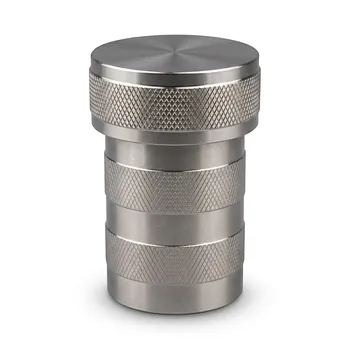
PTFE Lined High Pressure Digestion Vessel 50ml High Temperature Hydrothermal Synthesis Tank

PTFE Lined High Pressure Digestion Vessel 50ml High Temperature Hydrothermal Synthesis Tank

This premium 50ml high pressure digestion vessel features a precision-engineered PTFE lining for superior chemical resistance. Ideal for trace metal analysis and hydrothermal synthesis, this unit ensures high-purity results through robust, fully customizable industrial-grade construction and specialized engineering.

Custom TFM Reaction Vessel with Stainless Steel Jacket and PTFE Inner Cup for High Corrosion Resistance

Custom TFM Reaction Vessel with Stainless Steel Jacket and PTFE Inner Cup for High Corrosion Resistance

Premium custom TFM reaction vessel featuring a stainless steel jacket and PTFE liner for ultimate chemical resistance. This high-pressure system ensures zero contamination in aggressive synthesis environments, providing industrial-grade reliability for critical laboratory applications and advanced materials research.

High Temperature Corrosion Resistant Hydrothermal Synthesis Reactor with TFM Inner Liner and Straight Cylinder Design

High Temperature Corrosion Resistant Hydrothermal Synthesis Reactor with TFM Inner Liner and Straight Cylinder Design

Professional grade high-pressure hydrothermal synthesis reactors featuring corrosion-resistant TFM liners and straight-wall geometry. These units are ideal for demanding chemical synthesis, trace analysis, and advanced material research where absolute purity and customizable performance are required for industrial lab excellence.

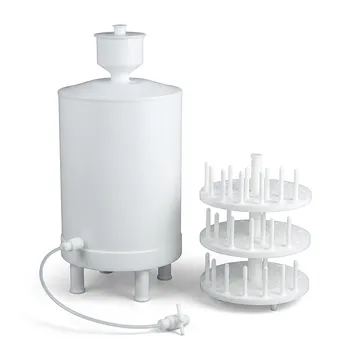
PTFE Acid Steam Cleaning System HF Resistant Trace Analysis Beaker Digestion Tank Customizable

PTFE Acid Steam Cleaning System HF Resistant Trace Analysis Beaker Digestion Tank Customizable

Precision-engineered PTFE acid steam cleaning systems provide contaminant-free trace analysis environments. These high-purity PFA systems resist hydrofluoric acid, ensuring non-polluting results for digestion tanks and laboratory beakers through automated, customizable vapor cleaning protocols for demanding scientific laboratory research.

High Purity TFM Microwave Digestion Vessels PTFE Acid Evaporation Liners Domestic GT-400 Equivalent Laboratory Reaction Containers

High Purity TFM Microwave Digestion Vessels PTFE Acid Evaporation Liners Domestic GT-400 Equivalent Laboratory Reaction Containers

Premium PTFE and TFM microwave digestion vessels designed as high-performance replacements for GT-400 systems ensuring trace metal purity and chemical resistance for demanding laboratory digestion and acid evaporation processes with full custom fabrication capabilities available for unique requirements and specifications.

High Pressure Custom TFM Reactor Stainless Steel Outer Vessel PTFE Inner Cup for Corrosive Synthesis

High Pressure Custom TFM Reactor Stainless Steel Outer Vessel PTFE Inner Cup for Corrosive Synthesis

Engineered for extreme chemical resistance, this custom TFM reactor combines a robust stainless steel outer vessel with a high-purity PTFE liner, ensuring safe, durable performance in demanding laboratory and industrial synthesis applications.

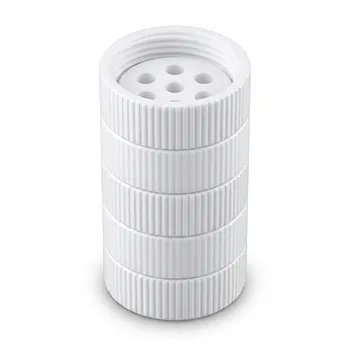
High Temperature PTFE Reaction Sieve with Customizable Layers and Precision Pore Sizes for Threaded Sample Separation Devices

High Temperature PTFE Reaction Sieve with Customizable Layers and Precision Pore Sizes for Threaded Sample Separation Devices

Engineered for extreme chemical environments, this customizable PTFE reaction sieve features adjustable layers and pore counts. Designed with secure threaded connections, it ensures reliable sample separation and high-temperature performance for demanding laboratory and industrial chemical reaction processes.

High Purity PTFE Microwave Digestion Vessel for Soil and Food Analysis Acid Resistant Fluoropolymer Sample Preparation Liners

High Purity PTFE Microwave Digestion Vessel for Soil and Food Analysis Acid Resistant Fluoropolymer Sample Preparation Liners

Engineered for high-pressure microwave digestion these ultra-pure PTFE liners provide exceptional resistance to concentrated acids during soil and food sample preparation ensuring zero contamination and uniform heating for precise heavy metal trace analysis in laboratory environments.

High Purity PTFE Microwave Digestion Vessel Replacement Liner for Acid Sample Preparation and Trace Analysis

High Purity PTFE Microwave Digestion Vessel Replacement Liner for Acid Sample Preparation and Trace Analysis

Premium PTFE microwave digestion vessels designed for extreme acid resistance and high-pressure performance. Engineered for trace analysis and sample preparation in industrial laboratories, these customizable liners provide superior durability and chemical inertness.

High Purity PTFE Acid Steam Cleaning System Trace Analysis Labware Decontamination Unit with Leak Proof Closed Reflux Technology and Customizable Multi Position Capacity

High Purity PTFE Acid Steam Cleaning System Trace Analysis Labware Decontamination Unit with Leak Proof Closed Reflux Technology and Customizable Multi Position Capacity

Optimize trace analysis workflows with this high-purity PTFE acid steam cleaning system. Featuring a leak-proof closed-loop design for significant acid savings and superior decontamination, this customizable unit ensures ultra-low background levels for sensitive ICP-MS and ICP-OES laboratory applications.

PTFE Condensation Reflux and Gas Collection Apparatus for Corrosive Biochemical Processing Customizable High Temperature System

PTFE Condensation Reflux and Gas Collection Apparatus for Corrosive Biochemical Processing Customizable High Temperature System

High-performance PTFE condensation reflux and gas collection apparatus designed for corrosive biochemical processing. This customizable system offers superior thermal stability and chemical inertness, ensuring reliable performance in demanding laboratory environments where standard materials fail.

Custom PTFE Condensation Reflux Apparatus with Serpentine Coil and Flask Collection System for Corrosive Chemical Processing

Custom PTFE Condensation Reflux Apparatus with Serpentine Coil and Flask Collection System for Corrosive Chemical Processing

High-performance custom PTFE condensation reflux apparatus designed for extreme chemical resistance. This integrated serpentine coil and flask system offers superior thermal stability and purity for advanced laboratory synthesis and industrial chemical processing applications. Contact us for bespoke solutions.

PTFE PFA Vacuum Filtration System Corrosion Resistant Customizable Shatterproof Laboratory Device

PTFE PFA Vacuum Filtration System Corrosion Resistant Customizable Shatterproof Laboratory Device

High-performance PTFE and PFA vacuum filtration systems designed for extreme chemical resistance. This customizable, shatterproof unit ensures trace-level purity and exceptional thermal stability for demanding laboratory processes and hazardous fluid transfers in industrial and research applications.

Custom PTFE Condensation Reflux Distillation Purification System 500ml Corrosion Resistant Low Background

Custom PTFE Condensation Reflux Distillation Purification System 500ml Corrosion Resistant Low Background

Professional high-purity PTFE condensation and reflux apparatus for distillation and purification. This customizable 500ml system offers exceptional corrosion resistance and low background interference for trace analysis and sensitive chemical reactions in demanding laboratory environments.

Custom PTFE Multilayer Reaction Apparatus High Temperature Corrosion Resistant Threaded Modular Sieve System

Custom PTFE Multilayer Reaction Apparatus High Temperature Corrosion Resistant Threaded Modular Sieve System

Enhance chemical processing with this custom PTFE multilayer reaction apparatus featuring corrosion-resistant threaded connections and integrated sieve plates. Designed for high-temperature stability and precision filtration in demanding laboratory environments across pharmaceutical and semiconductor research and advanced industrial applications.

Custom PTFE Condenser Tube Hydrofluoric Acid Resistant Reflux Device Constant Pressure Separatory Funnel

Custom PTFE Condenser Tube Hydrofluoric Acid Resistant Reflux Device Constant Pressure Separatory Funnel

Engineered for extreme chemical environments, our custom PTFE condenser tubes and hydrofluoric acid resistant reflux devices offer unparalleled corrosion resistance and non-stick performance. These high-purity laboratory tools ensure zero sample contamination and long-term durability in demanding industrial applications.

Customizable PTFE Heat Insulation Plate High Temperature Corrosion Resistant Laboratory Support Layered Multi Tier Stand

Customizable PTFE Heat Insulation Plate High Temperature Corrosion Resistant Laboratory Support Layered Multi Tier Stand

High-performance customizable PTFE heat insulation plates offer superior 250°C thermal stability and chemical resistance. Expertly engineered for laboratory environments, these bespoke layered supports ensure maximum durability and precision for demanding industrial fluid or chemical processing applications in modern facilities.

Customizable 22ml PTFE Cup Deep Layer Sampler and Corrosion Resistant Cylinder with Handle

Customizable 22ml PTFE Cup Deep Layer Sampler and Corrosion Resistant Cylinder with Handle

This high-purity PTFE sampler and deep-layer cylinder offers ultimate corrosion resistance for demanding industrial environments. Fully customizable to meet specific laboratory or field sampling requirements, this robust system ensures precise and contaminant-free fluid collection in harsh chemical processes.

Custom PTFE Condenser Tube 100ml Serpentine and Straight Fluoropolymer Laboratory Heat Exchanger with Flask Adapters

Custom PTFE Condenser Tube 100ml Serpentine and Straight Fluoropolymer Laboratory Heat Exchanger with Flask Adapters

Engineered for extreme chemical resistance, this custom 100ml PTFE condenser tube features straight or serpentine designs with integrated adapters for laboratory flasks. Ideal for high-purity trace analysis and corrosive solvent recovery in demanding industrial research environments worldwide.

PTFE Anti Scald Heat Insulation Sleeve Hot Plate Support Feet Laboratory Benchtop Protection Customizable Thermal Barrier

PTFE Anti Scald Heat Insulation Sleeve Hot Plate Support Feet Laboratory Benchtop Protection Customizable Thermal Barrier

Protect laboratory benchtops with customizable PTFE anti-scald insulation sleeves and support feet. Engineered for high-temperature stability and chemical resistance, these bespoke components ensure safe thermal isolation for hot plates and sensitive equipment in modern high-performance research environments.


Leave Your Message