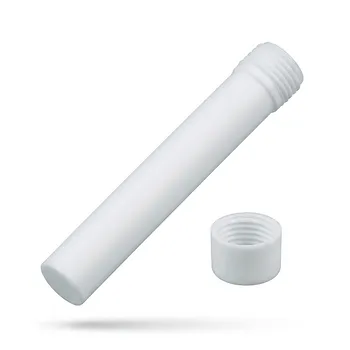
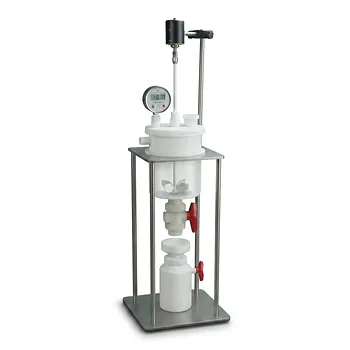
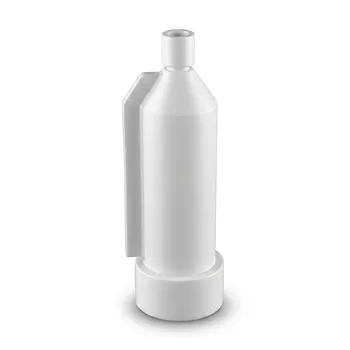
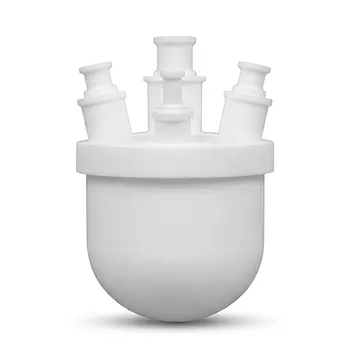
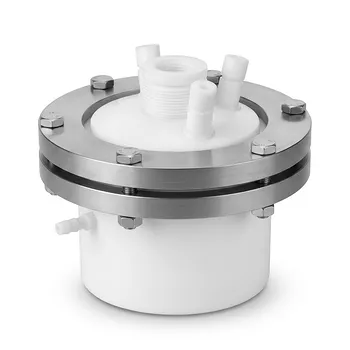
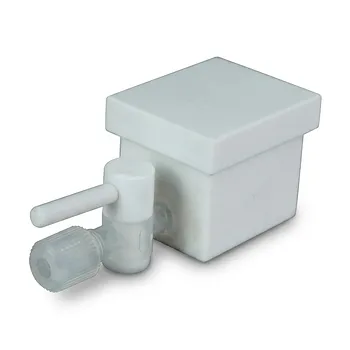
Hydrothermal synthesis of zeolites requires Polytetrafluoroethylene (PTFE) liners because they provide an chemically inert, non-contaminating barrier against the aggressive alkaline environments and high autogenous pressures inherent to the process. Without this protection, the strong mineralizing agents would corrode the metal reactor walls, leading to structural failure of the vessel and the introduction of metallic impurities that compromise the zeolite’s framework purity and silicon-to-aluminum ratio.
Core Takeaway: PTFE liners serve as the critical interface that isolates corrosive synthesis gels from the pressure vessel, ensuring both the safety of the hardware and the precise chemical integrity of the resulting zeolite crystals.
Protecting Equipment from Chemical Erosion
Resistance to Highly Alkaline Environments
Zeolite synthesis typically occurs in highly alkaline media, often involving concentrated sodium hydroxide (NaOH) or other strong bases.
Standard stainless steel vessels are susceptible to corrosion and pitting when exposed to these "caustic" environments at elevated temperatures.
PTFE possesses exceptional chemical inertness, allowing it to withstand prolonged contact with aggressive mineralizing agents without degrading or reacting.
Prevention of Metal Leaching
When alkaline solutions attack the surface of a metal autoclave, they cause metal ions (such as iron, chromium, or nickel) to leach into the synthesis gel.
These foreign ions can integrate into the zeolite framework, disrupting the intended silicon-to-aluminum ratio and altering the catalytic or adsorptive properties of the material.
The PTFE liner acts as a total chemical barrier, ensuring that the reaction environment remains high-purity and free from metallic interference.
Maintaining High-Pressure Sealed Environments
Support for Autogenous Pressure
Hydrothermal synthesis relies on autogenous pressure—the pressure generated by heating a liquid in a sealed volume—to drive the nucleation and growth of crystals.
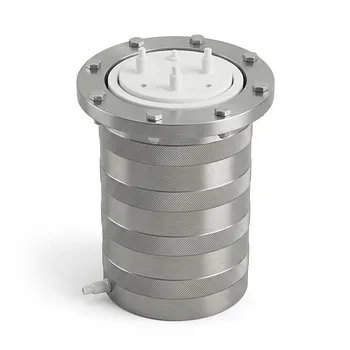
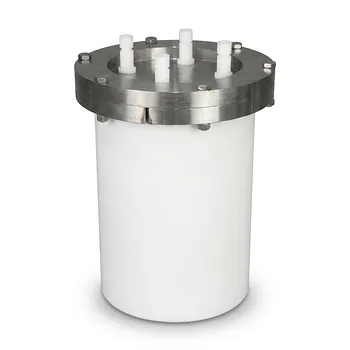
PTFE liners are designed to fit snugly within stainless steel autoclaves, allowing the metal shell to provide mechanical strength while the PTFE provides the sealed environment.
This combination allows the system to reach temperatures between 120°C and 200°C, providing the thermal energy necessary for the formation of complex structures like analcime or hierarchical zeolites.
Facilitating Crystal Nucleation
A stable, sealed environment is essential for Structure-Directing Agents (SDAs) to effectively organize the silicon-aluminum precursor gel.
By preventing leaks and maintaining constant pressure, the PTFE liner ensures that the crystallization kinetics remain predictable and controlled.
This stability is what allows for the precise development of micro-mesoporous structures within the zeolite framework.
Enhancing Product Yield and Recovery
Low Surface Energy and Non-Stick Properties
PTFE is known for its extremely low surface energy, which prevents synthesized nanoparticles and crystals from adhering to the vessel walls.
In zeolite production, this ensures that the maximum yield of the product can be easily recovered after the reaction is complete.
This non-stick quality also makes the liners easier to clean and decontaminate between different synthesis batches, preventing cross-contamination.
Understanding the Trade-offs and Limitations
Temperature Constraints
While PTFE is highly stable, it has a maximum service temperature (typically around 220°C–250°C) beyond which it begins to soften or undergo creep.
If a synthesis requires temperatures exceeding these limits, alternative materials like PFA (Perfluoroalkoxy) or specialized gold/platinum liners may be required.
Exceeding the thermal limit of PTFE can lead to liner deformation, which may cause the seal to fail or make the liner difficult to remove from the autoclave.
Thermal Conductivity Issues
PTFE is a thermal insulator, meaning it does not conduct heat as efficiently as the outer stainless steel shell.
This can lead to a thermal lag between the oven temperature and the internal temperature of the synthesis gel.
Researchers must account for this lag to ensure that the actual reaction temperature matches the experimental design for consistent zeolite crystallization.
Applying This to Your Synthesis Goals
How to Apply This to Your Project
- If your primary focus is high-purity analytical research: Use high-grade PTFE liners to eliminate metal ion leaching and ensure your silicon-to-aluminum ratios remain precise.
- If your primary focus is maximizing product yield: Leverage the non-stick properties of PTFE to ensure full recovery of nanoparticles and minimize loss during the collection phase.
- If your primary focus is equipment longevity: Always inspect PTFE liners for thinning or deformation to prevent the synthesis gel from ever reaching and compromising the stainless steel autoclave body.
Ultimately, the PTFE liner is the unsung hero of hydrothermal synthesis, bridging the gap between aggressive chemical requirements and the need for high-pressure physical containment.
Summary Table:
| Feature | Benefit | Impact on Zeolite Synthesis |
|---|---|---|
| Chemical Inertness | Resists highly alkaline media (NaOH) | Prevents vessel corrosion and structural failure |
| Purity Protection | Eliminates metal ion leaching | Maintains precise silicon-to-aluminum ratios |
| Non-Stick Surface | Extremely low surface energy | Maximizes product recovery and prevents loss |
| Pressure Stability | Supports autogenous pressure | Ensures controlled kinetics for crystal nucleation |
| Thermal Limits | Stable up to 220°C–250°C | Ideal for most standard hydrothermal processes |
Elevate Your Synthesis Precision with KINTEK Fluoropolymers
Are you looking for the ultimate reliability in your hydrothermal synthesis workflows? At KINTEK, we maintain an exclusive focus on high-performance fluoropolymer materials to ensure your research remains uncontaminated and your equipment protected.
From everyday basic labware—including beakers, crucibles, and reagent bottles—to specialized hydrothermal synthesis liners, microwave digestion vessels, and custom electrochemical cells, we manufacture virtually every laboratory supply crafted from PTFE and PFA.
Whether you need standard consumables like stirring bars and O-rings or complex fluid transfer components (tubing, valves, fittings), our end-to-end custom CNC fabrication is equipped to deliver. We provide everything from high-volume orders to bespoke, non-standard machined parts tailored to your specific zeolite research needs.
Ensure the integrity of your crystals today. Contact KINTEK to discuss your custom laboratory requirements!
References
- Ygor Geann dos Santos Leite, R. Carvalho. PRODUCTION OF MIXED ZEOLITE USING AMAZONIAN NATURAL RESOURCES AND ITS APPLICATION IN THE REMOVAL OF LEAD FROM AQUEOUS SOLUTION. DOI: 10.56238/revgeov16n5-286
This article is also based on technical information from Kintek Knowledge Base .
Related Products
- PTFE Lined High Pressure Digestion Vessel 50ml High Temperature Hydrothermal Synthesis Tank
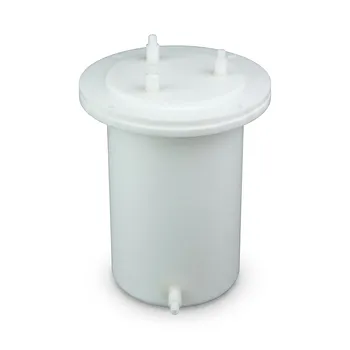
- High Pressure Custom TFM Reactor Stainless Steel Outer Vessel PTFE Inner Cup for Corrosive Synthesis
- Custom TFM Reaction Vessel with Stainless Steel Jacket and PTFE Inner Cup for High Corrosion Resistance
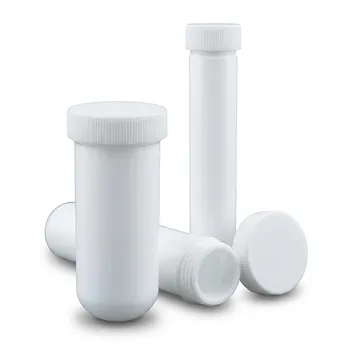
- Custom PTFE Continuous Reaction Bottles Virgin Fluoropolymer High Purity Low Background Synthesis Vessels
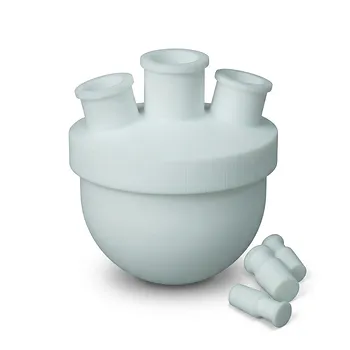
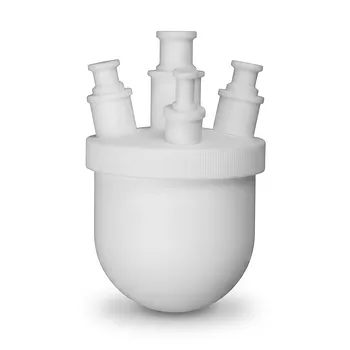
- High Purity Large Capacity PTFE Flask Custom Multi Neck Chemical Reaction Vessel for Corrosive Laboratory Synthesis and Industrial Processing
People Also Ask
- What are the benefits of using a PTFE-lined vessel for carbon-sulfur cathode treatment? Maximize Purity & Performance
- Why are PTFE-lined pressure digestion vessels required for the preparation of Ag/CeO2 catalysts? Purity & Performance
- What is the function of high-pressure PTFE digestion vessels in mineral analysis? Optimize Sample Mineralization
- What safety features are typically incorporated into high-pressure PTFE digestion vessel designs? Ensure Lab Safety
- What is the function of PTFE lined high-pressure vessels in g-C3N4 synthesis? Achieve High-Purity Material Growth