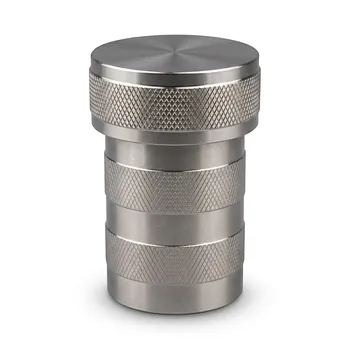
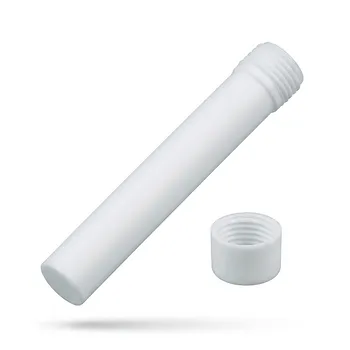
The PTFE-lined hydrothermal autoclave is the critical vessel for synthesizing rGO/Fe3O4/Ag nanocomposites. It provides the sealed, high-pressure environment required to reduce Graphene Oxide (GO) at 135 °C while ensuring the chemical purity of the reaction. Without the PTFE liner, the corrosive precursors would damage the reactor and contaminate the resulting material with metallic impurities.
Core Takeaway: A PTFE-lined autoclave enables the simultaneous reduction of GO and the anchoring of nanoparticles by providing a high-pressure environment and a chemically inert barrier. This ensures the structural integrity and purity of the rGO/Fe3O4/Ag composite by preventing interaction with the stainless steel reactor body.
Creating the Ideal Reaction Environment
Facilitating Graphene Oxide Reduction
The synthesis of rGO/Fe3O4/Ag requires the thermal reduction of Graphene Oxide into reduced Graphene Oxide (rGO). This chemical transformation typically occurs at temperatures around 135 °C within a sealed system.
The autoclave traps heat and builds autogenous pressure, which lowers the energy barrier for the reduction process. This environment allows the reduction to occur more efficiently than it would under standard atmospheric conditions.
Enabling One-Step Nucleation
Hydrothermal conditions facilitate the simultaneous dissolution and nucleation of metal precursors. This allows Fe3O4 and Ag nanoparticles to grow directly on the surface of the graphene sheets.
The pressure inside the vessel promotes the conformal deposition of these nanoparticles. This results in a stable heterojunction where the nanoparticles are securely anchored, enhancing the composite's overall performance.
The Necessity of Chemical Inertness
Preventing Stainless Steel Corrosion
The precursors used in these reactions, such as metal salts and strong acids, are highly corrosive at elevated temperatures. PTFE (Polytetrafluoroethylene) is utilized because it is almost entirely chemically inert.
The liner acts as a physical shield for the stainless steel autoclave body. Without it, the acidic or oxidative reaction mixture would erode the reactor walls, leading to structural failure of the vessel over time.
Eliminating Metallic Contamination
If the reaction solution were to come into direct contact with the steel walls, metal ions (such as iron, nickel, or chromium) could leach into the sample. This would alter the chemical profile of the rGO/Fe3O4/Ag nanocomposite.
The PTFE liner ensures a high-purity environment. This is essential for maintaining the specific catalytic, magnetic, or electronic properties intended for the final product.
Understanding the Trade-offs
Temperature Limitations
While PTFE is exceptionally stable, it has a functional temperature ceiling. Most PTFE liners should not be used above 240–250 °C, as the material can begin to soften or release toxic fumes.
If a synthesis requires higher temperatures, alternative liners like PEEK (Polyether ether ketone) or quartz must be considered. For rGO/Fe3O4/Ag synthesis at 135 °C, however, PTFE remains the gold standard.
Pressure and Cooling Rates
The sealed nature of the autoclave means that pressure cannot be adjusted independently of temperature. Users must strictly follow filling ratios (typically 60-80% of volume) to avoid over-pressurization.
Furthermore, the autoclave must be cooled slowly to prevent the PTFE liner from deforming. Rapid cooling can lead to a vacuum effect or thermal shock that compromises the seal in future experiments.
How to Apply This to Your Project
- If your primary focus is material purity: Always inspect your PTFE liner for cracks or discoloration before use to ensure no precursors reach the steel shell.
- If your primary focus is nanoparticle anchoring: Ensure the reaction temperature remains constant for the full duration to allow for uniform recrystallization on the graphene surface.
- If your primary focus is reactor longevity: Never exceed the recommended filling capacity or temperature limits of your specific PTFE liner grade.
Choosing a PTFE-lined autoclave is a fundamental requirement for achieving the high-pressure, high-purity conditions necessary for advanced nanocomposite synthesis.
Summary Table:
| Feature | Role in rGO/Fe3O4/Ag Synthesis | Key Benefit |
|---|---|---|
| Pressure Control | Lowers energy barrier for GO reduction at 135°C | Efficient thermal reduction and bonding |
| Chemical Inertness | Resists corrosive metal salts and strong acids | Prevents sample contamination and leaching |
| Sealed Environment | Facilitates simultaneous nucleation of Fe3O4/Ag | Stable heterojunction and anchoring |
| PTFE Material | Acts as a physical barrier for stainless steel | Protects reactor body from erosion |
Elevate Your Research with KINTEK’s Precision Fluoropolymer Labware
Achieving the perfect rGO/Fe3O4/Ag nanocomposite requires a reaction environment free from contamination and resistant to extreme conditions. KINTEK specializes in high-performance PTFE and PFA solutions designed for advanced chemical synthesis.
From everyday basic labware like beakers, crucibles, and reagent bottles to specialized hydrothermal synthesis liners, microwave digestion vessels, and custom-machined microchannel reactors, we provide the absolute chemical inertness your project demands. Whether you need standard consumables like stirring bars and tubing or complex, bespoke laboratory setups via our end-to-end custom CNC fabrication, KINTEK delivers the structural integrity and purity essential for high-stakes material science.
Don't let metallic impurities compromise your results. Contact us today to discuss your specific requirements and see how our fluoropolymer expertise can streamline your synthesis process!
References
- Eman F. Aboelfetoh. One step hydrothermal synthesis of magnetically separable rGO supported Fe₃O₄ and Ag nanoparticles for adsorption and reduction of organic pollutants. DOI: 10.1038/s41598-025-12170-9
This article is also based on technical information from Kintek Knowledge Base .
Related Products
- PTFE Lined High Pressure Digestion Vessel 50ml High Temperature Hydrothermal Synthesis Tank
- Custom TFM Reaction Vessel with Stainless Steel Jacket and PTFE Inner Cup for High Corrosion Resistance
- High Temperature Corrosion Resistant Hydrothermal Synthesis Reactor with TFM Inner Liner and Straight Cylinder Design
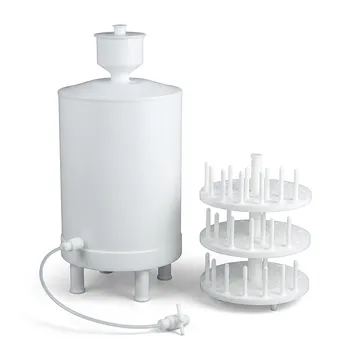
- PTFE Acid Steam Cleaning System HF Resistant Trace Analysis Beaker Digestion Tank Customizable
- High Purity TFM Microwave Digestion Vessels PTFE Acid Evaporation Liners Domestic GT-400 Equivalent Laboratory Reaction Containers
People Also Ask
- What are the benefits of using a PTFE-lined vessel for carbon-sulfur cathode treatment? Maximize Purity & Performance
- Why are PTFE-lined pressure digestion vessels required for the preparation of Ag/CeO2 catalysts? Purity & Performance
- What safety features are typically incorporated into high-pressure PTFE digestion vessel designs? Ensure Lab Safety
- What is the function of PTFE lined high-pressure vessels in g-C3N4 synthesis? Achieve High-Purity Material Growth
- Role of High-Pressure Digestion Tanks in Perovskite Synthesis: Achieve Superior Stability and Latent Heat