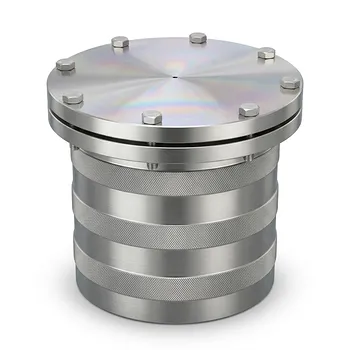
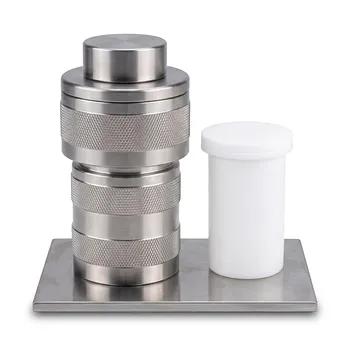
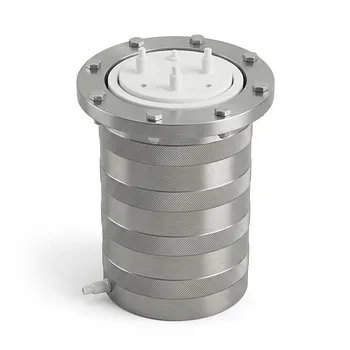
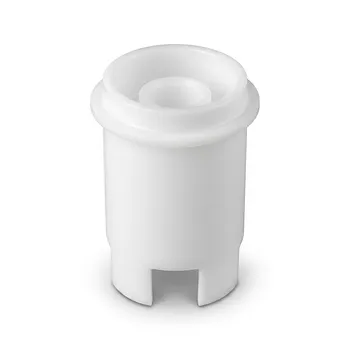
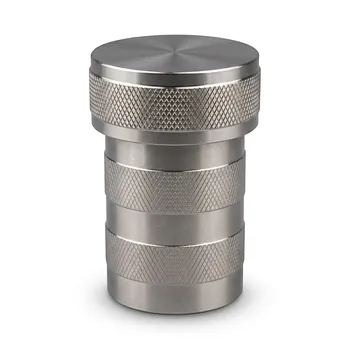
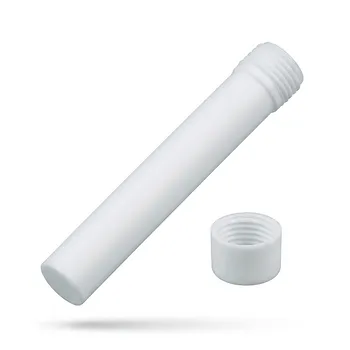
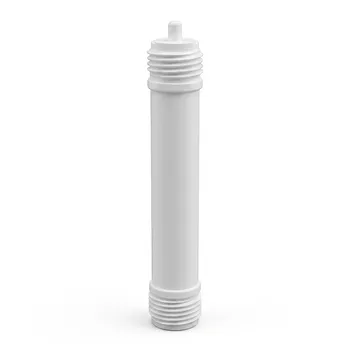
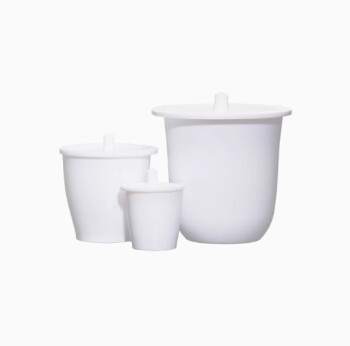
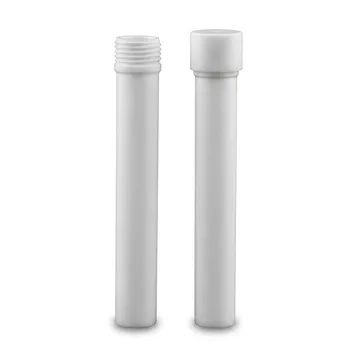
The synthesis of HPMo@Bi/Ce-BTC catalysts requires a PTFE-lined stainless steel autoclave to provide a pressurized, high-temperature environment while ensuring chemical purity. The stainless steel outer shell provides the mechanical strength necessary to contain the high internal pressures generated at 160°C, while the Polytetrafluoroethylene (PTFE) liner acts as a chemically inert barrier that prevents vessel corrosion and catalyst contamination.
This dual-material design allows for "solvothermal synthesis," where solvents are heated above their boiling points to facilitate the orderly growth of Metal-Organic Frameworks (MOFs) without the interference of metal ions or pressure-induced vessel failure.
Managing High-Pressure Solvothermal Environments
Withstanding Autogenous Pressure
The synthesis of HPMo@Bi/Ce-BTC occurs at 160°C for 10 hours, a temperature well above the boiling point of many common solvents. The stainless steel outer shell acts as a pressure vessel, safely containing the autogenous pressure—the internal pressure generated by the heated liquid and vapor.
Maintaining Subcritical Conditions
By sealing the reaction in a rigid container, the autoclave maintains solvents in a subcritical state. This high-pressure environment is essential for the complete and orderly assembly of the Bi/Ce-BTC framework, ensuring the precursors react effectively.
Structural Integrity and Safety
Without the mechanical reinforcement of the stainless steel, a standard glass or plastic vessel would fail or explode under these thermal conditions. The outer shell ensures the reaction remains stable and controlled throughout the 10-hour duration.
Ensuring Chemical Purity and Structural Integrity
Preventing Metal Ion Contamination
MOF synthesis is highly sensitive to the presence of external metal ions, which can disrupt the coordination crystallization process. The PTFE liner ensures that no metal from the stainless steel shell leaches into the reaction, maintaining the purity of the HPMo@Bi/Ce-BTC catalyst.
Corrosion Resistance Against Solvents
Solvothermal reactions often involve aggressive solvents like DMF or alcohols which, at high temperatures, can erode metallic surfaces. PTFE is characterized by its exceptional chemical stability, shielding the outer shell from corrosive damage and extending the life of the equipment.
Protecting the Microporous Structure
The regularity of the catalyst's microporous structure and its specific surface area depend on a "clean" reaction environment. By eliminating side reactions with the vessel walls, the PTFE liner guarantees the reproducibility and catalytic activity of the resulting material.
Optimizing Catalyst Recovery and Yield
Low Surface Energy and Non-Adhesion
PTFE has an extremely smooth, non-adhesive surface that prevents synthesized powder sediments from sticking to the walls. This low surface energy is critical for ensuring a high recovery rate of the HPMo@Bi/Ce-BTC solid precipitates after the reaction is complete.
Maintaining Stoichiometric Precision
Because the reactants do not adhere to or react with the liner, the stoichiometric ratio of the precursors remains precise. This ensures that the final catalyst has the intended chemical composition and performance characteristics.
Understanding the Technical Constraints
Temperature Limitations of PTFE
While PTFE is chemically robust, it has a thermal limit; it typically begins to soften or deform above 220°C–250°C. For the 160°C requirement of HPMo@Bi/Ce-BTC, it is perfectly safe, but it cannot be used for ultra-high-temperature calcination.
Thermal Expansion Mismatch
PTFE and stainless steel expand at different rates when heated, which can cause the liner to deform if the autoclave is cooled too rapidly. Slow, controlled cooling is often necessary to maintain the integrity of the liner and the crystal structure of the catalyst.
Pressure Rating Dependencies
The safety of the synthesis depends on the thickness of the stainless steel shell and the quality of the seal. Operators must ensure the filling degree (usually 60-80%) is not exceeded to prevent over-pressurization beyond the vessel's rated capacity.
How to Apply This to Your Synthesis Goal
Choosing the Right Equipment
- If your primary focus is high-purity MOF synthesis: Always use a high-purity PTFE liner to eliminate metal ion interference and ensure structural regularity.
- If your primary focus is maximizing catalyst yield: Leverage the non-stick properties of PTFE to ensure all solid precipitates can be easily collected and washed.
- If your primary focus is safety during long reactions: Regularly inspect the stainless steel threads and the PTFE gasket for signs of wear or deformation from repeated high-pressure cycles.
By utilizing the mechanical strength of steel and the chemical neutrality of PTFE, you create the precise conditions necessary for the successful molecular assembly of HPMo@Bi/Ce-BTC catalysts.
Summary Table:
| Component | Primary Function | Benefit for HPMo@Bi/Ce-BTC Synthesis |
|---|---|---|
| Stainless Steel Shell | Mechanical Strength | Safely contains autogenous pressure at 160°C for 10 hours. |
| PTFE Liner | Chemical Inertness | Prevents metal ion leaching and catalyst contamination. |
| Non-stick Surface | Low Surface Energy | Ensures high recovery rate of synthesized powder sediments. |
| Sealed Environment | Pressure Control | Maintains subcritical conditions for orderly MOF crystal growth. |
Elevate Your Synthesis Precision with KINTEK
Achieving the perfect molecular assembly for catalysts like HPMo@Bi/Ce-BTC requires equipment that never compromises on purity or safety. KINTEK specializes in high-performance fluoropolymer laboratory solutions, offering an exhaustive range of supplies crafted from premium PTFE and PFA.
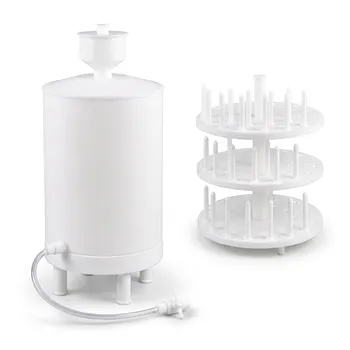
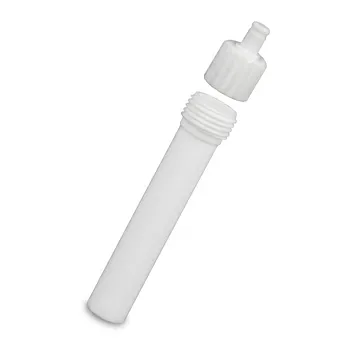
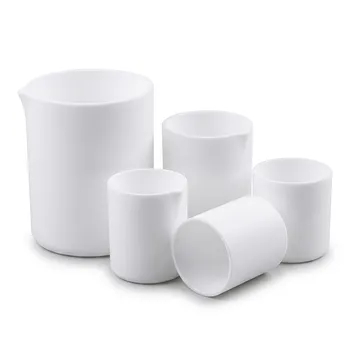
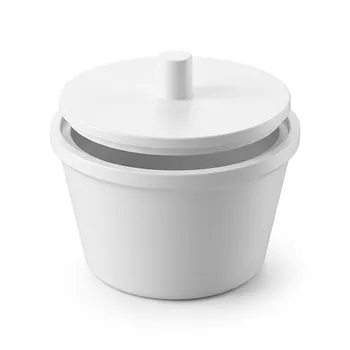
From everyday essentials like beakers, crucibles, and centrifuge tubes to advanced hydrothermal synthesis liners, microwave digestion vessels, and custom-machined reaction apparatus, we provide the inert environments necessary for sensitive chemical reactions. Our end-to-end custom CNC fabrication allows us to deliver everything from complex non-standard parts to high-volume orders with absolute precision.
Whether you are performing trace analysis or high-pressure solvothermal synthesis, KINTEK is your partner in high-performance labware. Contact us today to discuss your custom laboratory needs and ensure your research is backed by the industry's best fluoropolymer engineering.
References
- Qiuyun Zhang, Yutao Zhang. Facile fabrication of heteropolyacid/bimetallic Bi/Ce-MOFs hybrid catalyst for sustainable biodiesel synthesis. DOI: 10.1186/s13065-025-01662-4
This article is also based on technical information from Kintek Knowledge Base .
Related Products
- Custom TFM Reaction Vessel with Stainless Steel Jacket and PTFE Inner Cup for High Corrosion Resistance
- PTFE Lined High Pressure Digestion Vessel 50ml High Temperature Hydrothermal Synthesis Tank
- High Pressure Custom TFM Reactor Stainless Steel Outer Vessel PTFE Inner Cup for Corrosive Synthesis
- High Pressure PTFE Digestion Vessel Inner Cup Holder Custom Corrosion Resistant Low Background Teflon
- High Temperature Corrosion Resistant Hydrothermal Synthesis Reactor with TFM Inner Liner and Straight Cylinder Design
People Also Ask
- Why are high-performance pressure-resistant reaction vessels required for oxygen-assisted hydrothermal conversion at 150 °C?
- Why are high-quality fluoropolymer-lined reaction vessels required for alk-Ti3C2Tx MXene? Ensure Purity & HF Resistance
- How do magnetic stirring and reaction vessels impact MOF-derived carbon quality? Optimize Your Composite Performance
- Why are PTFE-lined reaction vessels necessary for forced degradation studies? Ensure high-purity results and accuracy.
- Why is a high-purity PTFE lined reaction vessel required for the acidic etching of MXenes? Ensure Material Purity.