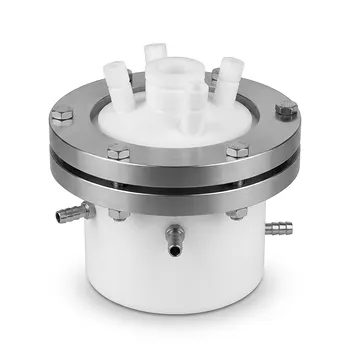
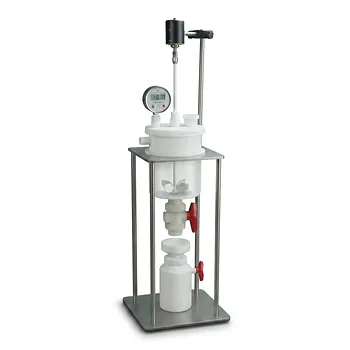
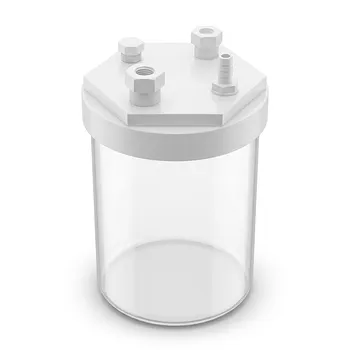
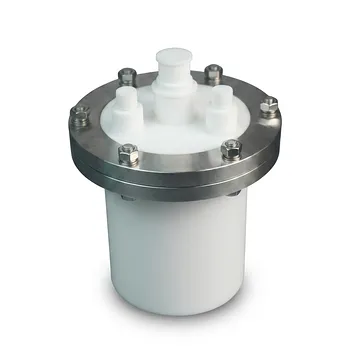
The use of microwave-assisted hydrothermal (MAH) reactors represents a paradigm shift in material synthesis, primarily by replacing slow thermal conduction with rapid, volumetric heating. For the synthesis of KMnVOH cathode materials, this technology reduces reaction times from several hours or days to as little as one hour. Furthermore, the direct coupling of microwave energy with the reaction medium facilitates the creation of nano-scale structures with uniform particle sizes and highly controlled morphologies.
Core Takeaway: Microwave-assisted hydrothermal synthesis leverages electromagnetic coupling to achieve instantaneous heating, resulting in KMnVOH materials with superior structural uniformity and significantly higher production efficiency compared to traditional conductive heating methods.
The Advantage of Volumetric Heating
Breaking the Conduction Barrier
Traditional hydrothermal autoclaves rely on external heating elements that transfer energy through the vessel walls via thermal conduction. This process is inherently slow and creates temperature gradients, where the fluid near the walls is hotter than the center.
Instantaneous Energy Transfer
In contrast, a microwave reactor utilizes the direct coupling of microwave energy with polar molecules in the reactant solution. This achieves volumetric heating, where the entire volume of the liquid heats simultaneously from the inside out, eliminating internal temperature gradients.
Accelerated Reaction Kinetics
Because energy is delivered directly to the molecules, the system achieves faster and more uniform temperature increases. This rapid energy transfer triggers the reduction of metal ions and the nucleation process almost instantly, drastically shortening the synthesis cycle.
Impact on KMnVOH Material Quality
Controlled Nucleation and Growth
The rapid heating mechanism of MAH synthesis enables simultaneous nucleation throughout the entire reaction medium. This synchronized start prevents the "staggered" growth seen in traditional methods, resulting in a narrower particle size distribution.
Prevention of Agglomeration
MAH technology effectively prevents the overgrowth and agglomeration of nanoparticles. By completing the crystallization process quickly, the system preserves a high specific surface area, which is critical for the electrochemical performance of vanadium-based cathode materials.
Structural Precision and Purity
MAH systems allow for precise regulation of crystallinity and phase purity. This level of control is essential for forming the specific crystal structures required for KMnVOH, while minimizing the formation of unwanted side products or impurities.
Efficiency and Process Control
Significant Energy Savings
By shortening reaction times—often completing in just one hour—MAH reactors significantly reduce total energy consumption. The efficiency of electromagnetic coupling ensures that energy is spent heating the reactants rather than the bulky specialized steel of an autoclave.
Enhanced Pressure and Temperature Regulation
Modern microwave reactors provide precise control over internal pressure and temperature (e.g., specific settings like 180°C at 10 bar). This precision allows researchers to fine-tune the hydrothermal environment to achieve optimal lithium-ion diffusion kinetics in the final cathode product.
Understanding the Trade-offs
Solvent Requirements
Microwave heating is highly dependent on the dielectric properties of the solvent. If the reaction medium is non-polar or lacks sufficient molecular dipoles, it will not couple effectively with the microwave field, requiring the addition of microwave-absorbing agents.
Equipment Complexity and Cost
Unlike a simple "static" hydrothermal autoclave, a microwave reactor is a sophisticated piece of electronic equipment. The initial capital investment is higher, and the system requires more rigorous maintenance to ensure the integrity of the microwave seals and sensors.
Scaling Limitations
Due to the penetration depth of microwaves, scaling this process from a laboratory beaker to a massive industrial reactor presents engineering challenges. Achieving the same level of volumetric uniformity in very large volumes requires complex wave-guide designs.
How to Apply This to Your Project
Recommendations Based on Your Goal
- If your primary focus is rapid R&D and screening: Use a microwave-assisted reactor to cut synthesis cycles down to one hour, allowing for multiple iterations per day.
- If your primary focus is maximizing electrochemical surface area: Choose the MAH method to exploit its ability to prevent nanoparticle agglomeration and maintain high specific surface area.
- If your primary focus is high-volume, low-cost production of established materials: A traditional hydrothermal autoclave may still be more cost-effective if the specific nano-scale benefits of microwave heating are not required for your application.
By prioritizing volumetric heating, you can achieve a level of structural control and synthesis speed that traditional thermal methods simply cannot match.
Summary Table:
| Feature | Traditional Hydrothermal Autoclave | Microwave-Assisted (MAH) Reactor |
|---|---|---|
| Heating Method | External thermal conduction | Internal volumetric coupling |
| Reaction Time | Several hours to days | Typically ~1 hour |
| Temperature Gradient | High (hotter near walls) | Minimal (uniform throughout) |
| Particle Control | Staggered growth/agglomeration | Synchronized nucleation/narrow size |
| Energy Efficiency | Lower (heats vessel & solution) | Higher (direct reactant heating) |
Elevate Your Synthesis Precision with KINTEK
To achieve the structural precision required for KMnVOH cathode materials, your equipment must withstand rigorous hydrothermal conditions. KINTEK specializes in high-performance fluoropolymer solutions, manufacturing virtually all imaginable laboratory supplies crafted from PTFE and PFA.
From hydrothermal synthesis liners and microwave digestion vessels to everyday basic labware (beakers, crucibles, reagent bottles) and high-purity trace analysis instruments, we provide the durability and chemical inertness your research demands. Whether you need standard consumables like O-rings and stirring bars or complex non-standard machined parts via our end-to-end custom CNC fabrication, KINTEK is your absolute partner for fluoropolymer excellence.
Ready to optimize your lab setup? Contact us today to discuss your custom requirements!
References
- Selin Sarıyer, Rezan Demir‐Cakan. Microwave‐Assisted Rapid Hydrothermal Synthesis of Vanadium‐Based Cathode: Unravelling Charge Storage Mechanisms in Aqueous Zinc‐Ion Batteries. DOI: 10.1002/cssc.202402445
This article is also based on technical information from Kintek Knowledge Base .
Related Products
- High Temperature Corrosion Resistant Hydrothermal Synthesis Reactor with TFM Inner Liner and Straight Cylinder Design
- High Purity TFM Microwave Digestion Vessels PTFE Acid Evaporation Liners Domestic GT-400 Equivalent Laboratory Reaction Containers
- High Pressure Custom TFM Reactor Stainless Steel Outer Vessel PTFE Inner Cup for Corrosive Synthesis
- PTFE Distillation Condensation Apparatus High Temperature Hydrofluoric Acid Resistant Fluorination Reaction Flask
- High Temperature Teflon Continuous Reaction System and HF Resistant Three Neck Flask for Petrochemical Processing
People Also Ask
- What is the role of a corrosion-resistant reactor in the synthesis of lignin-based carbon dots? Ensure Maximum Purity
- What are the technical advantages of using hydrothermal synthesis reactors for advanced electronic & optical nanomaterials?
- How does a hydrothermal synthesis reactor facilitate the production of crystalline materials with tailored morphologies? Precision Crystal Growth
- Why is the sealing reliability of a hydrothermal synthesis reactor critical for 24-hour cycles? Ensure Nano-Precision
- What role do hydrothermal synthesis reactors play in CQD preparation? Achieve High-Purity Nanomaterial Synthesis