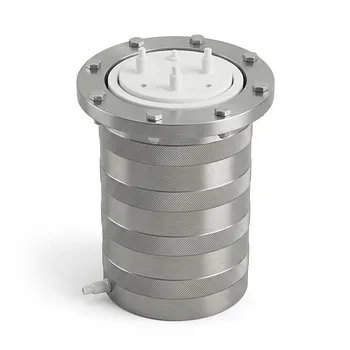
High-pressure reaction vessels, commonly known as autoclaves, serve as the critical physical environment required to drive the crystallization of multicomponent titanate perovskites. By providing a sealed, high-temperature, and high-pressure chamber, these vessels allow reaction solvents to reach temperatures significantly higher than their normal boiling points. This specific environment is the essential foundation for converting precursor gels into stable, well-crystallized perovskite phases.
The autoclave functions as a specialized reactor that leverages extreme thermal and barometric conditions to overcome kinetic barriers, ensuring the formation of high-purity, uniform perovskite crystals from liquid precursors.
The Physical Foundation of Hydrothermal Synthesis
Surpassing the Boiling Point
The primary role of the high-pressure vessel is to maintain a sealed environment where solvents, such as water or organic liquids, can be heated far beyond their ambient boiling points. For instance, while water boils at 100°C at sea level, an autoclave allows the mixture to reach temperatures like 240°C while remaining in a liquid or supercritical state.
Driving Phase Transformation
This high-energy environment provides the necessary physical basis for phase conversion. It forces the precursor gels—which are often amorphous or loosely structured—to reorganize into the dense, ordered atomic lattice characteristic of titanate perovskites.
Enhancing Material Properties and Stability
Achieving High Crystallinity
Precise control over the temperature and pressure within the vessel allows researchers to dictate the crystallinity and particle size of the resulting powder. This level of control is vital for ensuring the perovskites possess the desired latent heat capacity and structural uniformity required for technical applications.
Facilitating Stabilizing Networks
The hydrothermal conditions within the autoclave facilitate the formation of polymer networks. these networks help stabilize the growing perovskite crystals, significantly improving their thermal stability and overall structural integrity.
The Technical Role of the Vessel Interior
Protecting Equipment via PTFE Linings
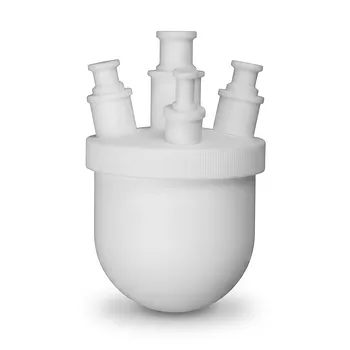
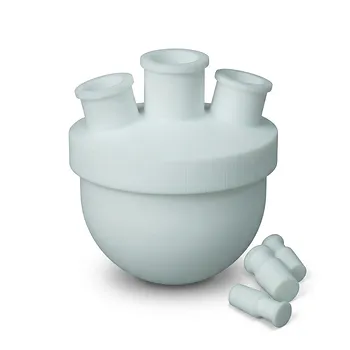
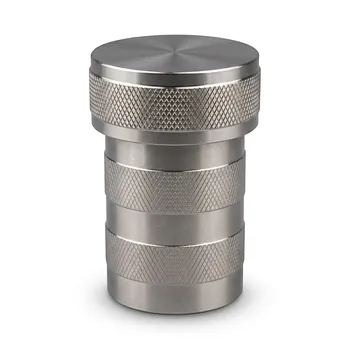
In many syntheses, a PTFE-lined stainless steel autoclave is used to manage the harsh chemical environment. The PTFE lining offers exceptional corrosion resistance and chemical stability, preventing aggressive reaction liquids from eroding the outer stainless steel shell.
Optimizing Material Recovery
The extremely smooth surface of the PTFE lining serves a practical purpose beyond protection. It prevents the synthesized powder sediments from adhering to the walls, which facilitates the efficient recovery and collection of the final solid precipitates.
Understanding the Trade-offs and Limitations
Safety and Pressure Boundaries
While high pressure is necessary for synthesis, it introduces significant safety risks if the vessel's limits are exceeded. Every autoclave has a maximum rated pressure and temperature; exceeding these can lead to mechanical failure or explosive decompression.
Potential for Contamination
If the internal liner—such as the PTFE sleeve—becomes degraded or scratched, the reaction chemistry can be compromised. Cross-contamination from the metal shell or trapped residues from previous experiments can negatively impact the purity of the multicomponent titanate.
How to Apply This to Your Synthesis Goal
Choosing the Right Vessel Parameters
- If your primary focus is high crystallinity: Prioritize a vessel capable of sustained high-temperature operation (e.g., 240°C) to ensure the complete conversion of precursor gels.
- If your primary focus is material purity and recovery: Utilize a high-quality PTFE-lined vessel to prevent reactor corrosion and ensure the easy collection of synthesized sediments.
- If your primary focus is morphological uniformity: Implement precise temperature control systems to maintain a stable internal environment, which regulates particle growth rates.
By mastering the high-pressure environment of the autoclave, you gain the ability to engineer titanate perovskites with precise structural and thermal characteristics.
Summary Table:
| Key Role | Impact on Synthesis | Critical Feature |
|---|---|---|
| Phase Transformation | Converts amorphous gels into ordered atomic lattices | Extreme thermal/barometric conditions |
| Crystallinity Control | Regulates particle size and latent heat capacity | Precise temperature/pressure regulation |
| Structural Stability | Facilitates polymer networks for thermal integrity | Controlled hydrothermal environment |
| Contamination Control | Prevents chemical erosion and ensures purity | High-quality PTFE/Fluoropolymer lining |
| Material Recovery | Prevents sediment adhesion for higher yields | Ultra-smooth internal surface finish |
Elevate Your Synthesis Precision with KINTEK
Maximize the success of your hydrothermal reactions with KINTEK’s high-performance fluoropolymer solutions. We specialize in manufacturing virtually every laboratory essential from PTFE and PFA, ensuring your multicomponent titanate perovskite synthesis remains free from contamination and corrosion.
From everyday basic labware (beakers, crucibles, and reagent bottles) and fluid transfer components (tubing, fittings, and valves) to advanced hydrothermal synthesis liners, microwave digestion vessels, and custom electrochemical cells, KINTEK provides the durability your research demands. Backed by end-to-end custom CNC fabrication, we deliver everything from high-volume consumables to complex, non-standard machined parts tailored to your specific reactor dimensions.
Ready to optimize your lab's performance? Contact our experts today to discuss your custom requirements and discover the KINTEK difference in high-performance materials.
References
- Hongbo Cui, Ming‐Yong Han. Viscosity-dependent hydrothermal synthesis of multinary titanate perovskites. DOI: 10.1126/sciadv.adu2476
This article is also based on technical information from Kintek Knowledge Base .
Related Products
- PTFE Lined High Pressure Digestion Vessel 50ml High Temperature Hydrothermal Synthesis Tank
- Custom TFM Reaction Vessel with Stainless Steel Jacket and PTFE Inner Cup for High Corrosion Resistance
- High Pressure Custom TFM Reactor Stainless Steel Outer Vessel PTFE Inner Cup for Corrosive Synthesis
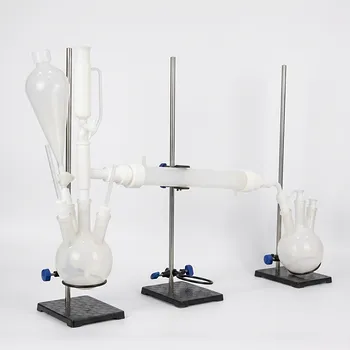
- High Purity PFA Constant Pressure Condensation Reaction System Acid Resistant High Temperature Customizable Teflon Labware
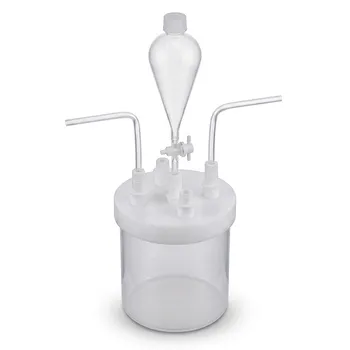
- High Purity PFA Reaction Vessel for Biopharmaceutical Synthesis and Corrosive Chemical Fluid Handling with Customizable Tube Fittings
People Also Ask
- What are the benefits of using a PTFE-lined vessel for carbon-sulfur cathode treatment? Maximize Purity & Performance
- Why are PTFE-lined pressure digestion vessels required for the preparation of Ag/CeO2 catalysts? Purity & Performance
- What is the function of high-pressure PTFE digestion vessels in mineral analysis? Optimize Sample Mineralization
- What safety features are typically incorporated into high-pressure PTFE digestion vessel designs? Ensure Lab Safety
- What is the function of PTFE lined high-pressure vessels in g-C3N4 synthesis? Achieve High-Purity Material Growth