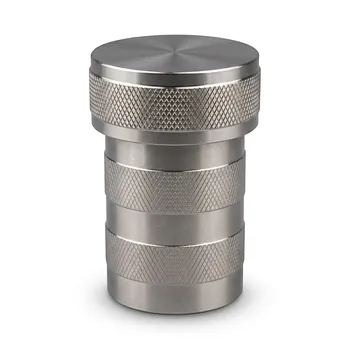
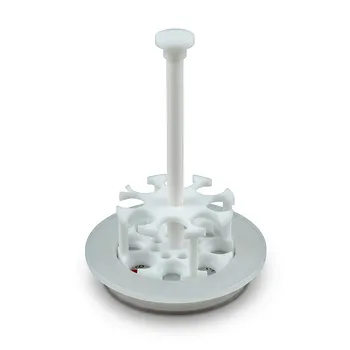
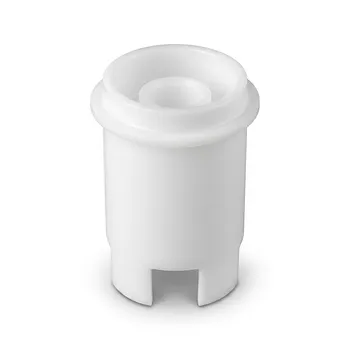
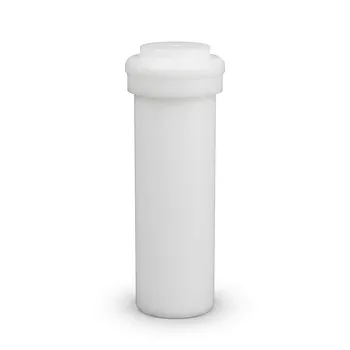
The high-pressure autoclave serves as the essential reactor for hydrothermal synthesis, creating a superheated environment that drives the self-assembly of silica. By maintaining a sealed chamber, the autoclave allows the reaction mixture to reach temperatures far exceeding its atmospheric boiling point, which accelerates the dissolution of silica precursors and ensures the formation of a stable, ordered mesoporous framework.
The autoclave is more than a container; it is a physical catalyst that utilizes autogenous pressure to facilitate the precise organization of silica molecules around a template, directly determining the material's final pore structure and thermal stability.
Facilitating the Chemistry of Self-Assembly
Overcoming Atmospheric Boiling Points
In a standard open vessel, the reaction temperature is limited by the boiling point of the solvent. The high-pressure autoclave creates a sealed environment where heating generates autogenous pressure, keeping solvents in a liquid state at extreme temperatures (e.g., 150°C–220°C).
Accelerated Dissolution and Reaction Kinetics
The high-energy environment within the autoclave allows for the complete dissolution of precursors, such as TEOS. This significantly shortens the reaction time compared to ambient pressure methods by increasing the frequency and energy of molecular collisions.
Driving Ordered Self-Assembly
For materials like KIT-5, the pressure and temperature provided by the reactor are the physical basis for the ordered self-assembly of silica around template agents. This process is critical for achieving specific symmetries, such as the Fm3m 3D cubic cage structure.
Shaping the Mesoporous Framework
Enhancing Hydrothermal Stability
The hydrothermal environment facilitates the robust formation of the silica framework. This process densifies the silanol groups and strengthens the walls of the pores, ensuring the resulting material can withstand high temperatures without structural collapse.
Precision Control of Pore Geometry
The specific temperature and pressure settings inside the autoclave directly determine the pore size distribution and structural regularity. By adjusting these parameters, researchers can fine-tune the dimensions of the mesopores to suit specific catalytic or filtration needs.
Ensuring Chemical Purity
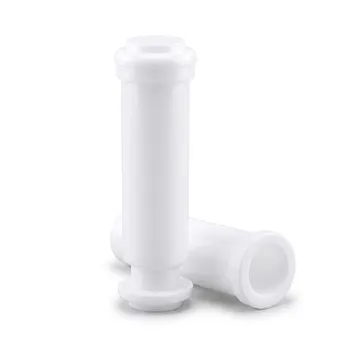
Most autoclaves utilize a Polytetrafluoroethylene (PTFE) liner inside a stainless steel shell. This liner provides chemical inertness, preventing strong alkaline or acidic precursors from corroding the metal walls and contaminating the silica with metallic impurities.
Understanding the Trade-offs and Limitations
Thermal and Pressure Constraints
While high temperatures accelerate synthesis, exceeding the limits of the PTFE liner (typically around 220°C–250°C) can lead to liner deformation or "creeping." This risk requires strict adherence to safety protocols and temperature monitoring to prevent vessel failure.
Complexity of Scale-up
Hydrothermal synthesis is highly effective at a laboratory scale but faces challenges in industrial scaling. Maintaining uniform temperature gradients and pressure across very large autoclaves is technically difficult and energy-intensive.
Kinetic vs. Thermodynamic Control
Rapid synthesis at high pressures can sometimes lead to metastable phases or decreased crystallinity if the cooling process is not managed correctly. Finding the balance between "fast" reaction times and "perfect" structural order is a primary challenge for researchers.
How to Apply This to Your Project
Making the Right Choice for Your Goal
To achieve the best results in mesoporous silica synthesis, your approach to using an autoclave should align with your specific material requirements.
- If your primary focus is Structural Regularity: Operate at precise, moderate temperatures (e.g., 100°C–150°C) to allow the silica source to slowly and accurately organize around the template agent.
- If your primary focus is High Hydrothermal Stability: Utilize higher temperatures (above 150°C) during the aging step to maximize the condensation of the silica framework and strengthen the pore walls.
- If your primary focus is Material Purity: Ensure the use of a high-purity PTFE liner and verify its integrity before every run to prevent metal ion leaching from the stainless steel outer shell.
By mastering the controlled environment of the high-pressure autoclave, you can transform simple silica precursors into highly sophisticated, nanostructured materials with tailored properties.
Summary Table:
| Key Function | Mechanism | Impact on Synthesis |
|---|---|---|
| Temperature Control | Creates autogenous pressure to exceed boiling points | Accelerates silica precursor dissolution (e.g., TEOS) |
| Structural Framework | Facilitates ordered self-assembly around templates | Defines pore geometry and symmetry (e.g., KIT-5) |
| Material Stability | Densifies silanol groups through hydrothermal aging | Enhances thermal and structural durability |
| Purity Protection | PTFE liners prevent metallic ion leaching | Ensures high chemical purity of the final nanostructure |
Elevate Your Synthesis Precision with KINTEK
Maximize the performance of your hydrothermal synthesis with KINTEK’s premium laboratory solutions. We specialize in high-performance fluoropolymer materials, offering everything from high-purity PTFE liners and hydrothermal synthesis vessels to essential labware like beakers, crucibles, and reagent bottles.
Whether you require standard consumables or bespoke laboratory setups—including custom CNC-machined components, microchannel reactors, and advanced electrochemical cells—our end-to-end fabrication ensures your equipment meets the most rigorous research standards. Protect your material purity and achieve superior structural control with our chemically inert PFA and PTFE tools.
Ready to upgrade your lab? Contact us today to discuss your custom requirements and discover how our expertise in high-performance materials can drive your next breakthrough!
References
- Inaam H. Ali, Saadiyah A. Dhahir. Hydrothermal synthesis of high surface area mesoporous silica as an efficient adsorbent for removal of crystal violet dye from aqueous solution. DOI: 10.21123/2411-7986.5018
This article is also based on technical information from Kintek Knowledge Base .
Related Products
- PTFE Lined High Pressure Digestion Vessel 50ml High Temperature Hydrothermal Synthesis Tank
- High Temperature Corrosion Resistant Hydrothermal Synthesis Reactor with TFM Inner Liner and Straight Cylinder Design
- Custom TFM Reaction Vessel with Stainless Steel Jacket and PTFE Inner Cup for High Corrosion Resistance
- High Performance TFM Microwave Digestion Vessel Rack 15 Position Customizable Sample Preparation Support
- High Pressure PTFE Digestion Vessel Inner Cup Holder Custom Corrosion Resistant Low Background Teflon
People Also Ask
- What are the benefits of using a PTFE-lined vessel for carbon-sulfur cathode treatment? Maximize Purity & Performance
- Why are PTFE-lined pressure digestion vessels required for the preparation of Ag/CeO2 catalysts? Purity & Performance
- What is the function of high-pressure PTFE digestion vessels in mineral analysis? Optimize Sample Mineralization
- What safety features are typically incorporated into high-pressure PTFE digestion vessel designs? Ensure Lab Safety
- What is the function of PTFE lined high-pressure vessels in g-C3N4 synthesis? Achieve High-Purity Material Growth