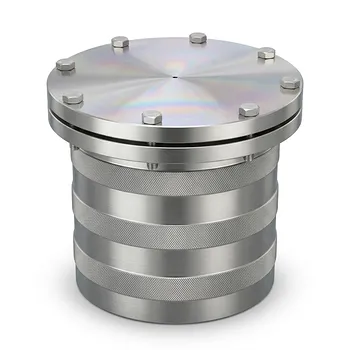
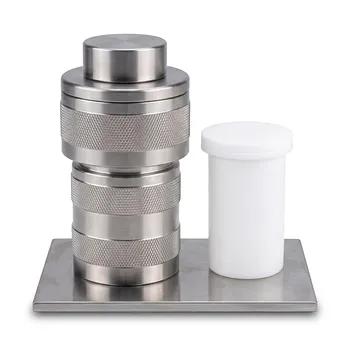
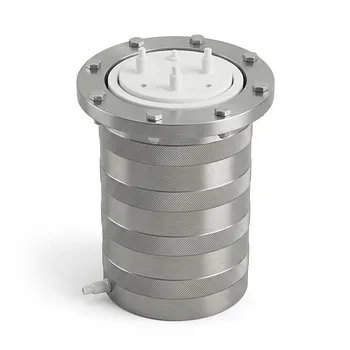
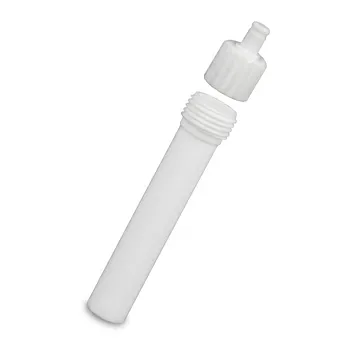
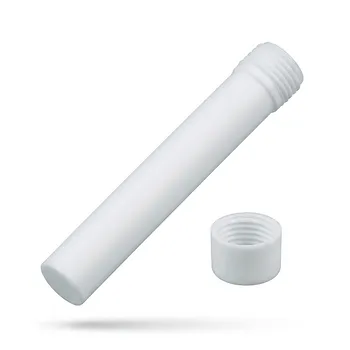
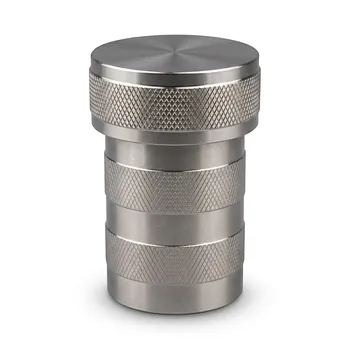
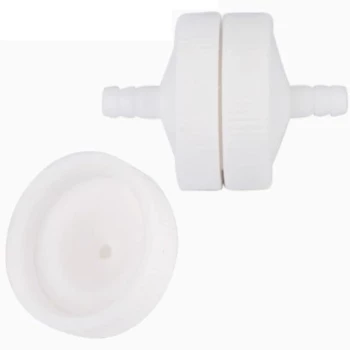
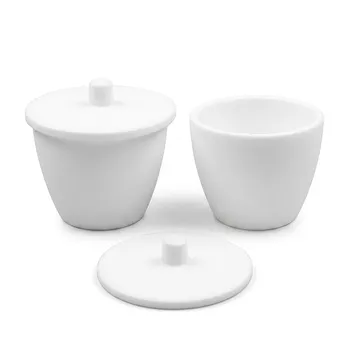
A PTFE-lined stainless steel autoclave is the essential reaction vessel for hydrothermal synthesis. This specialized equipment provides the sealed, high-pressure, and high-temperature environment (typically reaching 180°C to 220°C) required to trigger the carbonization and nitrogen-doping of organic precursors. While the stainless steel shell provides the necessary structural strength to contain high pressures, the PTFE (polytetrafluoroethylene) liner acts as a chemically inert barrier that prevents metal ion contamination and protects the vessel from corrosive reaction media.
The Core Takeaway: The autoclave functions as a two-part system where the stainless steel ensures physical safety under pressure, while the PTFE liner ensures chemical purity. This combination is vital for producing high-purity Nitrogen-doped Carbon Dots with consistent optical properties and high quantum yields.
The Synergistic Role of PTFE and Stainless Steel
Maintaining High-Pressure Structural Integrity
The synthesis of Carbon Dots requires a hydrothermal process where water or solvents are heated beyond their boiling points in a sealed space. This generates significant internal pressure, which would cause a standard glass or plastic vessel to fail. The high-strength stainless steel outer shell provides the pressure-bearing capacity needed to maintain this environment safely.
Chemical Shielding and Corrosion Resistance
Nitrogen-doped Carbon Dot synthesis often involves corrosive precursors, such as ammonia solutions, organic acids, or bases. At high temperatures, these chemicals can aggressively attack metal surfaces. The PTFE liner is exceptionally inert, meaning it does not react with these precursors, thereby protecting the steel shell from degradation and extending the equipment's lifespan.
Thermal Stability for Carbonization
Carbonization—the process of turning organic molecules into carbon structures—requires sustained heat, often between 120°C and 200°C. PTFE is thermally stable within this range, allowing it to remain intact while the precursors undergo the necessary chemical transformations. This stability ensures that the liner does not melt or leach its own polymers into the reaction mixture.
Impact on Nitrogen-Doped Carbon Dot Quality
Preventing Metal Ion Contamination
If the precursor solution were in direct contact with the stainless steel walls, metal ions (like iron, nickel, or chromium) could leach into the reaction. Even trace amounts of metal impurities can "quench" the fluorescence of Carbon Dots, significantly lowering their quantum yield. The PTFE liner acts as a sterile barrier, ensuring the resulting dots remain high-purity.
Preserving Surface Functional Groups
The performance of Nitrogen-doped Carbon Dots depends on specific surface groups like amines, carboxyls, and thiols. An inert PTFE environment ensures that these groups form correctly during the in-situ growth process without being altered by side reactions with metal walls. This leads to better batch-to-batch consistency in the dots' optical and electronic performance.
Facilitating Uniform Nucleation
The sealed environment of the autoclave ensures that the entire solution is subjected to uniform temperature and pressure. This uniformity is critical for the nucleation and growth phases of the Carbon Dots. Without the controlled pressure provided by the autoclave, the carbonization process would be incomplete or result in non-uniform particle sizes.
Understanding the Trade-offs and Limits
Temperature Limitations of PTFE
While PTFE is highly resistant, it has a strict upper thermal limit, generally around 220°C to 250°C. Exceeding these temperatures can cause the liner to deform or "creep," leading to a loss of the seal or permanent damage to the liner. For reactions requiring higher temperatures, more expensive PFA or specialized ceramic liners may be necessary.
Thermal Expansion Discrepancies
PTFE and stainless steel expand at different rates when heated. This requires the use of a spring-loaded or carefully designed cap assembly to maintain the seal as the vessel heats up. If the autoclave is cooled too rapidly (quenched), the liner can shrink faster than the shell, potentially leading to leaks or structural stress.
Pressure Risks of Overfilling
A common pitfall is overfilling the PTFE liner; it is generally recommended to fill it to only 60%–80% of its capacity. Because liquids expand when heated, overfilling can lead to an "extreme pressure" event that exceeds the safety rating of the stainless steel shell, posing a significant laboratory hazard.
How to Apply This to Your Project
When selecting or using an autoclave for Nitrogen-doped Carbon Dot synthesis, consider your specific experimental goals:
- If your primary focus is high quantum yield: Ensure your PTFE liner is thoroughly cleaned with acid between runs to remove any residual trace metals that could quench fluorescence.
- If your primary focus is extreme temperature (above 220°C): Seek out PFA or specialized high-performance fluoropolymer liners rather than standard PTFE to avoid liner deformation.
- If your primary focus is scalability: Use a larger-volume stainless steel autoclave, but maintain the 70% fill-ratio rule to ensure pressure safety during the hydrothermal process.
- If your primary focus is consistent doping: Use a tightly sealed autoclave to prevent the escape of volatile nitrogen precursors (like ammonia), ensuring the intended nitrogen-to-carbon ratio is maintained.
By respecting the chemical and physical limits of the PTFE-lined autoclave, you ensure the synthesis of high-quality Carbon Dots while maintaining a safe laboratory environment.
Summary Table:
| Component | Primary Function | Key Benefit for Carbon Dots |
|---|---|---|
| Stainless Steel Shell | High-pressure containment | Provides safety & structural integrity at 180°C-220°C |
| PTFE Liner | Chemical barrier | Prevents metal ion contamination & protects against corrosion |
| Sealed Environment | Hydrothermal containment | Ensures uniform nucleation & maintains precursor ratios |
| Thermal Stability | Heat resistance | Supports carbonization without polymer leaching |
Elevate Your Synthesis with KINTEK’s Fluoropolymer Expertise
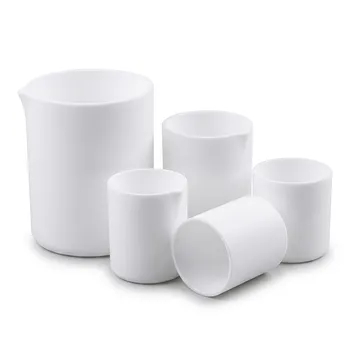
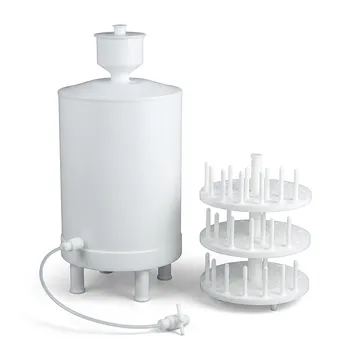
Precision in Nitrogen-doped Carbon Dot synthesis requires materials that never compromise on purity. KINTEK specializes in high-performance laboratory supplies crafted exclusively from PTFE and PFA. From everyday basics like beakers, crucibles, and centrifuge tubes to advanced hydrothermal synthesis liners, microwave digestion vessels, and custom electrochemical cells, we provide the tools necessary for high-yield research.
Whether you need standard consumables (stirring bars, O-rings, seal tapes) or complex, bespoke laboratory setups via our end-to-end custom CNC fabrication, we deliver everything from single non-standard machined parts to high-volume orders. Ensure your research achieves maximum quantum yields with our metal-free, chemically inert solutions.
Ready to upgrade your lab? Contact us today to discuss your custom project or bulk requirements!
References
- Mouna Fhoula, Inocencio R. Martín. Highly photoluminescent carbon dots: a multifunctional platform for pH sensing, nano thermometry, and mercury( <scp>ii</scp> ) detection. DOI: 10.1039/d5ma00250h
This article is also based on technical information from Kintek Knowledge Base .
Related Products
- Custom TFM Reaction Vessel with Stainless Steel Jacket and PTFE Inner Cup for High Corrosion Resistance
- PTFE Lined High Pressure Digestion Vessel 50ml High Temperature Hydrothermal Synthesis Tank
- High Pressure Custom TFM Reactor Stainless Steel Outer Vessel PTFE Inner Cup for Corrosive Synthesis
- High Purity PTFE Microwave Digestion Vessel Replacement Liner for Acid Sample Preparation and Trace Analysis
- High Purity TFM Microwave Digestion Vessels PTFE Acid Evaporation Liners Domestic GT-400 Equivalent Laboratory Reaction Containers
People Also Ask
- Why are high-performance pressure-resistant reaction vessels required for oxygen-assisted hydrothermal conversion at 150 °C?
- How do magnetic stirring and reaction vessels impact MOF-derived carbon quality? Optimize Your Composite Performance
- Why are high-quality fluoropolymer-lined reaction vessels required for alk-Ti3C2Tx MXene? Ensure Purity & HF Resistance
- Why are PTFE-lined reaction vessels necessary for forced degradation studies? Ensure high-purity results and accuracy.
- Why is a high-purity PTFE lined reaction vessel required for the acidic etching of MXenes? Ensure Material Purity.